
the Creative Commons Attribution 4.0 License.
the Creative Commons Attribution 4.0 License.
 | 06 Mar 2026
Between faith and nature: sacred landscapes of South Tyrol in nineteenth-century travel accounts
Lorenzo Brocada
This paper examines how religion, landscape, and identity intersected in the nineteenth-century South Tyrol using a cultural and historical geography perspective. It primarily draws on travel writings, complemented by iconographic sources, to show how sacred inscriptions shaped spatial relations, collective identities, and mobility across the Alpine region. The analysis distinguishes between local expressions of devotion and perceptions brought by foreign travellers, revealing the interaction between lived religious practices and external representations. Treating the sacred as a spatial language mediating human–environment interactions, the study argues that sacredness is not a fixed property of place but a relational process embedded in social, symbolic, and territorial dynamics. These findings inform broader debates on the spatiality of faith and the role of religious imaginaries in forming cultural landscapes and regional identities in Europe.
- Article
(7543 KB) - Full-text XML
- BibTeX
- EndNote


Geographers have long explored the spatial dimension of religion, particularly its diffusion and territorial specificities. However, the intersection of geography and religion as fields of study has not always been widely accepted. As Dwyer (2016) notes, for many years cultural geographers largely ignored religious aspects, only later reintegrating them – alongside other social sciences – within what has been called post-secularism.
Kong (1990) recounts an earlier debate in German geography between Troll and Büttner regarding the preparation needed to study religious topics. Büttner (1980) argued that geographers should acquire competence similar to that required by economic geographers in their field, while Troll maintained that geographers should focus only on spatial aspects, without investigating internal religious structures. Intermediate positions, such as those of Sopher (1981) and Levine (1986), are more balanced: scholars should approach religion cautiously, avoiding overlap with religious studies while remaining coherent with geographical training.
Tse (2013) criticizes the religious–secular dichotomy underlying post-secularism, and Della Dora (2018) introduces the term infra-secular, urging reflection on how religious spaces – built for worship – acquire multiple layers of meaning over time through both sacred and secular uses. Her work extends attention to beyond “official” sacred sites.
In the Anglo-Saxon context, Slatter (2019, 2023) observes that past geographical studies of religion were often entwined with colonial and racial biases, focusing mainly on Abrahamic faiths. She recommends diversifying research beyond these traditions and, methodologically, paying close attention to the complex interactions between religion and place, moving away from rigid institutional perspectives and towards understanding faith as it shapes local experiences.
In the Italian context, research on “geografie del sacro” has increasingly explored how space, territory, and landscape shape religious perceptions and heritage (Galliano, 2002; Papotti, 2007; Battisti, 2020; Bagnoli and Capurro, 2023). This study continues this line of inquiry, analysing landscape perception in textual and visual sources produced by eighteenth- and nineteenth-century travellers. It builds upon the “Envisioning Landscapes”1 project (Piana et al., 2025), following the theoretical framework outlined by Brocada (2025).
This study adopts a geographical perspective to explore how religious meanings become materially inscribed in the landscape and how such inscriptions participate in the production of spatial identities. Building upon the theoretical premises outlined above, it investigates how the sacred inscriptions in the landscape of the nineteenth-century South Tyrol reflected and shaped spatial relations, collective identity, and forms of mobility within an Alpine region. The analysis focuses on both endogenous expressions of religiosity – rooted in local devotional practices and vernacular sacred spaces – and exogenous interpretations conveyed by foreign travellers through their travel writings and visual depictions.
From this viewpoint, the paper situates the Tyrolean landscape within the broader framework of cultural and historical geography, where landscape is understood as a relational construct emerging from the interplay between material forms, symbolic values, and social practices (Cosgrove, 1998; Claval, 2012). The sacred, in this sense, acts as a spatial language that mediates the interaction between humans and their environment, generating distinctive modes of attachment, representation, and territorialization. While the relational nature of the sacred is a consolidated theme in human geography, this study builds on contemporary perspectives that conceptualize sacred landscapes as “assemblages” (Anderson and McFarlane, 2011). In this view, sacredness is not an inherent quality of South Tyrolean soil but a dynamic constellation of material objects (shrines, crosses), affective experiences, and social practices (Kong, 2010; Slatter, 2023). Yet this scholarship has tended to focus on urban, postcolonial, or non-European contexts, while Alpine environments – and, in particular, their historical configurations – remain comparatively underexplored. Within the Italian tradition, by contrast, research on geografie del sacro has privileged institutional religious heritage, sanctuaries, and contemporary devotional landscapes, paying less attention to vernacular, rural, and historically embedded forms of sacrality. This study positions itself at the intersection of these two traditions: it draws on Anglophone debates on material and lived religion while extending them to a historical Alpine setting, showing how sacredness in South Tyrol emerged as a long-term assemblage of objects, practices, and narratives that has rarely been examined in a systematic way.
This research treats travelogues and iconographic sources not merely as passive records but as archival traces that reveal how religious identity was materialized through everyday objects (Slatter, 2019). By adopting the lens of the “sacred assemblage”, the study moves beyond simple description to explore the intermediary role of the traveller. It is argued here that 19th-century visitors were active participants in the construction of a “sacred geography”: they filtered local devotional practices through romantic and ethnographic categories, effectively co-producing the region's spiritual identity for a wider European audience. Consequently, the analysis of these textual and visual accounts reconstructs the overlapping layers of meaning – religious, aesthetic, and patriotic – that define the sacred morphology of the Alpine landscape. In this framework, iconographic sources serve to visually codify and reinforce the themes emerging from the written corpus, which remains the analytical core of the study.
Early modern travel literature – widely studied but lacking a single definition (Tinguely, 2006) – shifted from explicitly religious pilgrimages to the so-called Grand Tours (Dai Prà and Gabellieri, 2021). Nevertheless, nineteenth-century travel diaries often maintained substantial religious references, particularly when describing the Holy Land (Lonni, 2012). Joseph Autran (Autran, 1841), a poet and playwright from Marseille, nostalgically recalls the era of humble pilgrimages, contrasting it with the luxurious tourism of his own time. Yet, even in this period, travellers' faiths and social backgrounds remained crucial for interpreting their writings (Lucchesi, 1995).
Romanticism, as Scaramellini (1996, 2008) notes, marked a turning point in human engagement with nature. Mountains – especially the Alps – became sites of aesthetic and emotional experience and not just scientific observation. Unlike American Transcendentalists, Europeans did not perceive wilderness as a direct manifestation of the divine; rather, mountains embodied awe, introspection, and cultural meaning. This shift gave rise to the picturesque voyage, which combined descriptive texts with evocative imagery: engravings, drawings, and views that shaped shared perceptions of Alpine landscapes (Piana et al., 2018). Visual accounts complemented textual descriptions, while purely pictorial sources, such as landscape paintings, offered additional insights (Howard, 1984; Rosenthal, 1984).
Although Romantic appreciation of the sublime often reflected aesthetic rather than religious sensibilities, travel literature retained biblical allusions and Garden of Eden imagery, contributing to the emergence of sacred landscapes. Here, “sacred” does not refer to major pilgrimage centres like Rome, Assisi, or the Holy Land (Keighren and Withers, 2012) but to local and regional destinations perceived as sacred by communities, sometimes preserving traces of pre-Christian cults.
The sacredness of nature can thus be understood in terms of two complementary dimensions: a spiritual one, grounded in communal faith, and a rational one, linked to scientific knowledge and technological progress (Scorrano, 2022). Sacred experiences materialize through diverse perceptual and symbolic forms, expressed in practices that engage with the landscape (Sajaloli and Grésillon, 2019).
Within travel sources, two modes of representing sacredness emerge: endogenous forms, rooted in local culture and religious traditions, and exogenous forms, reflecting the perspectives of foreign travellers. These dimensions intertwine, sometimes harmoniously, sometimes in tension (Brocada, 2025). Endogenous religiosity is reconstructed from material inscriptions and repeated textual descriptions of everyday devotional practices, while travellers' perceptions are filtered by prior readings and cultural stereotypes (Castelnovi, 1997). Modern parallels exist in contemporary user-generated content, such as TripAdvisor, where tourist expectations shape descriptions of landscapes (Mangano et al., 2020).
Although the study analytically distinguishes between endogenous and exogenous sacredness, the empirical analysis relies primarily on textual travel accounts, with visual sources serving as complementary material. Visual depictions reinforce, stabilize, and codify themes emerging from the diaries rather than acting as independent testimonies of local religiosity. This hierarchical approach reflects both the uneven availability of iconographic material and the central role of narrative in shaping nineteenth-century travellers' interpretations.
Approaching these elements through the lens of assemblage highlights how Alpine sacredness does not stem from any single dimension – neither purely material nor exclusively symbolic – but from the dynamic convergence of objects (crosses, shrines, frescoes), embodied gestures (the sign of the cross, ritual pauses), affective dispositions (protection, fear, familiarity), and circulating narratives produced by travellers. While assemblage thinking is now common in cultural geography, it has seldom been applied to historical mountain contexts, where sacredness is articulated through small-scale, repetitive, and spatially diffuse practices more akin to “material religion” than to major pilgrimage centres.
The Tyrolean region2 has long constituted a transitional zone between the Latin and Germanic cultural spheres3. For centuries it was traversed by pilgrims; merchants; armies; and, eventually, travellers and mountaineers4, thanks to its Alpine passes – situated at relatively low elevations compared with those of the central and western Alps – such as Brenner (1372 m), Reschen (1509 m), and Toblach (1219 m).
In the early nineteenth century, alongside Napoleon's infrastructural improvements to the Alpine passes of Montgenèvre, Mont Cenis, and the Simplon, the Habsburg Empire undertook equally ambitious roadworks, such as the Stelvio Pass – by far the highest carriageable pass in Europe (2757 m) – and the “Strada Regia”, later renamed the “Strada di Alemagna”, connecting Toblach and Cortina. The latter would prove to be crucial for the subsequent development of tourism in the Dolomite area (Bartaletti, 2011). Only a few decades later came the construction of the Brenner railway (Camanni, 2017). Despite these state projects, most transport infrastructures were financed privately, sometimes with the support of local authorities, as in the case of the Meran–Bozen railway, inaugurated in 1881 (Cole and Scharf, 2017).
For centuries, however, the region functioned more as a necessary corridor for north–south transit than as a destination in itself. This changed during the nineteenth century, when naturalists and geologists – followed by mountaineers – began to celebrate its unique features, thereby attracting interest from foreign travellers, including the French (Osti, 2003; Bainbridge, 2016; Colò, 2019; Brocada, 2021; Roghi, 2024).
During the same period, Tyrol experienced the turbulence of French-inspired revolutionary movements, which led to the suppression and closure of numerous religious communities5 and to administrative reorganizations. These transformations provoked a conservative Catholic reaction, fuelled by fears that Protestantism might spread through the developing tourism industry, modelled on that of Switzerland6. As long as visitor numbers remained limited and the clientele highly elitist, however, the presence of foreign tourists was tolerated by provincial authorities.
Tyrolean society was traditionally Catholic and conservative, as was Emperor Franz Joseph, who reigned from 1848 to 1916 and, together with his wife Elizabeth (Sisi), epitomized the spirit of the age (Boller, 2016). Nevertheless, traces of ancient pagan nature worship endured. As Frazer (1922) observed in The Golden Bough, some rural communities in Austria continued to regard trees as living beings capable of feeling pain and avoided injuring their bark except for serious reasons, a belief transmitted through generations.
The growing number of Protestant visitors prompted requests for suitable places of worship, leading the emperor to promulgate the Protestantenpatent in 1861, which authorized the formation of Protestant congregations. This decree sparked widespread protests throughout the region. The resulting climate of tension persisted for decades, dividing society between groups that actively encouraged tourism – such as the commercial bourgeoisie, the Christian Social Party, and the lower clergy – and those that opposed it, including Catholic conservatives, the high clergy, certain sectors of the rural population, and proto-environmentalist movements7 (Cole and Scharf, 2017). Even in the case of Rodolphe Töpffer, whose Protestant background might have predisposed him to a critical reading of Tyrolean Catholicism, religious practices are not approached as objects of political tension in travel accounts. Instead, they are interpreted as morally and socially structuring elements of everyday life, essential to cohesion and well-being. This further suggests that, within travel narratives, confessional difference was often subordinated to broader moral and landscape-based interpretations of faith.
Eventually, a form of equilibrium was reached – one that, in some ways, endures to this day – between the preservation of traditional rural and cultural activities and the development of tourism. The latter, by diversifying livelihoods mainly on a seasonal basis, provided the means to avoid the abandonment of agro-silvo-pastoral practices that occurred in many other mountain areas of Italy.
Another social conflict emerged between different categories of visitors: traditional tourists and alpinists. The latter were criticized by one of the most prominent British travellers of the Victorian era, John Ruskin, who opposed the sublime vision of the artist and poet in relation to the superficial competitiveness of the climber. Ruskin denounced sporting alpinism as a profanation of sacred places, asserting that the mountains had become “greased poles in a circus” for the entertainment of the vain (Bainbridge, 2025). For him, mountains were not merely geological forms but sacred entities, symbols of divine beauty in Creation. Observation of nature was thus a spiritual and moral act, a contemplative mode of knowledge uniting poetry, prophecy, and religion (Lough, 2023).
Among those influenced by Ruskin was Reginald John Farrer, who developed a form of secular mysticism in which the contemplation of mountain nature – especially in the Dolomites – took on quasi-religious yet non-confessional overtones. Mountains, for Farrer, became “enormous pilgrims on the way to salvation”, living symbols of a spiritual journey towards perfection, inspired in part by Buddhism. In his Alpine and Bog-Plants, Farrer blends natural science with spiritual metaphor, drawing on both Asian spirituality and the European Romantic tradition. His descriptions of Dolomitic landscapes often evoke local legends, such as that of King Laurin, thus enriching the cultural and mythical dimension of the Alpine environment (Bainbridge, 2025).
By the end of the century, nationalist issues had further complicated the picture: for both Italians and Austrians, the Tyrolean Alpine belt represented a territory to be either “Germanized” or “Italianized” once and for all (Judson, 2001). Throughout the nineteenth century, moreover, the Trentine Church maintained a rather conflictual relationship with the Habsburg Empire, which had absorbed what was once the Prince-Bishopric of Trento, seeking to diminish the influence of the Trentine Diocese in favour of those of Brixen and Salzburg (Boller, 2016).
3.1 Perceptions of the sacred in the South Tyrolean landscape: endogenous and exogenous elements
These tensions, however, did not substantially affect the profound religiosity of the Tyrolean people, at least according to the francophone travel sources examined. Among them stands the revealing testimony of Abbot Charles Hermeline (Hermeline, 1898:275–276), whose observations clearly reflect the environmental determinism typical of late-nineteenth-century geographical discourse:
Along the entire route there is a succession of crosses and little chapels. This is a Catholic country, indeed, a most Catholic one; the Tyroleans have sown the signs of their faith and devotion on every mountain slope. Wherever they pass, whether on their way to work or returning home, they have placed a Christ to bless them, a Virgin who smiles upon them, a Saint John of Nepomuk absorbed in contemplation of his crucifix.
The crosses are covered by a small roof to protect them from snow and rain. Beneath it, a Christ is enclosed in a carving, often rough, but always moving for the sorrowful expression of his features and for the long streaks of blood running down his body. … The sight of these crosses and paintings recalls the simple devotion and the harsh life of these mountain dwellers. Inhabiting a land that claims victims every year, they feel themselves in God's hands: the mountain that sustains them and sometimes kills them, they have consecrated to Him; and they are readier to face the hazards of life when they see the cross and the Virgin beside them (Hermeline, 1898:275–276).8
Whereas foreign travellers in Italy often emphasized the prominence of Marian devotion, in Tyrol, religious practice appeared to be more explicitly centred on Christ, and especially on the crucifix, omnipresent both in the domestic sphere9 and throughout the landscape. Roadside crosses and Passion scenes were recurrent features along junctions and mountain paths, signalling a form of religiosity strongly rooted in place. As Rodolphe Töpffer10 observed in 1842, in his Voyages en zigzag (1900), the abundance of crucifixes and wooden reliefs, though sometimes naïve in execution, expressed a popular aesthetic that translated faith into visible and spatial forms. Through constant reproduction, these images had become typified, turning individual representations into shared symbols that embodied collective identity. For Töpffer, such material and artistic expressions were not merely devotional artefacts but the tangible signs of a coherent cultural system, one in which art, faith, and landscape merged to shape a sense of belonging and continuity. His observations thus illuminate how visual devotion functioned as a spatial language, inscribing moral and spiritual values directly into the everyday geography of Tyrol.
Similarly, Taponier (1892:292–293) reflects on the numerous chapels perched atop hills, the small oratories dispersed along rural roads, and the multitude of crucifixes and saintly statues that populate the landscape. He notes that a traveller cannot help but have their thoughts drawn, whether consciously or unconsciously, towards profound and spiritual reflections at almost every turn. The responsibility for constructing and maintaining these modest religious monuments varies: occasionally it falls to local municipalities, but more frequently it is taken up by affluent families who, motivated by devotion, seek to commemorate either joyful occasions or tragic events. In addition, there exists a whole cohort of artisans who benefit from this popular expression of faith. These are generally minor artists, often simple rural inhabitants, yet they possess a certain skill and occasionally display a measure of creativity or imagination. In some instances, their work demonstrates a boldness reminiscent of medieval artistic daring, and, much like the Flemish painters, they do not hesitate to evoke strong emotional reactions from the public. As a vivid example, Taponier recounts seeing in Nauders a depiction of Christ marked by gruesome wounds, bleeding from head to toe; because it was incorporated into a fountain, the water emerged from His pierced chest, intensifying the impact on viewers.
Several contemporary depictions – almost all by German artists – confirm the local importance of these sacred elements within the landscape. Such is the case of the etching by Philipp von Foltz (1805–1877), a Bavarian-trained painter educated at the Munich Academy of Fine Arts, who repeatedly depicted devotional subjects with a rather conservative outlook. Foltz was in fact a representative of Historical painting, although he was influenced by Romanticism. In Prayer in the Tyrol (Fig. 1), two women wearing traditional Tyrolean hats are shown kneeling before a wooden crucifix along an unlocated mountain path.
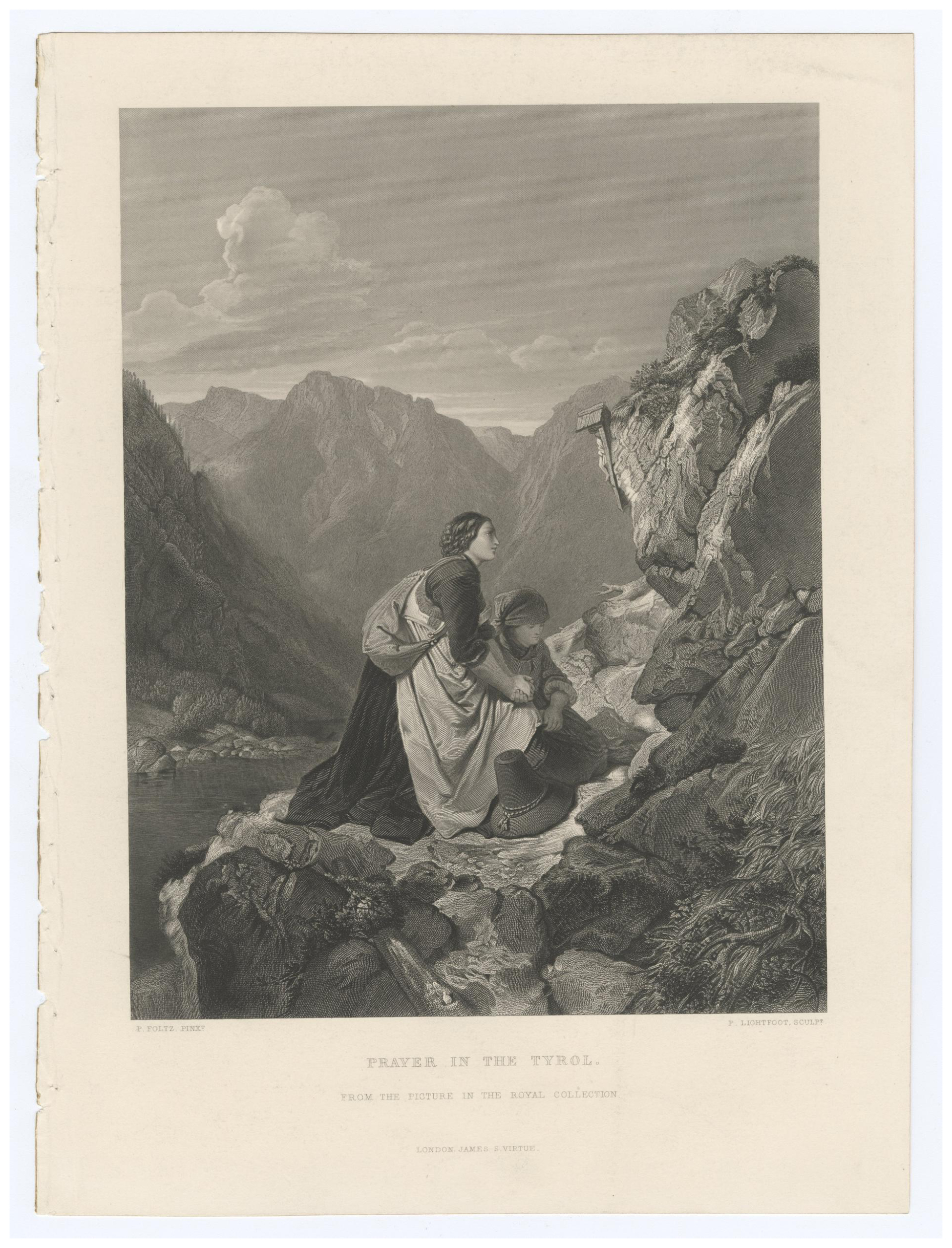
Figure 1Philipp von Foltz (etching), Peter Lightfoot (engraving), Prayer in the Tyrol (1820–1861), 1872, 1012. 2365, © The Trustees of the British Museum (CC BY-NC-SA 4.0).
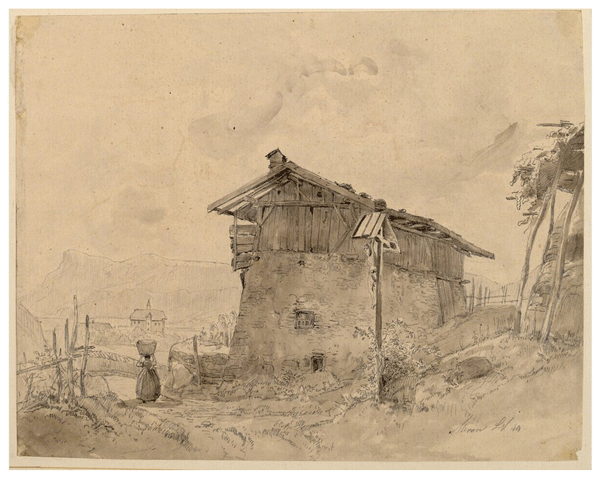
Not dissimilar is the sketch in Fig. 2 by Jakob Ludwig Buhl (1821–1880), another German artist trained at the Royal Prussian Academy of Arts in Düsseldorf, as well as the watercolour by Ludwig Neelmeyer (1814–1870), a German painter who spent many years in Bozen (Fig. 3). The first was more of an engraver than a painter, while the second was a true landscape painter, quite renowned locally in the mid-19th century. However, none of the three artists achieved sufficient fame and renown to be studied in depth in scientific literature. Therefore, we are unable to further explore the dissemination of these works in shaping the “exogenous” European image of Tyrol. Anyway, their images certainly were not produced for a purely local audience. Engravings and sketches by these artists circulated through illustrated books, albums, and exhibitions, primarily addressing a middle- and upper-class European public increasingly interested in Alpine travel. Their wide reproducibility contributed to fixing a visual repertoire of Tyrol as a land of devout rural communities, reinforcing an exogenous imagination shaped as much by images as by texts.

Figure 2Jakob Ludwig Buhl, Wegkreuz beim Dorf Tirol (19th century), Städel Museum, Frankfurt am Main, 6302.
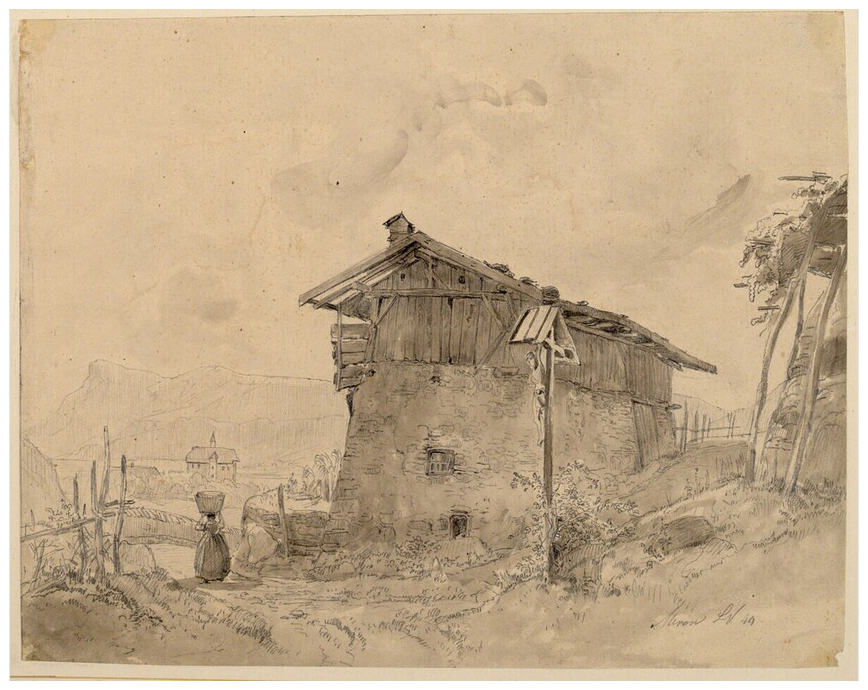
Figure 3Ludwig Neelmeyer, Kienhaus bei Meran, Inv. No. 6092, Albertina, Vienna.
These visual representations often focused on roadside crucifixes and shrines; other travellers agreed in describing these physical sculptures as possessing little artistic refinement but great spiritual power. As Holloway (2006) suggests, these objects act as material agents that produce an “enchanted” space, where the affective impact on the observer transcends the aesthetic quality of the artefact itself:
In certain quarters, devotional subjects – Christs or Madonnas, statues or paintings – are suspended above doorways or at street corners. Often a lamp or modest lantern burns before the sacred image, and it is among the curiosities of the town to see all these flickering lights swaying over the street (de Souhesmes, 1883:20).
At the entrance and exit of every village, and at each crossroads, public faith has erected small enclosed chapels or Calvaries sheltered by carpentered roofs that give them a strange appearance. These large boxes sometimes contain Christs which, in their naïveté, seem to me to possess a certain artistic merit. All are painted in the brightest colours of the rainbow (Clausse, 1886:42).
At every crossing, tall wooden crucifixes – lean, gaunt, with enormous heads and a naïve, rustic aspect – are set up to protect them from storms (Camoin de Vence, 1888:68).
All along the road skirting the hillside meadows, one meets chapels and Calvaries with wooden Christs carved and painted in bright colours. The Tyroleans are devout Catholics. It is not rare to see a man or a woman kneeling at the foot of a Calvary. As they pass, everyone makes the sign of the cross devoutly (Curtel, 1893:56–57).
Clearly, these sources are infused with stereotypes that foreign travellers carried with them before even observing local realities. As Papotti (2003) reminds us, travellers often performed a voluntary or involuntary selection of the elements they observed, natural, cultural, religious, or political. Yet, when an author's attention becomes almost obsessive, and the descriptive detail of his chosen objects acquires the weight of testimony, the travel report shines with an informational potential comparable to that of a technical treatise.
That said, many of these descriptions confirm a social structure – reflected in the landscape – deeply centred on faith, not without remnants of pre-Christian beliefs, as was common across much of Europe. The Voyage d'un exilé (1835) by Baron d'Haussez offers an illustrative example: he found the Tyrolean men's hunting customs and “libertine” habits to be nearly incompatible with their extreme devotion, which he dismissed as superstition born of poor education:
No one passes before the sacred images set along the roads – placed at the shortest intervals – without saluting them. One sees passers-by saying their prayers with the air of great devotion. The façades of the houses are decorated with frescoes representing scenes from sacred history which, though mediocre, must have cost almost as much as the modest homes they sanctify. One may call these practices superstition, and rightly so; yet superstition – being but a deviation, an exaggeration, or an abuse of the religious principle among educated classes – constitutes the whole religion of those who lack instruction. … They believe far beyond what they should; they pray far more than is required, and think thus to be at peace with heaven. They never pass an oratory without crossing themselves and wait until the girl kneeling there has finished her rosary before following her into the forest. At the sound of the Angelus, they interrupt the noisy joys of the tavern to kneel before the great crucifix at the end of the hall and recite long prayers together. Then they resume their amusements and get drunk. Religion is thus for them a practice, not a teaching, still less a source of morality or restraint (Haussez, 1835:155–164).
Baroness de Montaran (1852:117) expressed similar perplexities for the Catholic faith of the Tyroleans, comparing it to that of the Bretons in her own country:
Protestant worship could only have developed in the North, where critical examination is a need of the mind. The people of the South, who live by emotion, require a religion that speaks to the eyes, the imagination, and the senses. The Tyroleans, credulous and simple, believe without knowing; for them faith kills reasoning. The only people I know in France so strongly attached to their naïve beliefs are the Bretons. The roads of Tyrol are strewn with chapels, Madonnas, bleeding Christs, and ungainly saints. If an accident occurs, a cross is erected; if misfortune strikes, a sanctuary is built. The churches are full of votive offerings. When a Tyrolean hears the Angelus, he uncovers his head and says the Ave Maria. Pilgrims go barefoot, rosary in hand, to intercede with the miraculous Virgins who inhabit the whole country. Here morality is pure. … In the credulous Tyrolean, faith exists without intelligence, without a perception of beauty or truth; ultimately, only through crude fanaticism does he glimpse God (Montaran, 1852:117).
de Souhesmes (1883) was more lenient, acknowledging a faith verging on superstition but coherent with the Tyroleans' moral behaviour. He added a subtle criticism of the French “Reds”, who, in the name of new ideals, were destroying Christian symbols, questioning which country truly suffered more from rising criminality:
It has been said that Tyrol is the Vendée of Austria, profoundly Catholic; but the Tyrolean does not possess merely the outwards and somewhat superstitious religion of the Italian. Here deeds accord with principles, and honesty has always been proverbial. Along the roads rise large crucifixes protected by triangular roofs, and I would not encourage our good Reds to come here to practise the demolition skills they so display in France. Human respect is unknown among these rugged mountain folk, who have preserved a simple piety: in their villages, every family prays together at the sound of the Angelus; all uncover their heads, and we have even seen travellers kneeling in the back of their carriages. One may call this bigotry; yet I would be curious to compare Tyrol's crime statistics with our own, and I doubt the results would support our modern theories (de Souhesmes, 1883:17).
Taponier (1892) went further, praising the Tyroleans for not having replaced their faith with the liberal values spreading through France and for the honesty and coherence of their daily conduct:
What strikes me here is the abundance – truly extraordinary, even for Tyrol – of religious inscriptions and emblems. At the doorway stands a great crucifix before which a small lamp burns, and on the façade several frescoes depict biblical scenes. … These simple people have not yet learned to be ashamed of their religion; they profess and practise it openly, without complication. No hypocrisy, no concession to that false discretion of liberalism which would impose upon modern man the law of hiding his beliefs beneath an impenetrable veil. … The religious sentiments of the Tyroleans are not, moreover, purely imaginary; they are translated, practically, into the thousand details of daily life. One soon notices that the people are profoundly honest. I defy anyone who has travelled often in Tyrol to deny it. Everywhere and always one feels absolute safety. There is no need to fear thieves or swindlers, as too often elsewhere; nor to dread being exploited as a foreigner. One is astonished, even amazed, at the modesty of prices in most country inns and small towns (Taponier, 1892:291–294).
Yet the same author later adopted a critical stance towards this conservative form of religiosity, describing Tyrol as a region stubbornly attached to its traditional faith and resistant to modern ideas. In his view, its inhabitants continued to uphold spiritual values over material progress, a persistence he interpreted as a sign of backwardness and ignorance.
Finally, Töpffer, writing of the Venosta Valley, considered these religious practices – disappearing in more “advanced” countries – to be indispensable to morality and happiness:
At Silandro, where we pass at noon, we are by chance witnesses of a scene that adds a striking touch to the picture we have just sketched. At the sound of the midday bell, seven or eight men who were threshing grain let their flails fall, step to the barn door, and kneel for a few moments in adoration. This scene, so impressive in its simplicity, is repeated at that hour in every village; everywhere these proud men, these masters, interrupt their labour to bend the knee before the Most High.
`Practices!' one may say, yes, but wholesome, beautiful, useful ones that instil and spread the fear of God, that bow childhood beneath His yoke, that daily transform, if only for a few moments, into brothers and equals the masters and the labourers, those who share the same roof and those whom chance has brought together, the loving and the hostile. Practices! but worth more than that lack of practice under which, in so-called advanced nations, the religious idea – the indispensable safeguard of morality, happiness, and national identity – Is vanishing day by day (Töpffer, 1900:123).
These examples – though limited in number – reveal in these texts a recurring tone of superiority in French travel accounts, comparable to what Colò (2019) identifies among British travellers of the same period. Taken together, these accounts – whether admiring, critical, or tinged with ethnocentric prejudice – illustrate a Tyrolean religiosity that was both pervasive and materially embedded in everyday life. Across valleys and mountain paths, the landscape itself functioned as a canvas for faith, with crucifixes, chapels, oratories, and devotional images forming a dense network of spiritual markers. Even when foreign observers questioned the aesthetic refinement or intellectual depth of these practices, they consistently acknowledged their social and moral significance: faith was expressed collectively, visible in the gestures, routines, and interactions of individuals within their communities. Moreover, as Taponier and Töpffer emphasize, this religiosity was inseparable from local notions of honesty, order, and social cohesion, creating a cultural system in which spiritual devotion, ethical conduct, and environmental awareness were intertwined. At the same time, the same sources reveal a tension between tradition and modernity: observers often interpreted the persistence of these practices as a sign of backwardness or superstition, while simultaneously recognizing that such devotions fostered stability, mutual respect, and a sense of shared identity in an otherwise harsh and challenging environment. In this sense, the Tyrolean landscape emerges not merely as a physical backdrop but as an active participant in the moral and spiritual life of its inhabitants, inscribing beliefs and values into both space and habit and offering a vivid counterpoint to the secularizing currents spreading through other parts of Europe.
3.2 Heimat, patriotic cults, and the exogenous sacred in the Tyrolean landscape
A recurring theme in Tyrolean travel accounts is the notion of Heimat, a German term expressing the intimate connection between homeland, belonging, and moral rootedness (Andreotti, 1995; Peterlini, 2013). This concept finds visible expression in the landscape through numerous votive chapels commemorating resistance to the Napoleonic invasion. Camoin de Vence (1888:68) reports one such example at Campo di Trens (Freienfeld, “free land”), a village whose name, he notes, derives “from the victories won by Tyrolean peasants under the heroic Andreas Hofer. In a chapel erected in memory of a battle won in 1797, one reads this proud inscription on a painting: `The enemy shall not pass beyond this point!”'
The same event was described by Pierre Gaultier in 1798 and later by Montaran (1852), though with differing degrees of faith in divine intervention:
The French never came this far. They showed us a chapel where, by a well-attested miracle, the horses of some of their advance troops reared up and could not proceed any farther. This chapel was immediately restored and is today much venerated. On the painted façade one can see the image of the rearing horses and the other circumstances that accompanied the event (Rogeron, 1912:423).
At the entrance to the gorge of Mittewald, an inscription on a chapel informs the traveller that Joubert's army stopped there. It was not for lack of strength but of will that it advanced no further. The Tyroleans, ever credulous, attributed this voluntary halt to divine intervention (Montaran, 1852:135).
Several authors, however, agree in praising the patriotic figure of Andreas Hofer, a hero renowned even beyond national borders (Colò, 2019), whose birthplace in the Passiria Valley became a site of a sort of secular pilgrimage11. Gourdault (1884) devoted an illustration to it (Fig. 4), noting that there was “essentially nothing else worth seeing in that valley.”
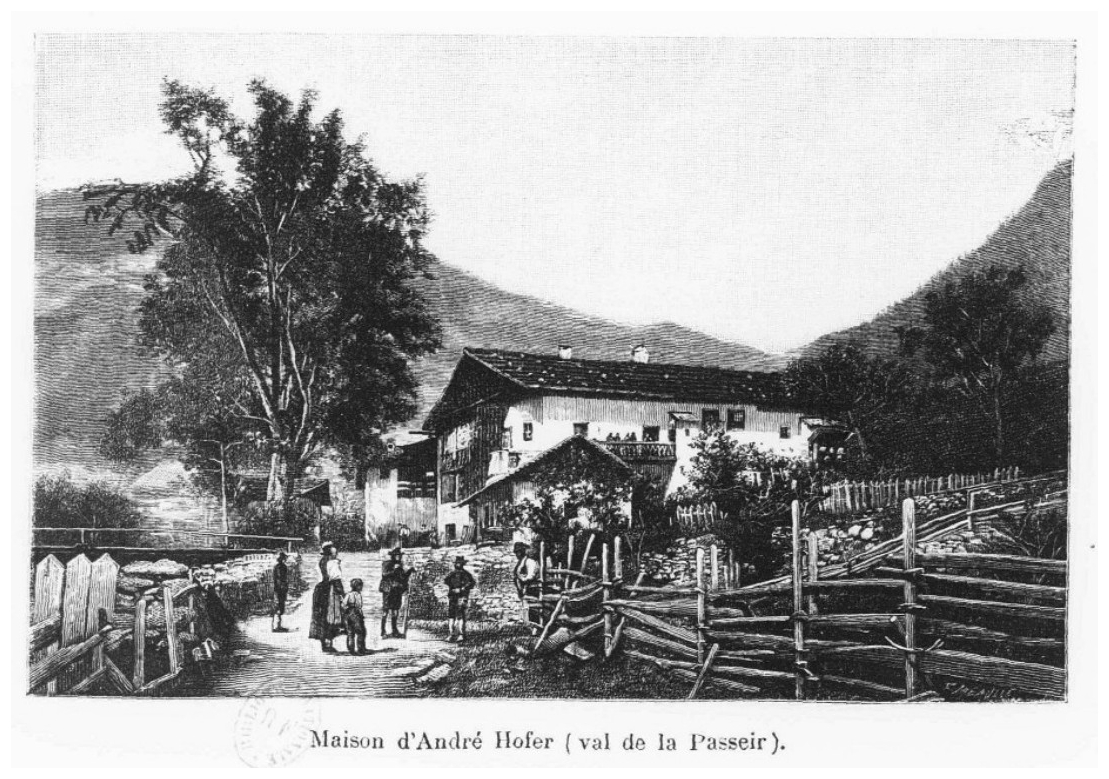
Figure 4Birthplace of Andreas Hofer, from À travers le Tyrol by Gourdault (1884:229).
As for exogenous sacredness, it is unsurprising that Romantic travellers often associated nature itself with the sacred. Yet, the explicit comparison with the Garden of Eden reveals how such imagery often stemmed from their religious formation. One such instance appears in the writings of Baroness de Montaran, who, upon entering Tyrol, exclaimed the following:
At last we enter Tyrol! Free and virgin land, I bow before your gigantic mountains, your impetuous torrents, your tranquil valleys; and, like a pilgrim who reaches Jerusalem, I salute you devoutly.
Blessed be Tyrol, that great work of the Creator, resting upon human masterpieces; for if Venice belongs to man, the Alps belong to God (Montaran, 1852:91–92)!
She soon compared the Bolzano area to the Garden of Eden, portraying a stereotyped rural economy and an idealized mountain world where nature and humans coexist in harmony, an idyllic atmosphere akin to that of Heidi, published in the same decades, in open contrast to the industrializing cities (Bartaletti, 2011):
Here nature takes on a festive air: man milks, birds sing, and the Isarco flows with its grey or yellowish waters, swollen by the melting snow, through the gardens of Eden. This river is encircled by immense mountains, all adorned with the flowers that God has sown upon their slopes. The circular trellises let their green vines hang down to the ground, lovingly concealing golden clusters of grapes worthy of the Promised Land. … The shepherds call to one another from mountain to mountain, and the echo repeats their joyful refrain.
Poetic Tyrol! How sweetly my thoughts wander among the branches of your firs and over the peaks of your rocks! Amid this solemn nature, Madonnas rest in the shade of larch trunks, and freshly picked flowers wither at their feet. Here the mountaineers kneel when the snow descends from the mountains; here they pray to the holy protector of misfortune for aid (Montaran, 1852:115–127).
Similarly, Taponier (1892:292–293) – of whom little is known beyond his own admission in the preface that he travelled “to calm nerves somewhat strained by numerous worries” – remarked on the intertwining of rural labour and faith: “Very often, during the haymaking season, I saw Tyrolean peasants arrange the heaps of hay so as to form, in the middle of the fields, the anagram of Jesus or of the Virgin Mary.”
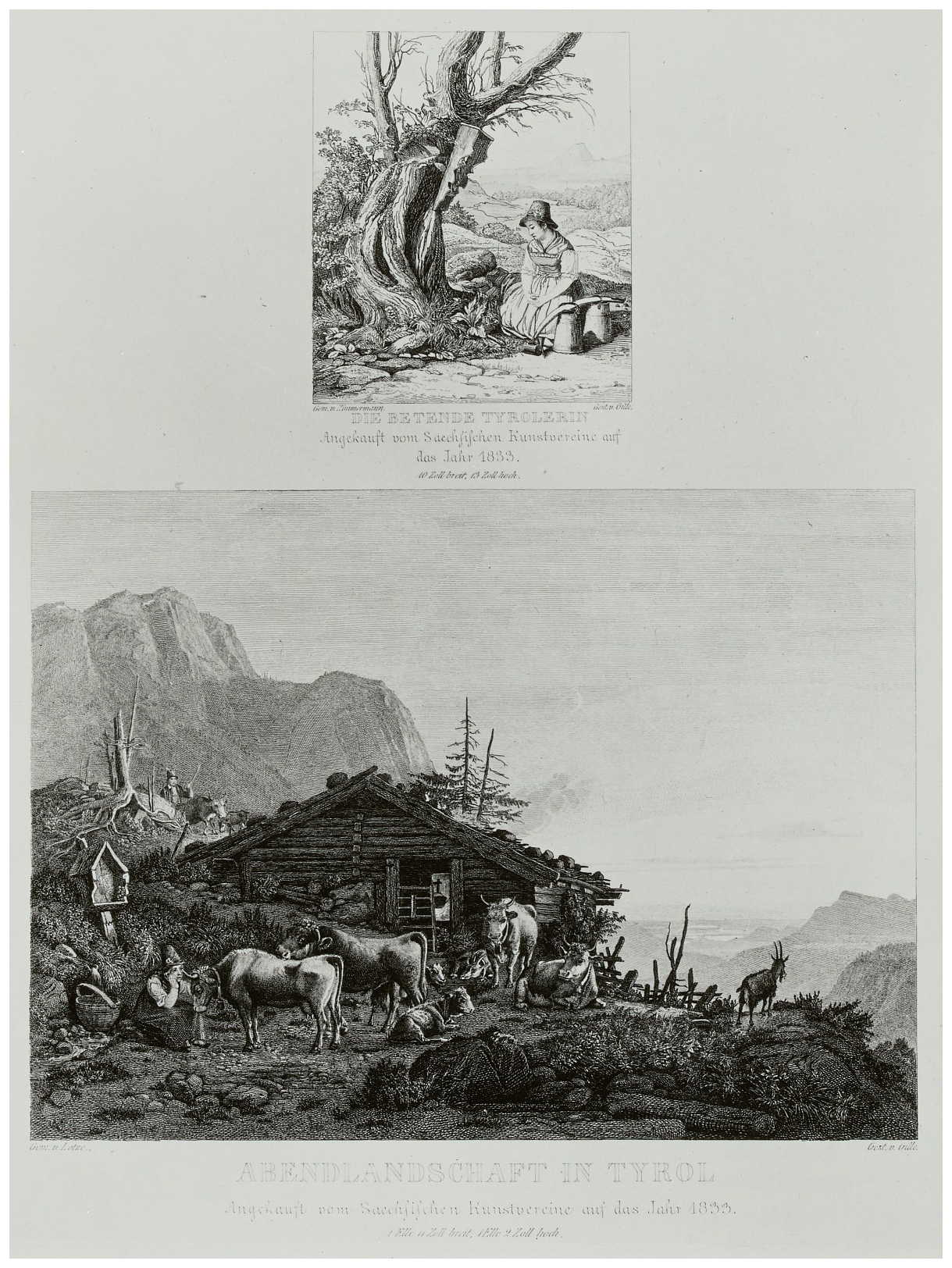
Figure 5Christian Friedrich Gille, two engravings (above – Die betende Tyrolerin; below – Abendlandschaft in Tyrol), Art Collection of the University Göttingen, Germany – CC0.
Finally, Rogeron's (1912) edition of his great-uncle Pierre Gaultier's 179012 travel account reflects a quintessential Romantic ideal of the eighteenth and nineteenth centuries: the belief that Alpine civilization preserved a direct link with both nature and spirituality, values perceived as archaic by travellers from the more “civilized” cities (Scaramellini, 2008):
The people are deeply attached to religion and practise it with great rigour. On Sundays and feast days the churches and altars are crowded with vast multitudes of simple, devout souls. Their customs are pure, and this is the country where corruption and disorder are least found. … Those who live in the mountains are robust, industrious, and simple, qualities that contribute to their moral purity and profound attachment to religion (Rogeron, 1912:416).
Such themes also found expression in nineteenth-century realist engravings and paintings, such as those by the German artist Christian Friedrich Gille (1805–1899), trained in the 1820s at the Dresden Academy. For much of his life, Gille was compelled to produce engravings for a living, though his painterly talent was later recognized (Keller, 1964). In two works from 1833, both generically set in Tyrol (Fig. 5), there emerges a certain harmony between Alpine pastoral life and faith: in one, a woman pauses from carrying two pails of milk to kneel in prayer before a wooden crucifix; in the other, a shepherd rests beside his hut with livestock nearby and a crucifix in the foreground.
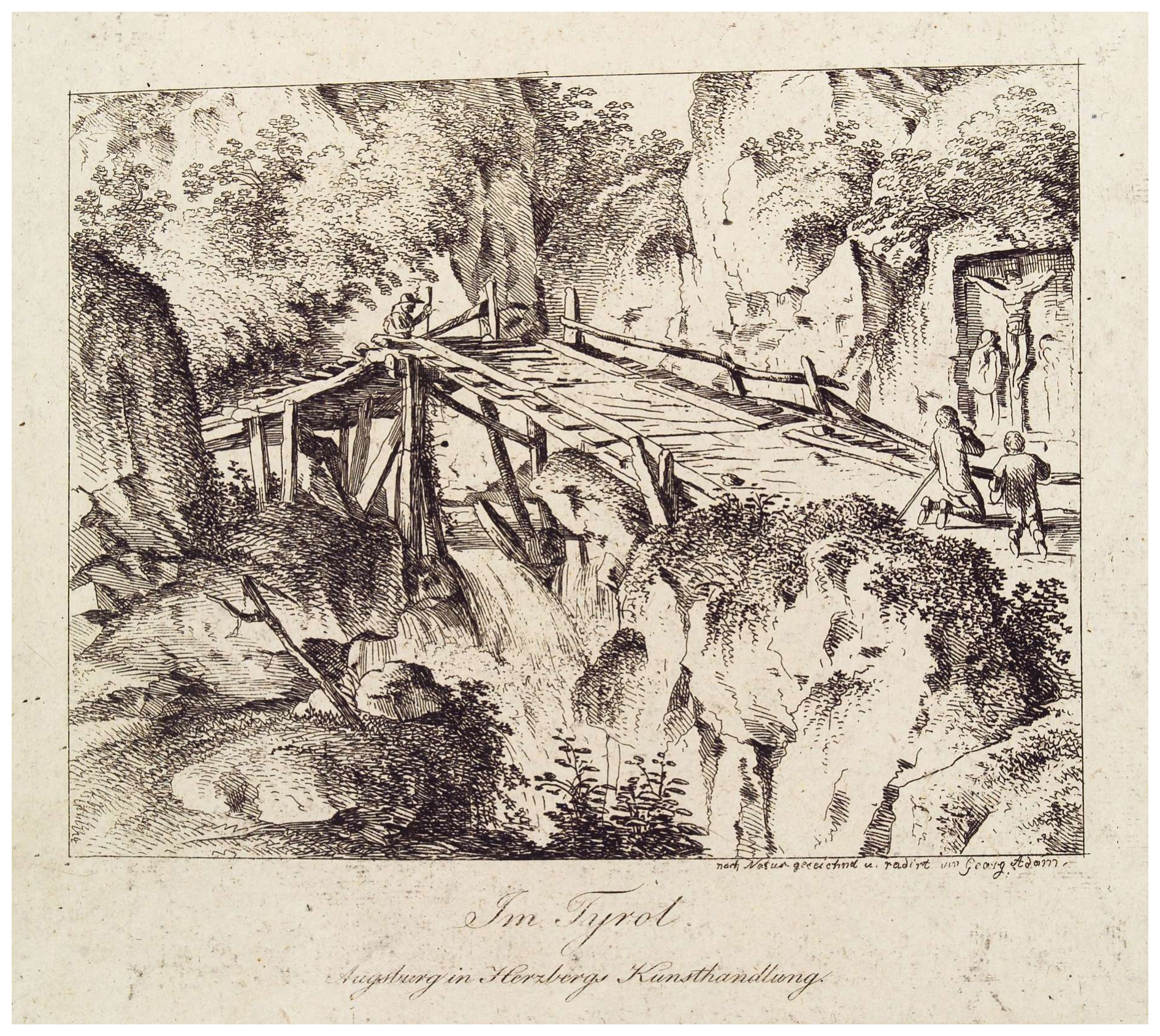
Figure 6Georg Adam, Im Tyrol (1804–1823), Herzbergs Kunsthandlung (publisher), Herzog August Library, Germany, Graph. C: 860.4 – CC BY-SA.
The slightly earlier Bavarian artist Georg Adam (1785–1823) produced a series of engravings depicting Tyrolean landscapes featuring bridges (Fig. 6), though these do not seem to belong to the popular “devil's bridge” motif, usually set within deep, untamed gorges (Scaramellini, 2008).
Examined through nineteenth-century travel writings and visual representations, South Tyrol emerges as a paradigmatic Alpine region where the sacred is inscribed in both material and symbolic forms within the landscape. The widespread presence of roadside crucifixes, chapels, and votive images testified to a spatial system of devotion that extended beyond purely religious practice to become a form of territorial expression. These sacred inscriptions contributed to the production of a shared sense of place, shaping everyday mobilities and defining the moral geography of mountain life.
By juxtaposing local religious practices with the exogenous perspectives of foreign travellers, the analysis shows how the Tyrolean landscape functioned as a meeting point between internal and external forms of sacredness. While local communities interpreted space through the repetition of devotional gestures, travellers re-sacralized the same environment through aesthetic, moral, or nationalistic narratives. The resulting landscape thus embodied a dialogue between faith and imagination, between lived experience and representation: a dialogue that produced both spatial cohesion and symbolic diversity.
From a geographical perspective, this study demonstrates that sacredness is not a fixed property of places but a relational process, emerging from the intersection of social practices, spatial imaginaries, and territorial identities. The South Tyrolean case exemplifies how religious landscapes can serve as laboratories for understanding the co-production of meaning between people and environment: a process equally relevant to historical and contemporary geographies.
More broadly, the paper contributes to ongoing debates in human geography on the relationships between landscape, identity, and spirituality. In recent decades, cultural and human geography have renewed their interest in the spatialities of religion and spirituality, recognizing faith as a lived and situated practice rather than a static attribute of place (Holloway and Valins, 2002). The discipline has seen the emergence of new conceptual frameworks that bridge geographical and anthropological perspectives, suggesting that religion is not a static category but a lived, spatial practice (Kong, 2010; Richardson, 2022). These “new avenues” highlight how sacred geographies, even when rooted in pre-modern contexts, continue to inform the spatial grammar of belonging and the cultural interpretation of Alpine regions. Recognizing these historical layers allows for a more nuanced understanding of how memory, faith, and mobility shape both the material and symbolic dimensions of European mountain landscapes.
Within this framework, sacred landscapes are increasingly interpreted as dynamic assemblage of material forms, emotions, and embodied performances that contribute to the ongoing negotiation of place and identity (Brace et al., 2006; Anderson and McFarlane, 2011). The historical case of South Tyrol thus acquires contemporary relevance: by revealing how the sacred once structured spatial relations and imaginaries in an Alpine context, it illuminates the continuing processes through which belief, heritage, and landscape remain intertwined in shaping mountain identities today.
The main contribution of this study lies in extending relational and assemblage-based approaches to the geography of religion into a historical Alpine context that has received limited attention in international debates. The historical “sacred morphology” reconstructed in this study has not been erased by the development of modern tourism in South Tyrol. On the contrary, many of the devotional markers described in nineteenth-century travel accounts – roadside crucifixes, small chapels, pilgrimage routes, and monastic complexes – continue to structure contemporary landscape experience. Today, these elements are frequently integrated into hiking trails, panoramic itineraries, and cultural routes, where they function simultaneously as heritage landmarks, aesthetic reference points, and spaces of pause and reflection for visitors. Iconic sites such as alpine chapels set against the Dolomitic backdrop, historic abbeys open to the public, or devotional paths reused as recreational trails demonstrate how sacred inscriptions persist as visible and meaningful components of the touristic landscape, even when their religious function is partially reinterpreted. This study, therefore, expands current cultural geography by demonstrating how historical travel sources can reveal the “layers” of sacredness that still influence regional identity today.
Within this framework, projects such as Envisioning Landscapes offer valuable tools for understanding how historical layers of sacrality continue to inform present-day territorial narratives. The contemporary tourist gaze does not simply consume these sacred elements as isolated monuments but encounters them as part of a coherent spatial grammar inherited from the past. Recognizing this continuity has important implications for heritage management in Alpine regions, where the conservation of religious landscapes intersects with tourism planning, sustainability, and local identity. Rather than representing residual or obsolete features, sacred markers remain active agents in shaping place-based meanings, mediating between historical memory, everyday practices, and the evolving expectations of a global audience.
The sources used in the text can be viewed in the Envisioning Landscapes project webGIS at the following link: https://grandtour.lettere.unitn.it/ (last access: 4 March 2026).
The author has declared that there are no competing interests.
Publisher's note: Copernicus Publications remains neutral with regard to jurisdictional claims made in the text, published maps, institutional affiliations, or any other geographical representation in this paper. The authors bear the ultimate responsibility for providing appropriate place names. Views expressed in the text are those of the authors and do not necessarily reflect the views of the publisher.
I would like to thank the reviewers for their careful and constructive advice, as well as the Envisioning Landscapes research team.
This work has received funding from the European Union – Next Generation EU, under the PRIN 2022 PNRR call for proposals, project “Envisioning landscapes: geohistorical travel sources and GIS-based approaches for participative territorial management and enhancement” (P2022PAHJT) – grant no. CUP D53D23020240001.
This paper was edited by Jevgeniy Bluwstein and reviewed by three anonymous referees.
Anderson, B.: Alpine Agency: Locals, Mountaineers and Tourism in the Eastern Alps, c. 1860–1914, Rural Hist., 27, 61–78, 2016.
Anderson, B. and McFarlane, C.: Assemblage and geography, Area, 43, 124–127, 2011.
Andreotti, G.: Euroregione Tirolo. Un nuovo modo di pensare l'Europa, Edizioni Colibrì, Trento, 1995.
Autran, J.: Italie et semaine sainte à Rome, Imprimeur Barile, Marseille, 1841.
Bagnoli, L. and Capurro, R.: Introduzione alla Sessione “Geo-grafie del sacro. Narrazioni dell'heritage e del turismo religiosi: confronti, frammentazioni, mutamenti”, in: Narrazioni/Narratives, Memorie Geografiche, XII Giornata di studio “Oltre la Globalizzazione”, edited by: Albanese, V. and Muti G., Società di Studi Geografici, Firenze, 21–22, 2023.
Bainbridge, W.: Debatable Peaks and Contested Valleys: Englishness and the Dolomite Landscape Scenery, J. Borderl. Stud., 31, 39–58, 2016.
Bainbridge, W.: Ruskin's Poetics of Mountains and the Victorian Alpine Spirit, Engl. Lit., 11, 65–88, 2025.
Bartaletti, F.: Le Alpi. Geografia e cultura di una regione nel cuore dell'Europa, Franco Angeli, Milano, 2011.
Battisti, G.: Geografie del sacro: La letteratura mistica come fonte di conoscenza, Documenti Geografici, 2, 1–22, 2020.
Besana, A. and Gabellieri, N.: Dal GIS letterario allo sviluppo turistico locale: Cartografia e itinerari odeporici letterari in Trentino, Boll. Assoc. Ital. Cartogr., 175, 89–100, 2022.
Boller, D.: Welschtirol. Il territorio trentino nell'impero asburgico 1815–1918, Athesia, Bolzano, 2016.
Brace, C., Bailey, A. R., and Harvey, D. C.: Religion, place and space: a framework for investigating historical geographies of religious identities and communities, Prog. Hum. Geogr., 30, 28–43, 2006.
Brocada, L.: Il Monte Baldo e l'Altopiano di Brentonico nelle descrizioni di botanici, alpinisti e studiosi dall'età moderna al Novecento: una lettura sinottica e diacronica, Ann. Ric. Stud. Geogr., 75–76, 7–22, 2021.
Brocada, L.: Sacralità del paesaggio nelle fonti di viaggio sette-ottocentesche, in: La trama del paesaggio. Racconti e immagini del Grand Tour tra geografia, storia e progetto territoriale, edited by: Piana, P., Gabellieri, N., and Gallia, A., Viella, Roma, 103–118, 2025.
Büttner, M.: Survey article on the history and philosophy of the geography of religion in Germany, Religion, 10, 86–119, 1980.
Camanni, E.: Storia delle Alpi. Le montagne più belle del mondo raccontate, Edizioni Biblioteca dell'Immagine, Pordenone, 2017.
Camoin de Vence, C.-É.: Ruines & légendes du Tyrol, E. Thorin, Paris, 1888.
Castelnovi, M.: Appunti intorno alle tipologie dei viaggiatori e delle relazioni di viaggio, Geotema, 8, 69–77, 1997.
Clausse, G.: Voyage dans les pays allemands: Suisse, Tyrol, Autriche, Bavière, grand-duché de Bade, Hachette, Paris, 1886.
Claval, P.: Géographie culturelle: une nouvelle approche des sociétés et des milieux, Armand Colin, Paris, https://doi.org/10.3917/arco.clava.2012.01, 2012.
Cole, L. and Scharf, K.: Alpine Tourism and `Masked Transformation': Salzburg and Tyrol before 1914, Z. Tourismuswiss., 9, 33–63, 2017.
Colò, A.: The Land in the Mountains: il Tirolo di inizio Novecento nei resoconti di viaggio di quattro autori inglesi, Studi Trentini. Storia, 98, 361–394, 2019.
Comerio, L.: La montagna tra educazione e avventura nei Voyages en zigzag di Rodolphe Töpffer (1799–1846), Hist. Alpes-Storia Alpi-Gesch. Alpen, 28, 161–175, 2023.
Cosgrove, D. E.: Social formation and symbolic landscape, Univ. of Wisconsin Press, 1998.
Curtel, G.: En bicyclette à travers l'Engadine, la Valteline, le Tyrol et l'Italie du Nord, Imprimerie Theolier, Saint-Étienne, 1893.
Dai Prà, E. and Gabellieri, N.: Mapping the Grand Tour Travel Writings: a GIS-Based Inventorying and Spatial Analysis for Digital Humanities in Trentino-Alto Adige, Italy (XVI–XIX c.), Lit. Geogr., 7, 251–274, 2021.
Della Dora, V.: Infrasecular geographies: Making, unmaking and remaking sacred space, Prog. Hum. Geogr., 42, 44–71, 2018.
de Souhesmes, R.: Un tour dans les Grisons, le Tyrol et la Haute-Italie, F. Levé, Paris, 1883.
Dwyer, C.: Why does religion matter for cultural geographers?, Soc. Cult. Geogr., 17, 758–762, 2016.
Frazer, J. G.: The Golden Bough: A Study in Magic and Religion, Palgrave Macmillan, London, 1922.
Gabellieri, N.: L'approccio comparativo alla letteratura odeporica: analisi geostorica del territorio trentino nell'Ottocento, Geotema, 66, 63–71, 2021.
Galliano, G.: Per l'analisi del rapporto geografia-religione. La letteratura geografica, Geotema, 18, 3–31, 2002.
Gourdault, J.: A travers le Tyrol, Alfred Mame et fils Éditeurs, Tours, 1884.
Haussez, C. L.: Voyage d'un exilé de Londres à Naples et en Sicile, en passant par la Hollande, la Confédération germanique, le Tyrol et l'Italie. Tome 1, Allardin Libraire-Éditeur, Paris, 1835.
Hermeline, C.: À travers l'Europe, notes de voyage, Sanard et Derangeon, Paris, 1898.
Holloway, J.: Enchanted spaces: the séance, affect, and geographies of religion, Ann. Assoc. Am. Geogr., 96, 182–187, 2006.
Holloway, J. and Valins, O.: Editorial: Placing religion and spirituality in geography, Social Cult. Geogr., 3, 5–9, 2002.
Howard, P.: Change in the landscape perceptions of artists, Landsc. Res., 9, 41–44, 1984.
Judson, P. M.: Tourism, travel, and national activism in the Böhmerwald, South Tyrol, and South Styria around 1900, Gesch. Reg./Storia Regione, 10, 59–90, 2001.
Keighren, I. M. and Withers, C. W. J.: The spectacular and the sacred: narrating landscape in works of travel, Cult. Geogr., 19, 11–30. https://doi.org/10.1177/1474474010393661, 2012.
Keller, H.: Gille, Christian Friedrich, Neue Deutsche Biographie, 6, 396–397, 1964.
Kloeckler, C.: Ça et là: souvenirs de voyages. IIIe partie, Typographie de Charles Wentzel, Wissembourg, 1867.
Kong, L.: Geography and religion: trends and prospects, Prog. Hum. Geogr., 14, 355–371, 1990.
Kong, L.: Global shifts, theoretical shifts: changing geographies of religion, Prog. Hum. Geogr., 34, 755–776, 2010.
Levine, G. J.: On the geography of religion, T. Inst. Brit. Geogr., 11, 428–440, 1986.
Lonni, A.: Geografia sacra e racconti di viaggio: la Terrasanta tra immaginario e realtà, in: Sulle strade del viaggio. Nuovi orizzonti tra letteratura e antropologia, Vol. 1, edited by: Marfè, L., Mimesis, Milano, 113–125, 2012.
Lough, C. T.: Ruskin in the Mountains: Sketches of a Sacramental Worldview, Christ. Lit., 72, 16–33, https://doi.org/10.1353/chy.2023.0001, 2023.
Lucchesi, F.: Il viaggio come conquista dell'uomo in cammino: introduzione, in: L'esperienza del viaggiare. Geografi e viaggiatori del XIX e XX secolo, edited by: Lucchesi, F., Giappichelli, Torino, 1–12, 1995.
Mangano, S., Piana, P., and Ugolini, G. M.: Paesaggi, percezione e rappresentazione: lo sguardo del turista in Liguria, Boll. Assoc. Ital. Cartogr., 169, 82–102, 2020.
Mercey, F.: Tyrol. Trente, Chez Desenne, Paris, 1835.
Montaran, M. C. A.: Loin de Paris: excursions dans les États vénitiens, le Tyrol, la Belgique, la Hollande, etc., Mandeville, Paris, 1852.
Osti, G.: Attraverso la regione trentino-tirolese dal 1400 al 1700: ricerca bibliografica essenziale, Atti Accad. Roveret. Agiati, 3, 79–129, 2003.
Papotti, D.: Attività odeporica ed impulso scrittorio: la prospettiva geografica sulla relazione di viaggio, Ann. Ital., 21, 393–407, 2003.
Papotti, D.: Geografie del sacro: riflessioni sul ruolo di spazio, territorio, paesaggio nella dimensione religiosa, in: Topografie della santità, edited by: Squarcini, F., Soc. Ed. Fiorentina, Firenze, 1–20, 2007.
Peterlini, H. K.: Noi figli dell'autonomia. Alto Adige/Südtirol oltre il disorientamento etnico, Alphabeta Verlag, Merano, 2013.
Piana, P., Watkins, C., and Balzaretti, R.: Art and landscape history: British artists in nineteenth-century Val d'Aosta, Landsc. Hist., 39, 91–108, 2018.
Piana, P., Gabellieri, N., and Gallia, A. (Eds.): La trama del paesaggio. Racconti e immagini del Grand Tour tra geografia, storia e progetto territoriale, Viella, Roma, https://doi.org/10.52056/9791257010508, 2025.
Richardson, M.: Geographic roots, anthropological routes: New avenues in geographies of religions, Geogr. Compass, 16, e12613, https://doi.org/10.1111/gec3.12613, 2022.
Rogeron, G.: Séjour de mon grand-oncle Pierre Gaultier en Espagne, en Italie et dans le Tyrol: 1791–1802, T. 2, J. Siraudeau, Angers, 1912.
Roghi, G.: The geological travels of Achille De Zigno in the Dolomites during the spring of 1846, Earth Sci. Hist., 43, 27–41, 2024.
Rosenthal, M.: Approaches to landscape painting, Landsc. Res., 9, 2–13, 1984.
Sajaloli, B. and Grésillon, É.: Les milieux naturels et le sacré: esquisse d'une biogéographie spirituelle de la nature, Bull. Assoc. Géogr. Fr., 96, 265–281, 2019.
Scaramellini, G.: The picturesque and the sublime in nature and the landscape: writing and iconography in the romantic voyaging in the Alps, Geo J., 38, 49–57, 1996.
Scaramellini, G.: Paesaggi di carta, paesaggi di parole. Luoghi e ambienti geografici nei resoconti di viaggio (secoli XVIII–XIX), Giappichelli, Torino, 2008.
Scorrano, S.: Dalla sacralità delle acque alla patrimonializzazione del sacro attraverso un percorso letterario, Boll. Soc. Geogr. Ital., 14, 45–55, 2022.
Slatter, R.: Materializing the self: religious material culture and the historical geography of religious identity, J. Hist. Geogr., 64, 48–58, 2019.
Slatter, R.: Geographical approaches to religion in the past, Geogr. Compass, 17, e12682, https://doi.org/10.1111/gec3.12682, 2023.
Sopher, D.: Geography and religion, Prog. Hum. Geogr., 5, 510–524, 1981.
Taponier, A.: Bavière et Tyrol: notes sur l'Allemagne du Sud, P. Lethielleux, Paris, 1892.
Tinguely, F.: Forme et signification dans la littérature de voyage, Le Globe, 146, 53–64, 2006.
Töpffer, R.: Voyages en zigzag. Voyage à Venise, E. Ardant, Limoges, 1900.
Tse, J. K. H.: Grounded theologies: `Religion' and the `secular' in human geography, Prog. Hum. Geogr., 38, 201–220, 2013.
This research has been developed within the framework of the national interest project “Envisioning Landscapes: Geohistorical Travel Sources and GIS-based approaches for participative territorial management and enhancement” (PRIN 2022 PNRR). The project aims to integrate qualitative analysis of historical travel literature and iconography with advanced digital mapping tools, exploring how historical perceptions of the landscape can inform contemporary strategies for sustainable territorial management and the valorization of cultural heritage.
For an in-depth geo-historical overview of the Tyrolean region, see, among others, Andreotti (1995) and Boller (2016).
Mercey (1835:78–79) observes that “The Trentino people … are, due to the location of their city, both Tyrolean and Italian; their character is influenced by these two peoples, and if, like the Tyroleans, they love spectacles and solemn dramatic ceremonies, like the Italians, they willingly mix religion with entertainment of a completely secular nature”; de Souhesmes (1883:20), on the other hand, travelling by train between Bolzano and Trento, notes that “the Italian flavour becomes increasingly marked until you reach Trento, which has all the appearance of an Italian city”; on the other hand, Kloeckler (1867:72) writes: “If you arrive from the north, Bolzano (Botzen in German) already seems like an Italian city, but if you arrive from the south, it seems like the largest city in Germany.”
Contemporary literature on travellers who crossed the Adige Valley and its tributaries in the modern age, i.e. those that, at the time, were entirely part of South Tyrol, has flourished in recent years: Dai Prà and Gabellieri (2021), Gabellieri (2021), Besana and Gabellieri (2022).
For years, these stories proliferated in the Alpine valleys with the aim of Christianising wild places where the devil, witches or dangerous imaginary creatures were believed to reside (Bartaletti, 2011). Even in 1881, Camoin de Vence noted a certain fear of crossing a “Cursed Hill” in the Ampezzo Dolomites, which, according to legend, was inhabited by an ogre.
To draw a comparison with the Mediterranean, one could say that Tyrol “follows” Switzerland in the same way that the Ligurian Riviera follows the Côte d'Azur.
Among other things, they argued that new visitors to the mountains lacked the culture and sensitivity of true mountaineers, and called for a halt to the construction of large mountain huts and paths to inaccessible peaks, so that the mountains would not lose their magic (Anderson, 2016).
All texts cited that are not in English have been translated by the author.
It is, in fact, an essential element of the stube, the traditional room for socializing in Tyrol and Bavaria.
A Geneva-based educator and illustrator, from 1825 onwards he organised long and adventurous trips through the Alps for the pupils of his boarding school, documenting them in illustrated diaries entitled Voyages en zigzag. Accompanying his pupils to territories that were still “wild”, he described the mountains with the picturesque and sublime strokes typical of the Romanticism of the time. He was among the first to consider the Alpine environment ideal for education, as it required detachment from the comforts of city life and stimulated courage, team spirit and solidarity (Comerio, 2023).
This custom is also widespread in other regions of Italy, such as in the case of Christopher Columbus in Liguria.
Full of notes on crops and the morphology of the territory, as well as extensive digressions on the religious structures where he often stayed overnight – for example, with the Capuchin Fathers in Meran, Bozen, Bruneck, and Brixen – sometimes meeting French priests who had probably fled the Jacobin revolts.
- Abstract
- Geography and religion, a complex relationship
- The sacredness of the landscape in travel sources: perceptions, stereotypes, and local cults
- The South Tyrol in the nineteenth-century geo-historical context
- Conclusions
- Data availability
- Competing interests
- Disclaimer
- Acknowledgements
- Financial support
- Review statement
- References
This study explores how religion and nature shaped the Alpine landscapes of South Tyrol in the nineteenth century. By analyzing travellers' writings and images, it shows how faith was expressed through mountain spaces and how these sacred places helped form local identity. The research reveals that sacred landscapes are dynamic, linking memory, belief, and a sense of belonging that still resonates today.
This study explores how religion and nature shaped the Alpine landscapes of South Tyrol in the...
- Abstract
- Geography and religion, a complex relationship
- The sacredness of the landscape in travel sources: perceptions, stereotypes, and local cults
- The South Tyrol in the nineteenth-century geo-historical context
- Conclusions
- Data availability
- Competing interests
- Disclaimer
- Acknowledgements
- Financial support
- Review statement
- References