Apprendre des territoires en conflits. Pour une géographie de l'action
Editor(s): René Véron and Laura Peaud | Theme issue coordinators: Claire Aragau and Caroline Rozenholc-Escobar
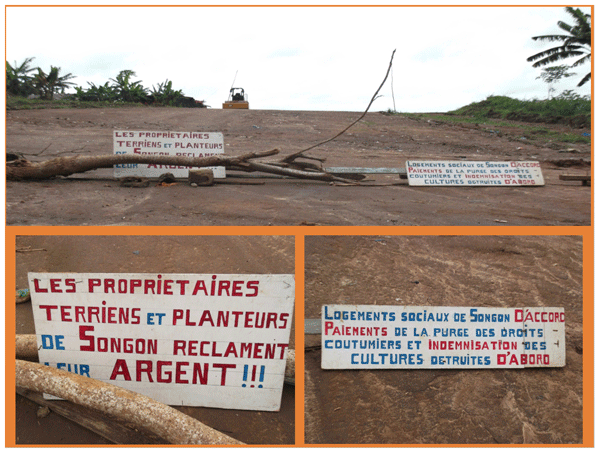
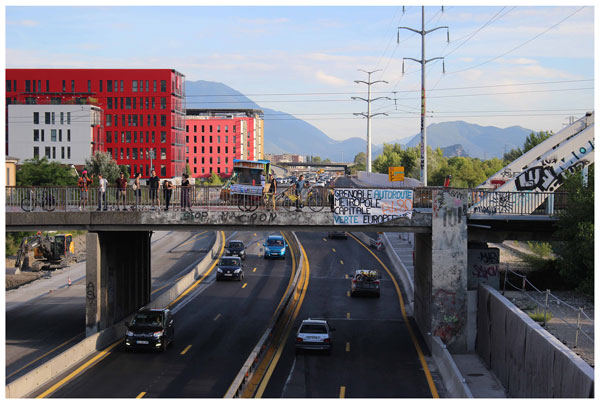
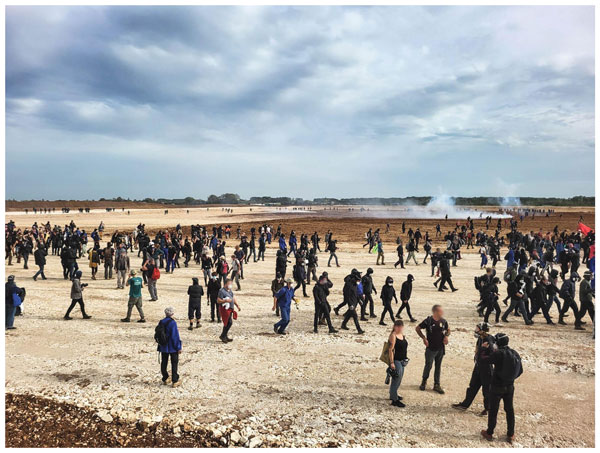
This theme issue is devoted to what we propose to call a "geography of action". It aims to contribute to the production of epistemological knowledge based on data and fieldwork in European, African, Latin American, and Middle Eastern countries which have recently seen conflicts reignite and new ones open up. To "learn from territories in conflict" (a title taken from two sessions organized during the 2023 colloquium of the Collège international des sciences territoriales) seems, indeed, important and provides a heuristic approach for nurturing a geography of action that we see as resulting from successive inflections of action-related geography: the instrumental geography of the early twentieth century that "served first and foremost to wage war" (Lacoste, 1977); the empiricist geography of the 1940s–1950s that wanted to avoid any compromising with imperialist and totalitarian states (Sorre, 1957; Brennetot, 2011); the geography involved in political action and urban planning until the mid-1980s; and the social geography which, as part of a quest for "spatial justice" (Harvey, 1973; Soja, 2011), positioned itself against the effects of neoliberalism (Pile and Keith, 1997; Sharp et al., 2000; Drozdz, 2016). Today, it is in a context of political, economic, socio-territorial, and environmental crises that geographers who approach their field differently (Hérin, 1999) and worry about what they "leave behind" (Valentine, 2005; Copans and Adell, 2019) position themselves. To this end, the articles presented in this theme issue tackle conflict situations which, whatever their duration, scope, or level of violence, become sources of learning and social mobilization (Featherstone, 2009; Nicholls, 2009; Pailloux and Ripoll, 2019). They also show that these mobilizations take place in a variety of spatial configurations (Sewell, 2001; Combes et al., 2016) that are or become objects of social demands. The forms of action analysed are those of the parties directly involved in the conflict or those of the populations affected by it: spontaneous or collectively structured. The contributions to this theme issue finally demonstrate how politicians, institutions, and citizens can "learn" – in emergencies or over time – from the socio-spatial dynamics that run through the territories in conflict and how the arbitrations that regulate them can be part of empowerment logics (Groom and Webb, 1987; Friedman, 1992; Jouve, 2006) or authoritarian forms of resolution (Blot and Spire, 2014; Michalon, 2020).

Bautès, N. and Marie dit Chirot, C.: Pour une géographie sociale de l'action, Carnets de géographes (online), 4, http://journals.openedition.org/cdg/982, 2012.

Blot, J. and Spire, A.: Déguerpissements et conflits autour des légitimités citadines dans les villes du Sud, L’Espace Politique (online), 22, 2014-1, http://journals.openedition.org/espacepolitique/2893, https://doi.org/10.4000/espacepolitique.2893, 2014.

Brennetot, A.: Les géographes et la justice spatiale: généalogie d'une relation compliquée, Annales de géographie, 2, 678, 115–134, 2011.

Combes, H., Garibay, D., and Goirand, C.: Les lieux de la colère. Occuper l'espace pour contester, de Madrid à Sanaa. Karthala, Questions Transnationales, ISBN 9782811115371, https://www.cairn.info/les-lieux-de-la-colere--9782811115371.htm, 2016.

Copans and Adell: Introduction à l’éthnologie et à l’anthropologie, Armand Colin, 304 pp., 2019.

Drozdz, M.: L’espace du discours. Médias et conflits d’aménagement à Londres, L’Espace géographique, 45, 3, 232–248, 2016.

Featherstone, D.: Resistance, Space and Political Identities, Londres, Wiley Blackwell, 240 pp., 2008.

Friedman, J.: Empowerment. The Politics of Alternative Development, Blackwell, Cambridge, 208 pp., 1992.

Groom, A. J. R. and Webb, K.: Injustice, empowerment, and facilitation in conflict, International Interactions, 13, 3, 263–280, https://doi.org/10.1080/03050628708434678, 1987.

Harvey, D.: Social Justice in Spatial Systems, in: R. Peet (Ed.), Geographical Perspectives on American Poverty, Antipode Monographs In Social Geography, 1, Worcester, 87–106, 1972.

Hérin, R.: Pour une géographie sociale critique et responsable, in: Ch. Chivallon, P. Ragouet, and M. Samers, Discours scientifiques et contextes culturels, Maison des Sciences de l’Homme d’Aquitaine, Talence, 129–139, 1999.

Jouve, B.: Éditorial. L'empowerment: entre mythe et réalités, entre espoir et désenchantement, Géographie, économie, société, 8, 1, 5–15, 2006.

Lacoste, Y.: La géographie, ça sert, d'abord, à faire la guerre, Ed.: Maspero, Paris, 187 pp., 1976.

Michalon, B.: The Handbook of Displacement, https://doi.org/10.1007/978-3-030-47178-1_16, 2020.

Nicholls, W.: Place, networks, space: theorising the geographies of social movements, Transaction of the Institute of British Geographers, 34, 1, 78–93, 2009. Pailloux, A.-L. and Ripoll, F.: Géographie(s) des mobilisations, Carnets de géographes (online), 12, 2019, http://journals.openedition.org/cdg/5142, https://doi.org/10.4000/cdg.5142, 2019.

Phlipponneau, M.: Géographie et action. Introduction à la géographie appliquée, A. Colin, 227 pp., 1960.

Pile, S. and Keith, M. (Eds.): Geographies of Resistance, London & New York, Routledge, 315 pp., 1997.

Sewell, W. H.: Space in Contentious Politics, Ronald, R. Aminzade, Jack A. Gladstone, Doug McAdam, Elisabeth J. Perry, William H. Sewell, Sindey Tarrow, and Charles Tilley (Eds.): Silence and Voice in the Study of Contentious Politics, Cambridge, Cambridge University Press, 51–88, 2001.

Sharp, Joanne P., Routledge, Paul, Philo, Chris, and Paddison, Ronan: Entanglements of power. Geographies of Domination/Resistance, London & New York, Routledge, 300 pp., 2000.

Soja, E.: Seeking Spatial Justice, Minneapolis, University of Minnesota Press, 288 pp., 2010.

Sorre, M.: Rencontres de la géographie et de la sociologie. Petite Bibliothèque Sociologique Internationale dirigée par Armand Cuvillier, A 4, Paris, 213 pp., 1957.

Valentine, G.: Geography and ethics: moral geographies? Ethical commitment in research and teaching, Progress in Human Geography, 29-4, 483–487, 2005.

Download citations of all papers

05 Dec 2025
L'expérience située d'un public et de ses problèmes: écologie d'un rassemblement à Sainte-Soline (France)
Romain Cazaux
Geogr. Helv., 80, 509–525, https://doi.org/10.5194/gh-80-509-2025,https://doi.org/10.5194/gh-80-509-2025, 2025
Short summary
CC BY 4.0