
the Creative Commons Attribution 4.0 License.
the Creative Commons Attribution 4.0 License.
 | 19 Mar 2026
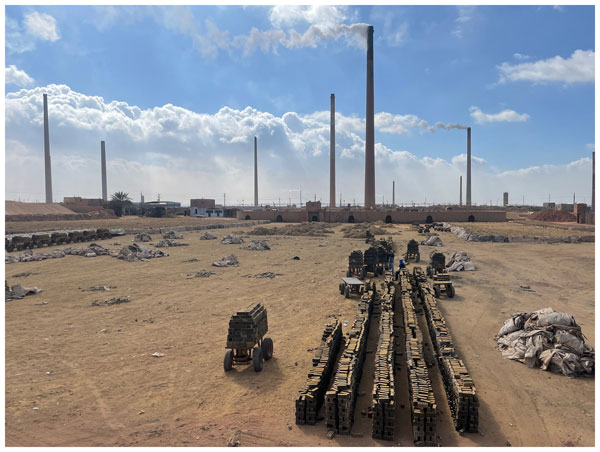
Declining red brick factories in Greater Cairo (Egypt): unveiling military-led urbanization through its productive peripheries
Corten Pérez-Houis
In the context of demographic and urban growth, Cairo's urbanization is mainly approached in terms of housing and development. By focusing on the Egyptian capital from the point of view of one of its main building materials – red brick – this article calls for a politicization of the planetary urbanization theory and for better analysis of productive peripheries' diverse trajectories. Despite the omnipresence of this material in urban spaces, red brick production has been declining since the late 2010s. Using a qualitative methodology based on interviews conducted throughout the red brick supply chain and the analysis of satellite images, this article aims to examine the contemporary transformations of the Egyptian capital from its industrial peripheries. This round trip between brick factories and the city, centred on red brick, allows us to explore and politicize the entanglement between production practices, technical standards and planning policies, which underpin the capitalist and military-led urbanization of Cairo.
- Article
(18334 KB) - Full-text XML
- BibTeX
- EndNote


There's a landscape like this, ugly, all-over Egypt. (…) On the Ring Road, in Cairo, all the buildings, all the buildings are red brick! (Adib, 2019)
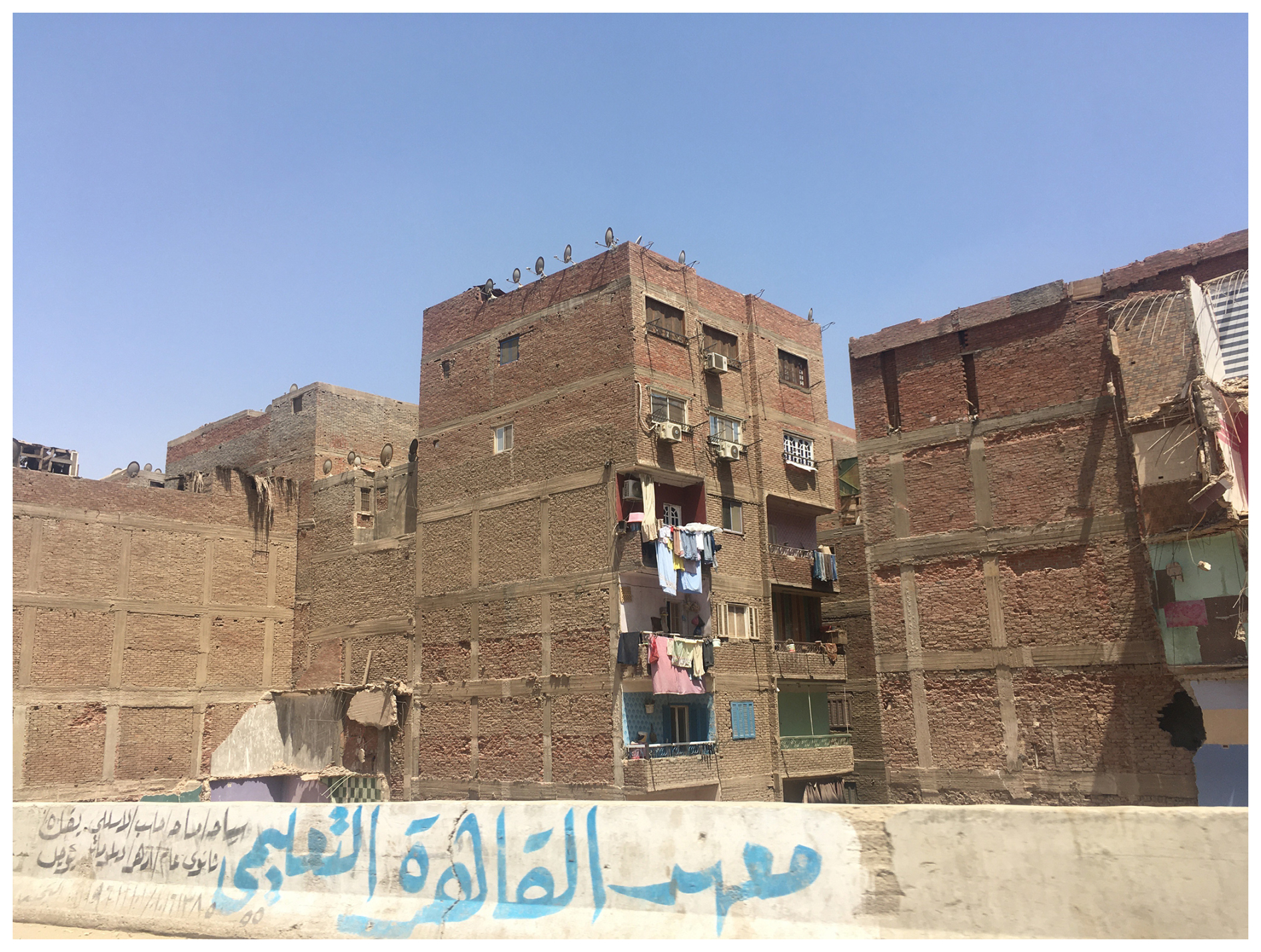
This is how Amr Adib, presenter of the very popular show al-Hekaya, refers to residential buildings visible from Cairo's Ring Road (Adib, 2019). Red bricks are indeed part of everyday cityscapes in the Egyptian capital (Fig. 1). This derogatory discourse follows on the promulgation, in January 2019, of a presidential decree making it mandatory to repaint these façades according to a harmonized code at the national level, assigning a different colour to each governorate. In the Prime Minister Mustafa Madbuly's eyes, this decree aims to give a unified face to urban spaces and to eradicate red brick buildings that reflect an “uncivilized” image  of the city (Khalil, 2019; Gomaa, 2019). In this discourse, a building material is associated with the representation of an informal and non-modern city. Although stigmatization of informal neighbourhoods is far from being new and specific to Abdel Fattah al-Sisi's regime (Denis, 2006), this paper proposes dealing with this discourse by questioning the processes of economic marginalization to which red brick sector, producing a ubiquitous and dominant material in urban production, is subjected.
The place of red brick in the Egyptian capital city must first be studied in the light of the urban context in which it is set. The Cairo metropolitan area, which is home to around 25 million inhabitants, expands as much as it fragments. Its historic site is on the banks of the Nile, but the capital city has gradually expanded in two main directions: into the Nile valley in the form of largely self-built neighbourhoods and towards the desert margins in the form of new towns and luxury compounds (Sims, 2011; Zaazaa, 2022). After the upsurge of illegal red brick constructions during the 2011 revolution (Tarek, 2020), the coming to power of Field Marshal Abdel Fattah al-Sisi in 2014 marked a turning point in the application of planning policies, characterized by an accelerated militarization (Sharp, 2022; Wahba, 2024). On the one hand, the pace of the destruction of informal settlements and of the rehousing of its inhabitants in peripheral social housing has intensified.1 On the other hand, the construction since 2016 of the New Administrative Capital, 45 km east of Cairo, is following a common will from successive Egyptian governments to promote construction outside the Nile valley, and it epitomizes these urban policies at an unprecedented scale. This urban development policy, largely inspired by the Dubai model, reflects the project of making Cairo and this new capital the showcases of the authoritarian regime and thus to impose itself more on the regional and even international scene (Elsheshtawy, 2006; Stadnicki, 2017; Beier and Elmouelhi, 2023).
These two main forms of urbanization have been widely studied from the point of view of their architecture (Angelil and Malterre-Barthes, 2016; Ghodbane, 2020), urban development policies (El Kadi, 1987; Elsheshtawy, 2006; Sims, 2011), housing conditions (Shawkat, 2020), lifestyle transformations (Denis, 2006), local mobilizations (El-Husseiny, 2025) and the productive economic activities that take place there (Florin, 2010). In this article, I propose to decentre the point of view by adopting that of the building materials that make up the city and, more specifically, that of production infrastructures which are located on the edges of the Nile valley and away from central areas of Greater Cairo (Fig. 2). This analysis draws on the diverse works which focus on the links of dependence and subordination between urban peripheries and central areas, especially through the planetary urbanization theory (Brenner and Schmid, 2015). Yet, although this approach might lead one to consider urbanization as a homogenization process, I rather dwell on scholarship that highlights the fragmentation and hierarchization produced by capitalist urban production (Kanai, 2014; Arboleda, 2016). This framework leads to a complexified approach to a centre-periphery relationship, based on a more precise and materially anchored reading of power struggles underpinning contemporary urbanization.
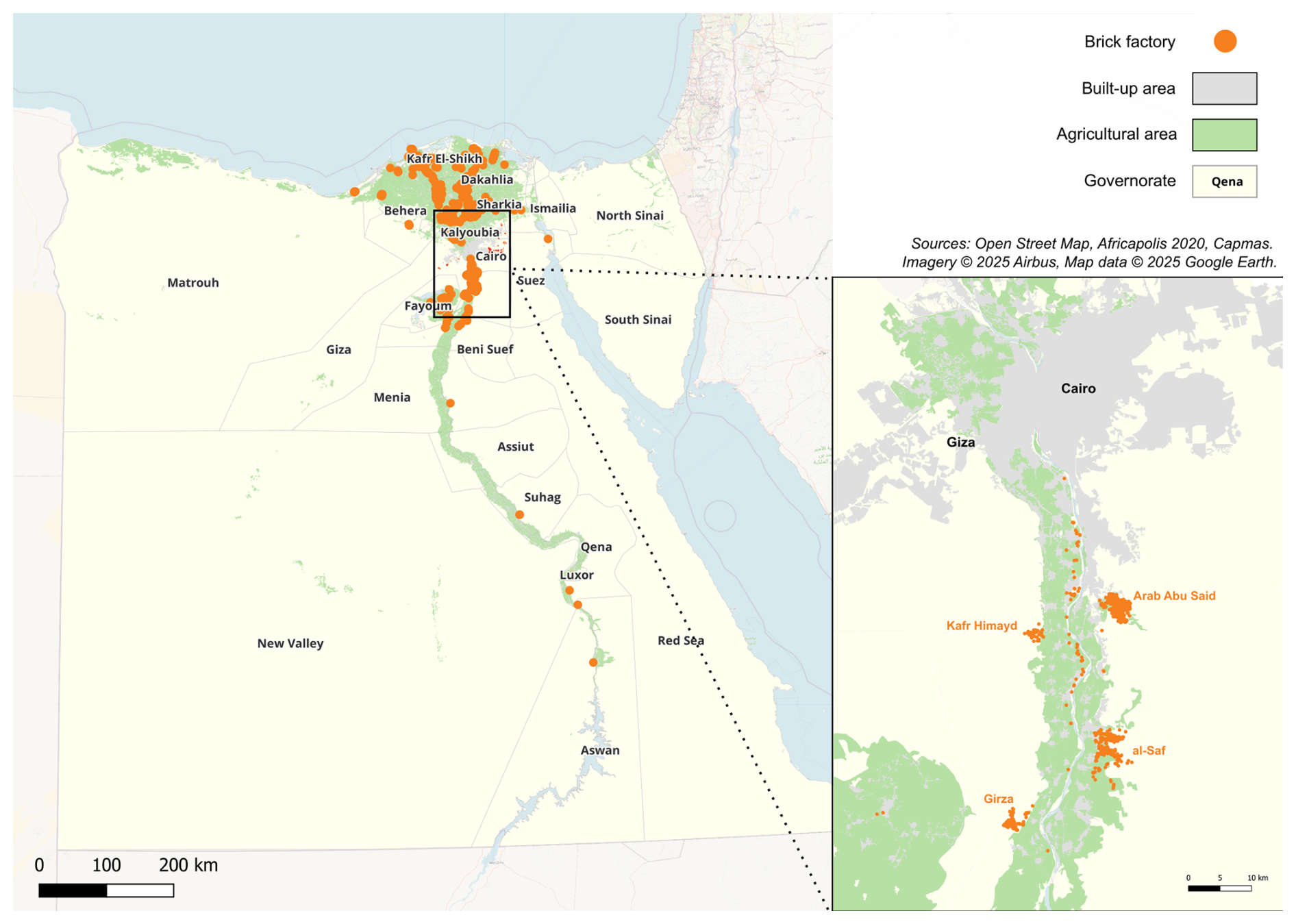
Figure 2Distribution of working brick factories in Egypt.
Following on from this literature, I thus start from the hypothesis that the peripheral industrial zones for the production of building materials are a relevant place of observation for analysing contemporary urban transformations in Cairo. Their evolution, that of the city and national development policies appear to be interdependent. More specifically, I focus on the case of the red brick sector, which has been going through a major crisis since the end of the 2010s. I argue that this economic marginalization is linked with recent evolutions in the building materials and construction market but also with current urban policies. Indeed, despite the rapid urban extension of the Cairo capital, the red brick sector appears to be experiencing great economic difficulties. The concept of marginality, already used in the Egyptian context to study people, activities and spaces that are excluded from national development (Bush and Ayeb, 2012; Wahdan, 2012) is here mainly mobilized to reflect this progressive economic decay of the red brick production sector, particularly linked to the development of concrete blocks.
Thus, the article proposes studying the decline of red brick and the growing share of concrete blocks on the market as reflecting the power relationships that underpin the contemporary urban fabric in Greater Cairo. The joint analysis of the sites of building material production and construction sites shows that the opposition between two main forms of city is both replayed in the industrial peripheries, between red brick and concrete blocks, and to be qualified as red brick producers experience variegated fates regarding these evolutions of the construction sector. The paper relies on a decentring of the point of view, from already deeply studied informal neighbourhoods and gated communties towards industrial urban peripheries and building materials production. This framework invites us to take an interest in the articulation between the image of the city and its materiality (Stadnicki, 2019). In al-Sisi's regime, the mainstream institutional critical discourse against the red brick façades, informal settlements and its inhabitants (Denis, 2006) more generally becomes effective. Then, this paper deals with its contrasting material effects on urban and industrial spaces located on the edges of Greater Cairo.
The article is based on a mainly qualitative study conducted during 5 and a half months of fieldwork between February 2021 and June 2022. During this period, and in a globally tense context for qualitative research in Egypt (Ghiglia, 2022), I have visited eight red brick factories (one in the Delta region, one in Fayoum Oasis, three in the Nile valley close to Cairo and three in industrial areas south of the capital city) and conducted 50 informal and semi-structured interviews of 90 min on average. These interviewees include 11 who are red brick factory owners; 7 who are building material sellers; and 15 who are architects, urbanists and construction site managers. In addition to these interviews with actors involved at different stages of the red brick supply chain, the analysis is based on the use of satellite images and numerous photographs to visually document the daily production of the city. This methodology makes it possible to respond to the difficulties of accessing both qualitative and statistical data on red brick production and urbanization in Cairo, in the context of a strong authoritarian regime limiting more critical research work (Fahmy, 2022).
After a review of the literature demonstrating the relevance of studying the political economy and ecology of building material production, in order to reflect on the planetary urbanization theory, I briefly describe the contemporary geography of the Egyptian red brick. The observation of the diversity of situations in these peripheral industrial zones, between active, abandoned or in reconversion factories, will provide a better understanding of the growing competition coming from concrete blocks. This phenomenon partly explains the current decline in red brick production. Beyond the discourses only focusing on the technical characteristics of the two materials, it is important to see that the two sectors operate according to opposing socio-technical regimes (resources, infrastructure, location, etc.). Finally, I qualify the opposition between two building materials and two cities by arguing that the crisis in the production of red bricks results from broader capitalist urbanization processes led by a military-based Egyptian Government. The will to modernize the built environment of Greater Cairo eventually leaves some red brick producers at the margins of the construction sector, while promoting the standardization of this material and the concentration of its factories.
The processes of urban sprawl and socio-spatial marginalization are widely debated in geography. The theory of planetary urbanization, formulated by Brenner and Schmid (2015), seeks to re-examine them by readapting Henri Lefebvre's call to study urbanization beyond the city limits (Lefebvre, 1970). This extended urbanization approach firstly allows us to go beyond the idea that this process is only visible in central urban spaces or, rather, that cities are the only incarnations of urbanization (Arboleda, 2016). It calls for a broadening of the field of analysis, for example, by integrating rural areas that are becoming hybrid, as proposed by Kanai (2014) or through the study of the effects of urbanization on rural and forest areas around the Brazilian metropolis of Manaus. More broadly, the postulate of planetary urbanization makes it possible to integrate “operational landscapes” as the product of urbanization-related processes. All productive activities, often excluded by urban analysis (such as the industrial zones for the production of red bricks in Cairo), are thus studied in conjunction with the processes of extended urbanization. This is what Arboleda (2016) proposes, for example, in the case of the extraction of mineral resources in South America. He sees these spaces as “resulting from an escalating international demand for raw materials” and as “particular morphological expressions of market-driven processes of urbanisation” (Arboleda, 2016:96).
However, this theory of planetary urbanization is also the subject of criticism, particularly because of its homogenizing and ethnocentric character. For Schindler (2017), the blurring of urban/rural boundaries and the shift from a study of cities to a study of planetary urbanization “risks recentring the essence of urbanity to the North Atlantic” (Schindler, 2017:2). Taking up Jennifer Robinson's critique of the hegemonic notions of development and modernity in urban studies (Robinson, 2006), Schindler sees in this theory an approach that is too globalizing and disconnected from the daily practices of city dwellers. As for Jaglin (2014), a “contemporary global urban condition” (Brenner et al., 2011) appears to be a “pure abstraction given the diversity of the processes and outcomes of urbanisation” (Jaglin, 2014:437).
From this critical perspective, several studies are less categorical and recognize the interest of the planetary urbanization approach while calling for its politicization and complication. For example, in his study of the mining sector in South America, Arboleda (2016) proposes going beyond the “extension/concentration” couple of processes that Brenner and Schmid (2015) place at the centre of their analysis of planetary urbanization. To do this, he borrows from Henri Lefebvre the triptych homogenization/fragmentation/hierarchization of space, which allows him to study the joint processes of spatial integration and the functional division of space (Arboleda, 2016). Thus, planetary urbanization does not only result in an extension of the city beyond its limits and a concentration of activities in certain poles but also in an increased fragmentation and hierarchization of the different urban spaces. This more confrontational reading sees the development of extractivism as an expression of capitalist urbanization, as it has been shown in other territorial contexts and other types of resources (Bridge, 2015; Dawson, 2021). In the same way, Kanai (2014) calls for further politicization of the theory of planetary urbanization by showing that this form of urbanization reinforces inequalities, and selects actors and infrastructures. Following on from Keil's (2018) argument on the need to decentre urban theory towards the analysis of the suburbanization of cities, this paper builds on an understanding of urbanization processes from the “exploded centralities and reconfigured peripheries” of cities (Keil, 2018:504), in connection with the unequal geography produced by the development of capitalism.
While retaining the multiple interests in the theory of planetary urbanization, this paper proposes, following Arboleda (2016), to see the industrial and urban peripheries of Cairo as affected by the processes of fragmentation and economic selection. Extended urbanization does not mean a standardization of urban spaces and should on the contrary allow us to re-examine the cities' peripheries with their peculiarities and their role, often fundamental for the urban centre itself. These peripheries are not to be seen only as a continuation of the centre's growth but also as autonomous fragments of the city (Keil, 2018). More specifically, I propose focusing on the productive industrial and peripheral areas by decentring the attention from housing, living places and construction sites on which most of the studies concerning extended urbanization have concentrated. If I do not really engage with an analysis highlighting the agency of materials (Simone, 2004; El-Husseiny, 2023; Fontein and Smith, 2023), I rather argue for a revaluation of production spaces and activities' role in urbanization. Thus, at the intersection of these different readings of the planetary urbanization theory, this paper proposes an analysis of the apparent economic marginalization of the red brick factories and industrial areas, which can be considered as fragments of the “urban explosion” (Keil, 2018) and places from which urban fabric has to be understood.
To do this, I suggest an approach to urban analysis based on building materials and its production. This approach is at the intersection of a diversity of works that focus on the materiality of the city and the social processes that structure it. Starting from anthropology's interest in the relationship to objects and their monitoring (Appadurai, 1986; Marcus, 1995; Cook, 2004; Tsing, 2017), it is a question of adopting a political reading of the materiality of urban societies. This is what Schindler proposes, for example, when he states that “political economy and materiality are always already co-constituted in Southern cities” (Schindler, 2017:10). Without restricting itself to a specific spatial context, a special issue of the journal City & Society, coordinated by Pilo' and Jaffe (2020), aims to deepen this approach through the notion of “political materiality”. For these authors, it is a question of understanding “urban politics as a socio-material coproduction” (Pilo' and Jaffe, 2020:8). This is illustrated through many examples such as electricity bills in Rio de Janeiro (Pilo', 2020), skyscrapers in Angola (Gastrow, 2020) and the construction of a mosque in Amsterdam (Verkaaik, 2020). In the same way, through the place of terracotta crafts in India, Nicolas Bautès studies the “place and role of local economies in the current phase of capitalism, and in spaces that are undergoing rapid transformations” (Bautès, 2022:15). In this work, materiality is thus understood in its ordinary, political and economic interaction with the urbanization processes.
Among these different inputs through materiality, building materials have been subject to particular attention, especially because of the interdependence between their production and the urbanization process, which they directly feed. Several branches of literature, such as metabolism (Augiseau, 2017; Mongeard, 2017; Bastin, 2022) and urban political ecology (Myers, 1999; Fry, 2013; Dawson, 2021), engaged with it in various territorial contexts and by adopting mixed methodologies. Focusing on the metabolic functioning of cities leads to complexifying planetary urbanization theory by paying attention to the consumption, transformation and rejection of matter and energy flows between rural and urban areas. Following on from the call to politicize the analysis of these flows and its regulation (Desvaux, 2019), this article applies a metabolic reading to Greater Cairo in order to highlight the materiality of urban production and the diverse roles of productive peripheries. More specifically, it is in line with recent work that articulates a multiscalar geography of building materials with an analysis of the different processes related to urban growth (sprawl, verticalization, fragmentation, etc.). This is what Choplin (2019, 2020, 2023) proposes through the study of the role of the cement bag in the constitution of the Accra–Lagos Corridor, Ravelli (2017) with the example of the Spanish brick industry or Mishra (2020) through his analysis of “urbanisation through brick kilns” in the Delhi region. All this research shows that building materials are objects at the intersection of planning policies, ordinary practices, norms, urban forms and varied spaces. Moreover, I argue that building material producers offer a specific point of view on extended urbanization, which differs from the ones who plan and build housing or infrastructures in these peripheries, or the ones who seek to live in it. Building material producers see the development of urban peripheries as economic opportunities on which their activity fully depends. Then, they are mainly concerned by the selling of big quantities of materials by energy and raw material prices and by other competitors' development on the market; however, they also appear to be very dependent on the implementation of planning policies and planners' choices regarding the use of building materials. In theory, the more the city expands, the best it is for their economic growth. Nonetheless, this case study on red brick production in Cairo shows that their activity can also suffer from the urban policies implemented. The paper both follows on from several studies on housing and gated communities in Southern cities' suburbs and in Cairo specifically, and offers a renewed point of view on this extended urbanization from the industrial peripheries that directly and materially feed it. This approach, which calls to a politicization of the planetary urbanization theory, structures the study of the place of red bricks and brickworks in the contemporary transformations of Cairo, which I aim to develop in the rest of the article.
The red brick industry in Egypt is structured around several stages and places: the extraction of fossil clay materials in quarries on the edge of the Nile valley; the moulding, drying and firing of red bricks in industrial brickworks; the transporting by truck, sometimes passing through an intermediary point of sale, but more often delivered directly to the buyer; and the construction site on which the bricks are used. For this article, I will focus mainly on the production and construction phases because they are privileged places of observation of contemporary transformations of the sector.
Nationally, red brick production is concentrated in the north of the country, in the Nile valley around the capital and in the delta (Fig. 2). While the production techniques and the form of the infrastructure remain the same, two types of factories must be distinguished according to their location, which also reflects their recent history. The first type of brick factory is that of isolated factories, located on former agricultural land near the Nile (Fig. 3). Based on a survey of Google Earth satellite images in 2022,2 there are 656 isolated factories functioning in the whole country. But, since the 1980s and 1990s, a significant portion of the factories has been relocated from the valley to its desert margins, in specialized industrial concentrations (Fig. 4). These four areas (Arab Abu Said, Kafr Himayd, al-Saf and Girza) are all located south of Cairo, 35 to 65 km from the city centre (Fig. 2). A total of 624 functioning factories belong to this second type. This difference in location can be explained by the recent history of the sector, marked by the High Aswan Dam construction in the 1960s and by a consequential change in raw material imposed by the Egyptian Government in the 1980s (MacKenzie, 1985; Fouda, 2001; Biswas and Tortajada, 2012). The use of the silt from the Nile was forbidden and replaced by fossil clays – also known as shale or  in Arabic. Therefore, all the brick factories located closer to Cairo's urban areas have been abandoned, destroyed or converted to other functions such as garage areas.
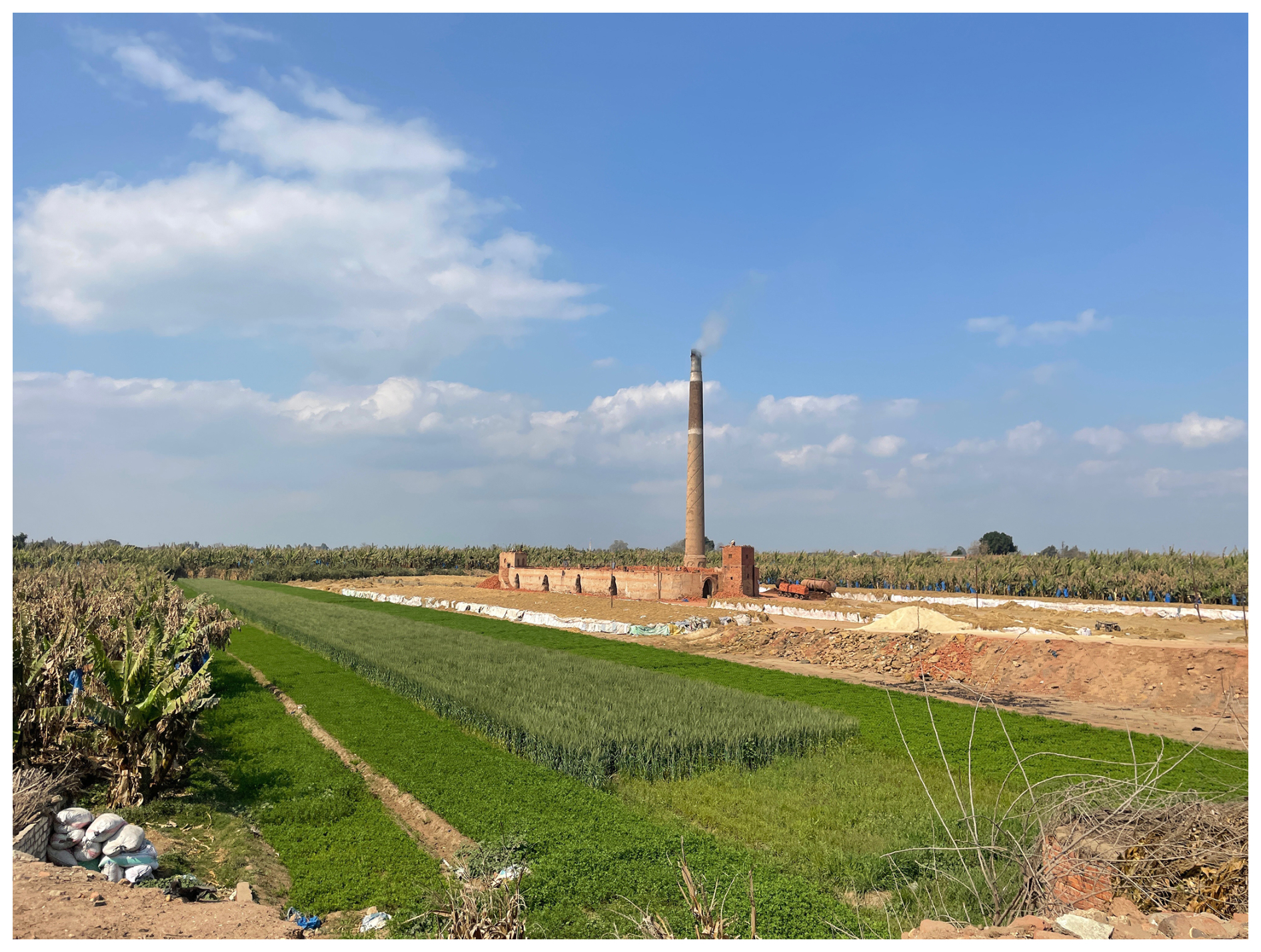
Figure 3An isolated factory in the middle of agricultural fields on the banks of the Nile, located to the north of Cairo, March 2022.
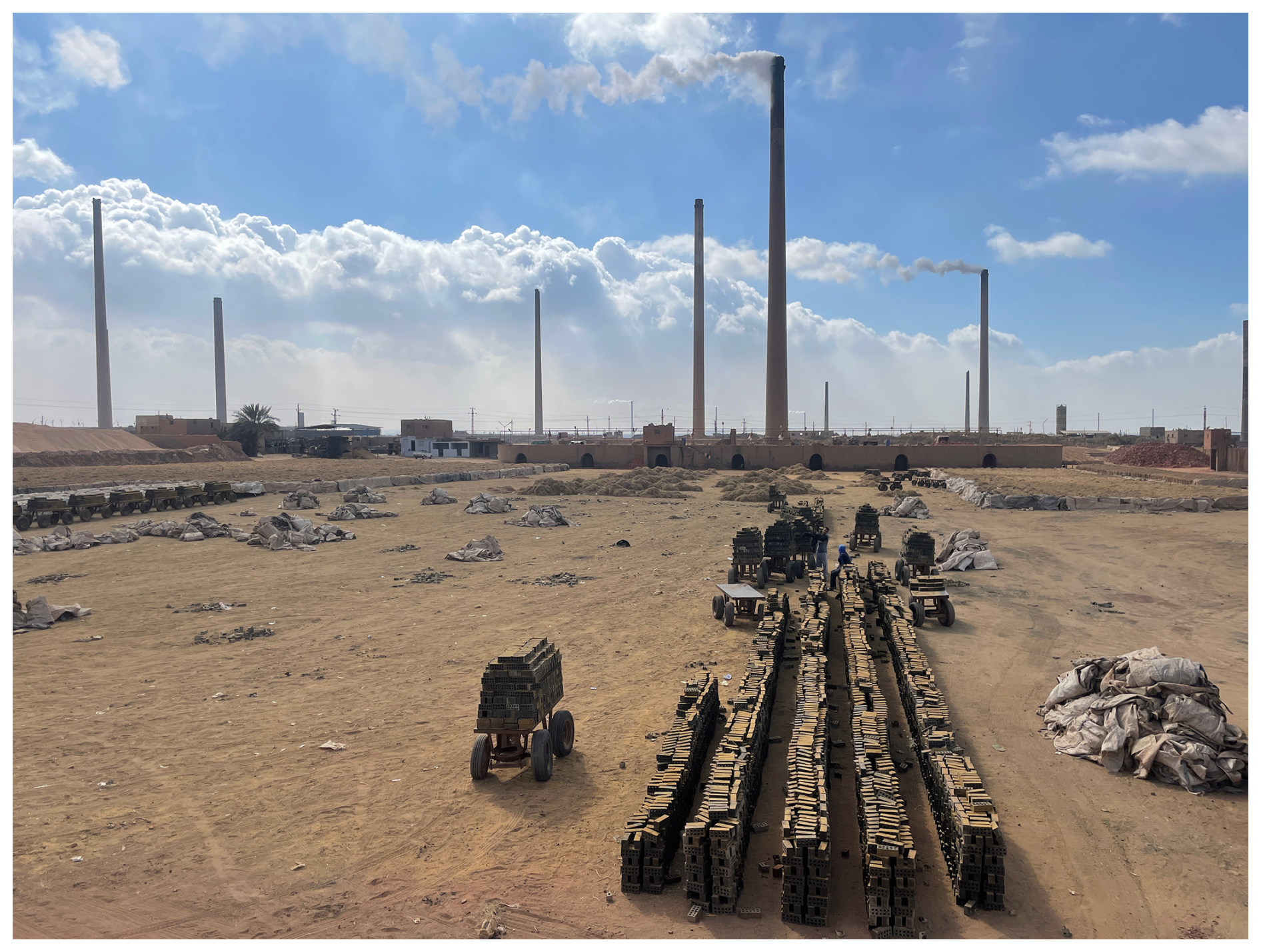
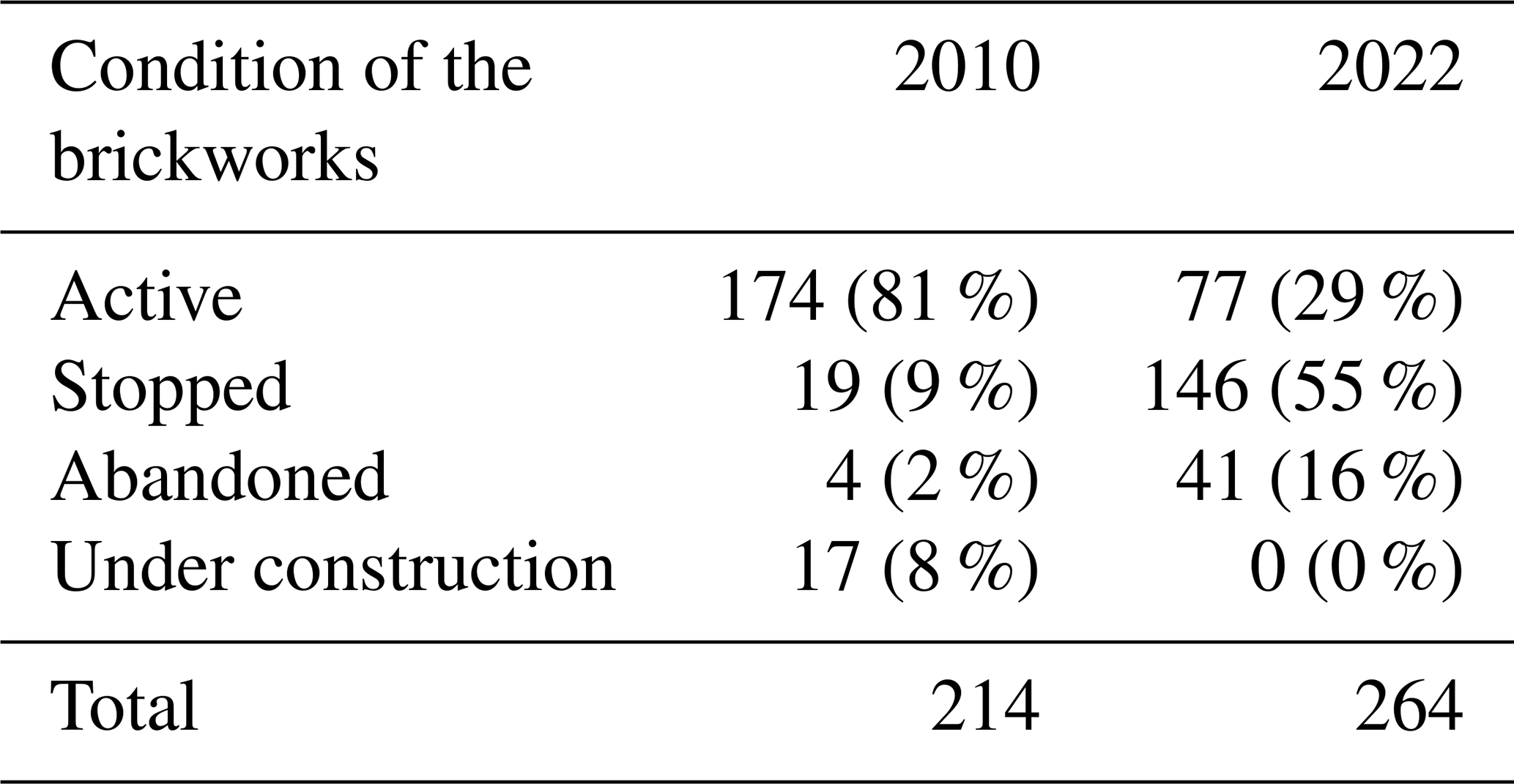
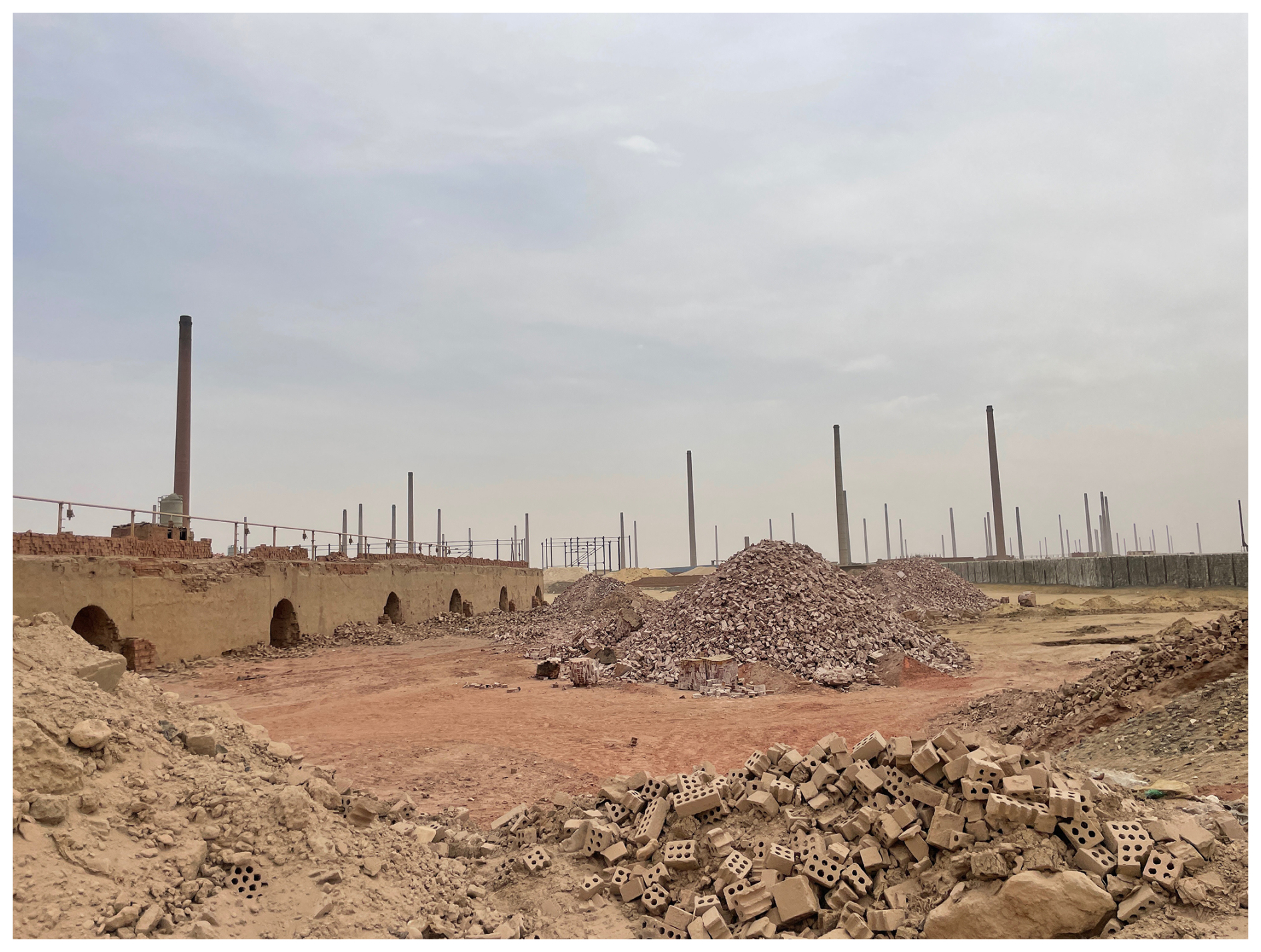
Beyond this relocation process away from central urban areas, which dates back to Nasser's project of modernization and industrialization (Pérez-Houis, 2024), one can now observe an economic marginalization of red brick factories. Contrary to the materials studied to analyse urbanization in West Africa, for example (Archambault, 2018; Choplin, 2020), despite its apparent omnipresence, red brick seems to be produced less and less. This decline is reflected materially in the current status of production areas. There are many factories that have been closed or are even abandoned (Fig. 5). Thus, on a national scale, according to a survey personally carried out on 2022 satellite images, of the 1597 factories identified, 470 are active (29 %), 810 are at a standstill (51 %) and 317 are abandoned (20 %). These statistics reveal an industrial sector in great difficulty, as observed more specifically in the specialized area of al-Saf (Table 1). While its activity seems to be growing in 2010, with a low number of factories shut down and several under construction, the situation is quite different in 2022. The quit rate (55 %) and the abandonment rate (16 %) are significantly higher. On the ground, this translates to many deserted factories.
Table 1Distribution of brick kilns in the al-Saf area according to their operational status between 2010 and 2022. Source: Google Earth.
Another sign of red brick decline can be seen in the growth of concrete blocks. According to a red brick sales manager, the market in 2012 was dominated by red bricks at 80 % compared to 20 % concrete blocks (interview, June 2022). But the share of bricks gradually decreased from 2015 onwards in favour of concrete blocks, with a 50–50 balance now being reached according to a major brick producer in Arab Abu Said (interview, February 2020). This market upheaval is visible both on construction sites and in industrial areas. The use of concrete blocks can be observed primarily in a large portion of the construction sites of the New Administrative Capital (Fig. 6) but also on smaller construction sites in rural areas, such as those of the government's Haya Karima (“Dignified Life”) presidential initiative, which aims to renew infrastructure in rural Egyptian areas. For example, in the Fayum Oasis, small concrete blocks are combined with red bricks in the construction of a public building (Fig. 7).
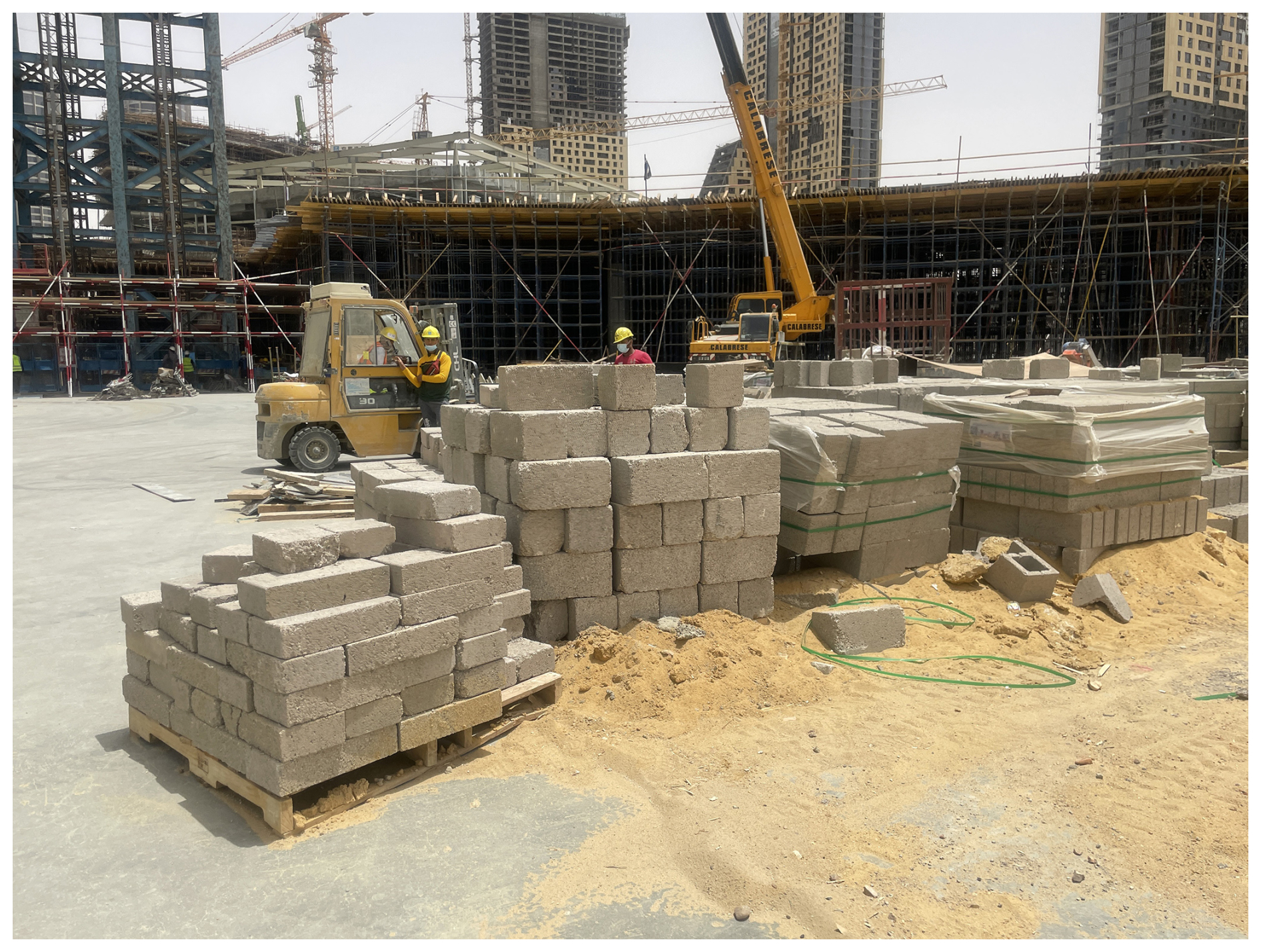
Figure 6Concrete blocks used on the construction site of the business district of the New Administrative Capital, May 2022.
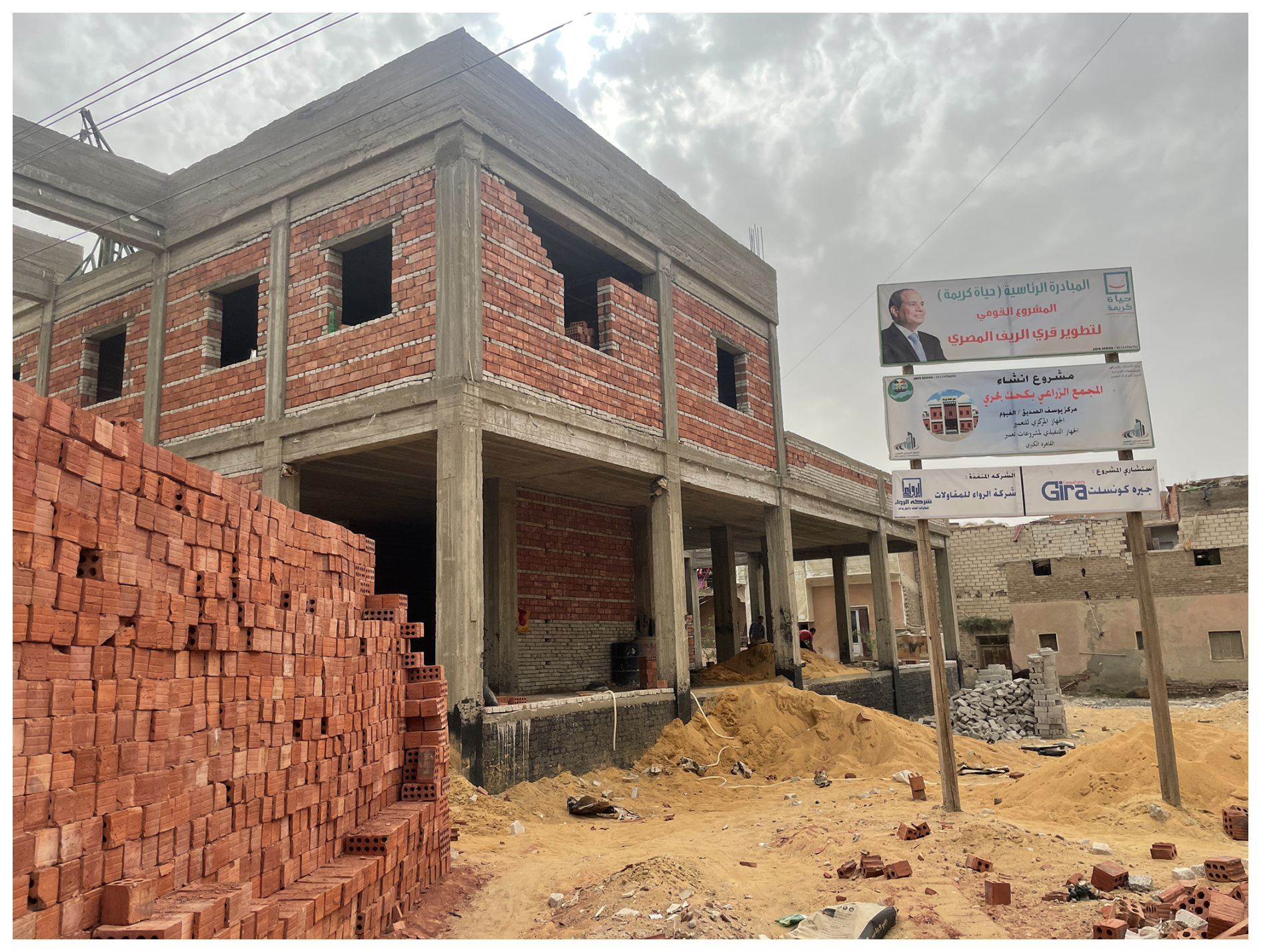
Figure 7Red bricks and small concrete blocks intertwined in the construction of a public building in the Fayoum Oasis, May 2022.
However, the material transformations linked to the growth of concrete blocks are mainly visible in industrial areas. In addition to the closure or abandonment of brick factories, and even if the rise of other construction materials is not new, red brick producers have observed a recent proliferation of concrete block factories since 2020, as indicated by this owner of a brick factory located in the al-Saf area:
Concrete blocks appeared in the early 2000s, but factories have developed over the past 2 years. There are now between 20 and 40, whereas there were only 5 before (interview, February 2022).
This transition is indeed visible in the appearance of new concrete block production units but also in the conversion of some brick factories into concrete block factories, such as this one located in al-Saf (Fig. 8). How can this growth of concrete blocks at the expense of red brick be explained?
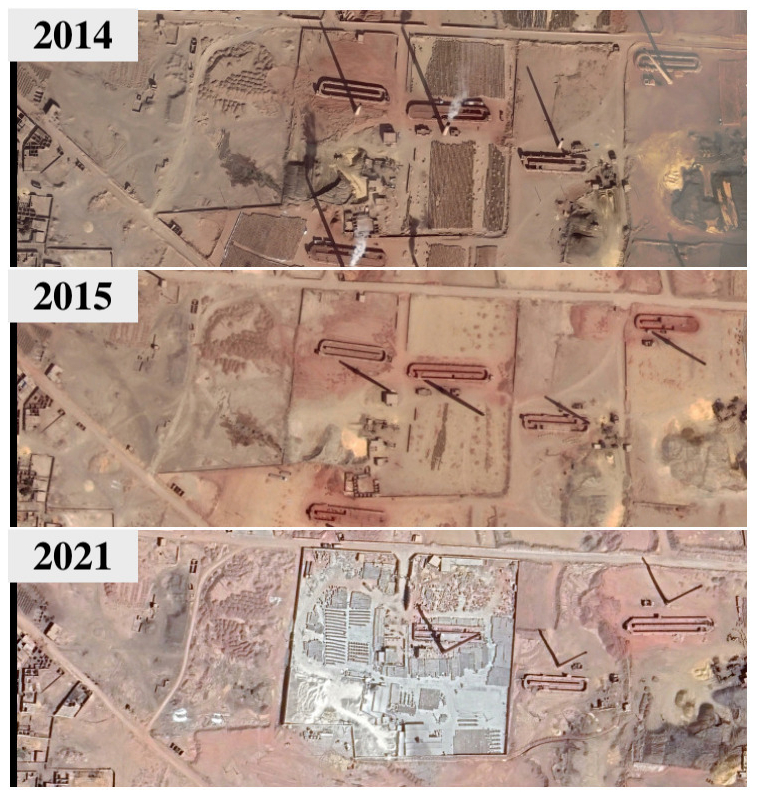
Figure 8From 2014 (top) to 2021 (bottom), the conversion of a brick factory into a concrete block one in the industrial zone of al-Saf. Imagery © 2025 Maxar Technologies, 2025 CNES/Airbus, Map data © 2026 Google Earth.
To understand what is at stake in these industrial margins and how these developments reflect a transition in urban production, we must first look back at what distinguishes these two construction materials on a technical level. While red brick and concrete block are both mainly made up of raw materials extracted from quarries (fossilized clay for brick, aggregates and sand for concrete blocks), their production methods differ. The brick is dried, then fired at high temperatures in kilns, whereas the concrete block is only moulded and dried in the open air, without the need for combustion. For some stakeholders, this makes it more environmentally friendly, unlike red brick, whose production conditions are regularly criticized for their environmental and health consequences (Fouda, 2001; Higazy et al., 2019; El-Hamawy, 2020). This not only takes into account the fact that concrete blocks are still 30 % cement – a material whose manufacture is local in Egypt but requires large amounts of energy and leads to high air pollution in the country (Ramadan, 2014) – but also on a global scale the fact that this industry accounts for about 7 % of CO2 emissions (AFP, 2021).
Apart from this environmental issue, the two materials are mainly compared in the Egyptian context on criteria of efficiency and solidity. According to several interlocutors who met during the survey, the concrete block provides better thermal insulation and better resistance to humidity than red brick because of its large cavities. According to an engineer working on the construction site of the New Administrative Capital's CBD, concrete block is preferred for the construction of large towers because of its lighter weight and greater strength than red brick (interview, May 2022). This material is also marketized for its effectiveness. The production of concrete blocks is indeed much quicker than that of red brick. The absence of combustion makes the process faster; drying the concrete block in the open air takes only one day in summer and two in winter, whereas the production cycle of red brick, from initial mixing to firing, is 20 to 25 d. The large dimensions of concrete blocks (40×20 cm compared to 25×12 cm for the standard dimensions of red brick) also make construction faster. This makes it possible to construct buildings more quickly, which is a significant asset in the contemporary urbanization of Cairo, and more particularly in the construction of new peripheral cities. A red brick producer I met north of the Egyptian capital identified time as an important parameter in the projects carried out by the government of Field Marshal al-Sisi:
In general, they are in a hurry. In all areas. Projects that used to take 3 to 5 years are now finished in 1 year. Since 2014, everything has been done quickly. It's good for development, it's fast, but everything is done at a fast pace now with this man (interview, May 2022).
The technical differences in insulation or solidity are reinforced by this temporal parameter, which plays an important role in the growth of concrete blocks, to the detriment of red brick. This line of explanation also makes it possible, following the work on “sociotechnique” (Akrich, 1987; Bastin, 2022), to address these technical issues at the interaction of more political choices and contexts. The decline of the red brick appears to be the consequence of a series of urban and economic policies carried out by al-Sisi's government since he came to power in 2014. These are structured by a strategy formulated by successive governments in Egypt since the 1970s but which became increasingly concrete under al-Sisi's regime: limiting the self-construction of residential neighbourhoods in the Nile valley and developing new towns on the desert margins (Sims, 2011). Beyond the continuous extension of the agglomeration in the form of gated communities and mega-projects such as the New Administrative Capital, this logic has recently resulted in a series of decrees gradually banning individuals from building in urban areas.3. Only the government and large private developers can open construction sites (Al Hiwar TV, 2022). This policy of controlling access to building permits has direct consequences for the red brick industry. Historically, this material has been massively used by individuals and small to medium construction companies because of its high availability, unlike concrete blocks, which are used more by large public and private actors. A seller of building materials I met in Cairo distinguishes several segments in the construction market:
Question: How is the brick and concrete block market at the moment?
Answer: Do you see the story of individuals who stop building? Those who suffer the most are the red brick producers. Those who are around Badrashin, Helwan … They worked with the segment of individuals and rural areas. Now, it's blocked by the government. They have problems. For concrete blocks, it's better because it works with the higher slices (interview, March 2022).
The current difficulties of the red brick industry would therefore be partly linked to the halt in construction by individuals in urban areas. Although this binary analysis of urbanization between individuals building informally and public actors endorsing large-scale projects has to be qualified, this diagnosis is shared by several Arab Abu Said red brick producers interviewed by the Egyptian media al-Borsa (Ahmed and Atta, 2019). According to them, the only active projects are now those carried out by the government or by private developers, and the latter favour concrete blocks over red brick. In the same report, one of them testified to a turnaround by public actors: “We used to rely on national projects, but the NUCA [New Urban Communities Authority]4 has forbidden the supply of red bricks”. A seller of concrete blocks claims that the government explicitly encourages the use of concrete blocks on its construction sites and has stipulated that “75 % of the New Capital must be made of concrete blocks” (interview, May 2022). Although this figure could not be verified or found in official documents, the consequences of this promotion of one material over the other are directly visible in industrial areas. An observation shared by this same seller: “The brick factories have been closing for about 4–5 years … Since the beginning of the New Administrative Capital actually” (interview, May 2022). Unlike the red brick producers, many of whom have had to close their factories, his company inaugurated an automatic concrete block factory in 2021 in the south of the al-Saf area (Fig. 9). It supplies materials to the country's largest construction companies, such as Hassan Allam and Talaat Mostafa Group, but also to public actors to supply their mega-projects in New Alamein and the New Administrative Capital. The employee confirmed this growth in the share of use of concrete blocks in government construction sites: “In the diplomatic district of the New Capital, there are 35 developers and we work with 25 of them” (interview, May 2022).
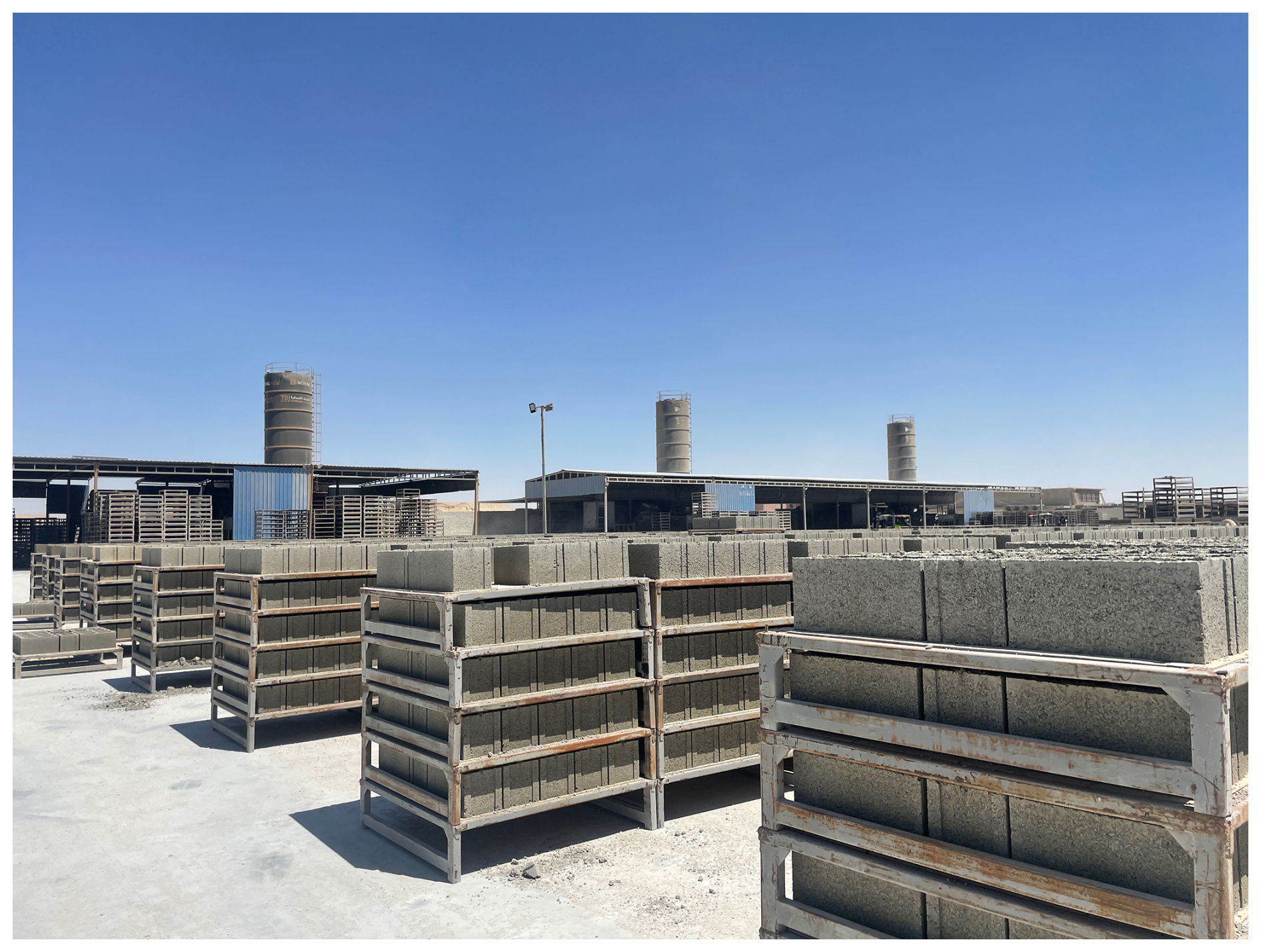
Figure 9A recently inaugurated automatic concrete block plant, located south of al-Saf, May 2022.
The direct involvement of public actors in the promotion of concrete blocks, to the detriment of red brick, is finally visible in the role played by military institutions. Egypt has the particularity of an army that is strongly involved in the domestic economy, as it has been analysed in various works (Abul-Magd, 2017; Amar, 2018; Sayigh, 2019). The construction and building materials sectors are no exception. While the army has invested particularly in the inauguration of cement factories (Boukhari, 2018), it is also directly involved in the production of concrete blocks. Without having factories the size of the large concrete block company, military players sometimes set up production units directly on the sites they supervise.
The installation of these factories on the site reveals the involvement of military actors in the production of cement and concrete blocks but also a major difference between the infrastructures of the two construction materials and the spatial organization they imply. Both red brick and concrete block are produced at the edges of urbanized areas, in specialized industrial areas. As mentioned earlier, however, the brick comes from fixed factories, located near the clay quarries and occupying a large area – 25 000 m2 on average, due to the size of the kiln and the drying space of the bricks. The infrastructure required for the production of concrete blocks is less cumbersome, relying only on silos to mix the different raw materials, an assembly line and a drying area (Fig. 10). Thus, while brick factories cannot be moved due to their dependence on a massive kiln and localized clay resources, concrete block factories can keep up with construction sites. A red brick producer I met north of Cairo sums up this structural difference between the two materials as follows:
Construction does not take place where there are brick factories. In the New Capital and the new towns, they use concrete blocks. There are factories on the site (interview, March 2022).
This possibility of installing factories on the site considerably reduces transport costs, which remain significant in Egypt. This gives a comparative advantage to concrete blocks and reinforces the spatial and economic marginality of the brick kilns compared to the new centralities that these construction sites constitute. This is also what a salesperson working in a large concrete block company said: “If a developer has 10 buildings in the same place, he will build a [concrete block] factory on site to reduce transport expenses” (interview, May 2022). The concrete block factories can thus follow the urbanization front that advances into the desert and farther and farther away from the Nile valley – the New Administrative Capital is located more than 45 km from the centre of Cairo. On the contrary, the distance between brick kilns and the active construction sites is increasing. Yet, one has to keep in mind that concrete block factories use cement which is produced in different factories located in the desert margins of the Nile valley and far away from urban areas, which extends the urban footprint all the more beyond the city.

While calling for an interest in these industrial margins, the theory of planetary urbanization must thus be nuanced by the identification of these processes of segmentation and selection in urban and productive spaces. The opposition between these two building materials can be explained by a variety of factors, at the same time technical, economic, geographical and political. It reflects a divergence of sectors, actors, practices and spaces. On the one hand, red brick is produced by a large number of factories spread across the country and mainly used by small to medium companies for the construction of residential buildings in the Nile valley and delta. On the other hand, the concrete block is produced by a smaller number of industrialists, in factories sometimes located on construction sites, and used mainly by public actors and large private developers in the construction of new towns. This analysis, while remaining relevant for the stakeholders in these building material sectors, must nevertheless be qualified. The economic marginalization of red brick can be explained by factors that also affect certain concrete block factories, which invites us to look at the selection processes among these different producers.
In order to refine the analysis of what is at stake in the industrial peripheries of the Egyptian capital, it is necessary to nuance the opposition between the concrete block and red brick supply chains. While the field survey showed that the former was growing rapidly to the detriment of the latter, more contrasting situations are also observable. This is the case, for example, of a concrete block producer whose factory is located in al-Obour, an industrial zone northeast of Cairo, which has been experiencing great difficulties in accessing the construction market for several years. Indeed, while his company used to work with large private developers, his factory is now partly shut down and the “market is a bit asleep at the moment” (interview, February 2022). According to him, this is directly explained by political choices by the government which imposes “indirect control” on the concrete block sector and the construction sector in general. In other words, public and military actors favour certain producers and certain construction areas over others. This is also what an architect confirmed about the construction sites of the New Administrative Capital, which are controlled by military actors:
In the New Capital, all the materials are provided by the military, cement, bricks, sand. (…) And everyone deals with it (interview, February 2022).
The growing importance of these public and military stakeholders in the construction market, in conjunction with a limited number of private investors and developers, is associated with new modes of operation that make a selection among the producers of building materials. The owner of the concrete block factory in al-Obour, for example, stopped working with government actors because they imposed a credit payment system on him:
They ask me to provide the concrete blocks and say that they will pay me later, when the site is finished, but that doesn't suit me, I have to pay bills (interview, February 2022).
Conversely, some red brick producers are managing to maintain their activity – still 29 % of brick factories are active in the al-Saf area and 47 % in the Kafr Himayd area. In the same way as for concrete blocks, a selection operates among them according to their ability to access the most active and material-demanding sites, those of the government, as this materials seller I met in Cairo said: “There are still brick producers, but they all sell to government projects. Us, we are the ordinary people” (interview, March 2022). Although the construction sites of the New Administrative Capital or other new towns are largely based on the use of concrete blocks, there are still many red bricks, produced by a small number of industrialists who have been able to adapt to the new requirements of the market.
The gradual economic marginalization of red brick factories is therefore not the result of public, economic or development policies that would directly target this industry. The ban on building for private individuals is primarily aimed at the expansion of informal settlements, but it indirectly affects red brick producers. In the same way, the selection among them is not intentionally desired by governmental actors, but it is the consequence of a demand for norms and standards. Indeed, the red brick producers who are able to maintain their activity are mostly those who have their material tested by technical institutes and thus obtain a quality certificate. These certifications, which relate to resistance to humidity or compression, or to the dimensions of the brick, for example, are not a new procedure but are required by the consultants and architects in charge of the large construction sites on the desert outskirts of Cairo, which are becoming the only active ones around the capital city. But carrying out these tests represents a significant cost, which amounts to an economic selection among producers, as one of them, the owner of a factory north of Cairo, confirmed: “Only people who have the means can continue to produce” (interview, March 2022). Compliance with standards is thus demanded by contractors and put forward as a selling point by some producers who have access to them (Fig. 11), although it is still considered as useless administrative procedures by those who mainly sell to individuals and small construction companies.
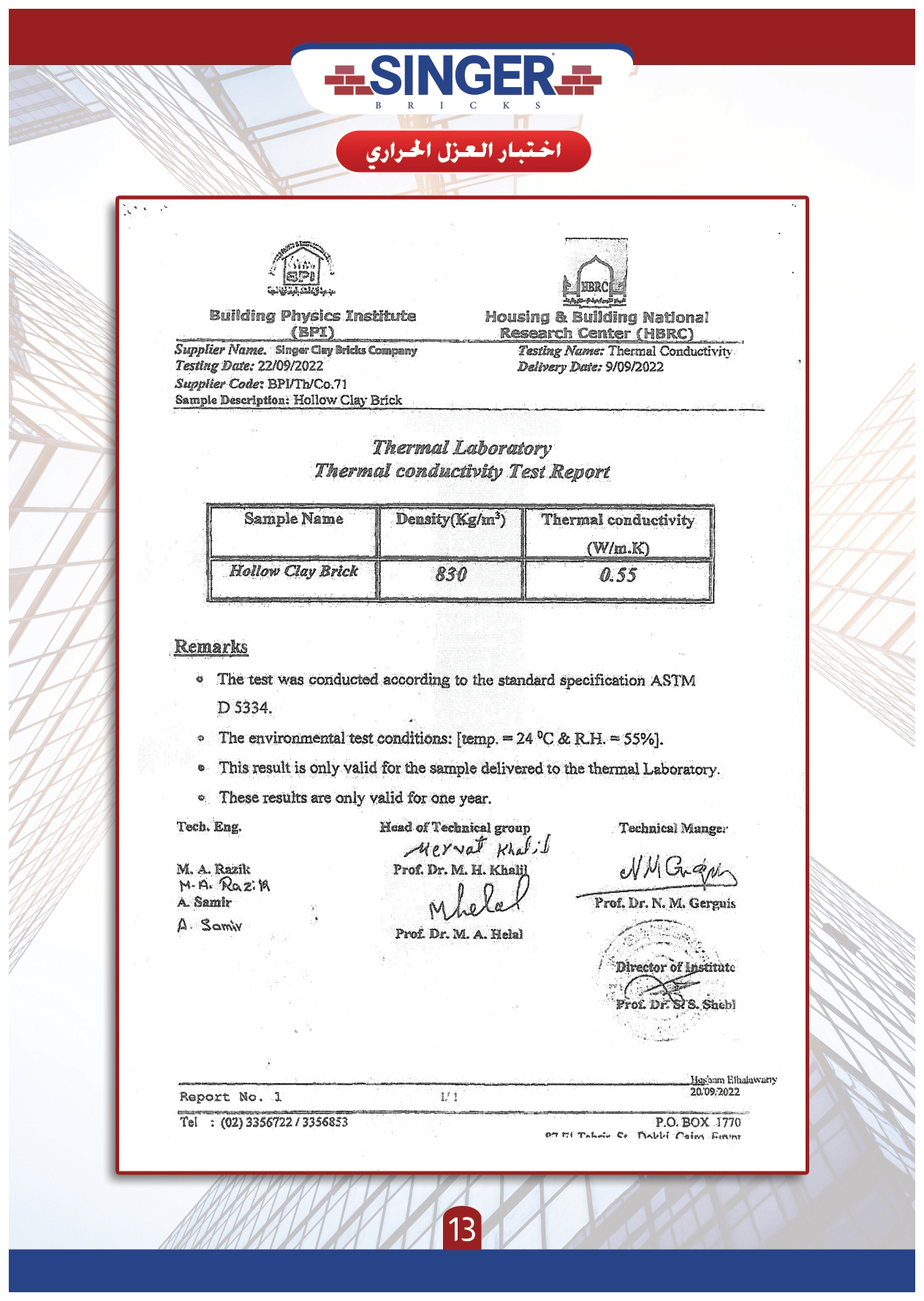
Figure 11A thermal insulation certificate highlighted in the sales catalogue of a red brick production company. © Singer Bricks.
This socio-economic selection thus leads to a transformation of the red brick sector, which is now tending towards an increasingly oligopolistic structure. With 470 active brick factories out of 1280 in working order in the country (37 %), including 220 out of 626 (35 %) in industrial zones, the number of producers has decreased, but the industry has not disappeared. Those who manage to adapt to the new requirements of the market do so by grouping together in industrial groups or by calling on resellers who pool their production and systematize the performance of technical tests. This is the case, for example, of the company al-Shorok Supplies, which specializes in the purchase and resale of red bricks. According to an employee I met in Cairo, he acts as an intermediary between a selection of certified producers, for whom he places orders according to demand, along with large construction companies such as Orascom or Rowad (interview, June 2022).
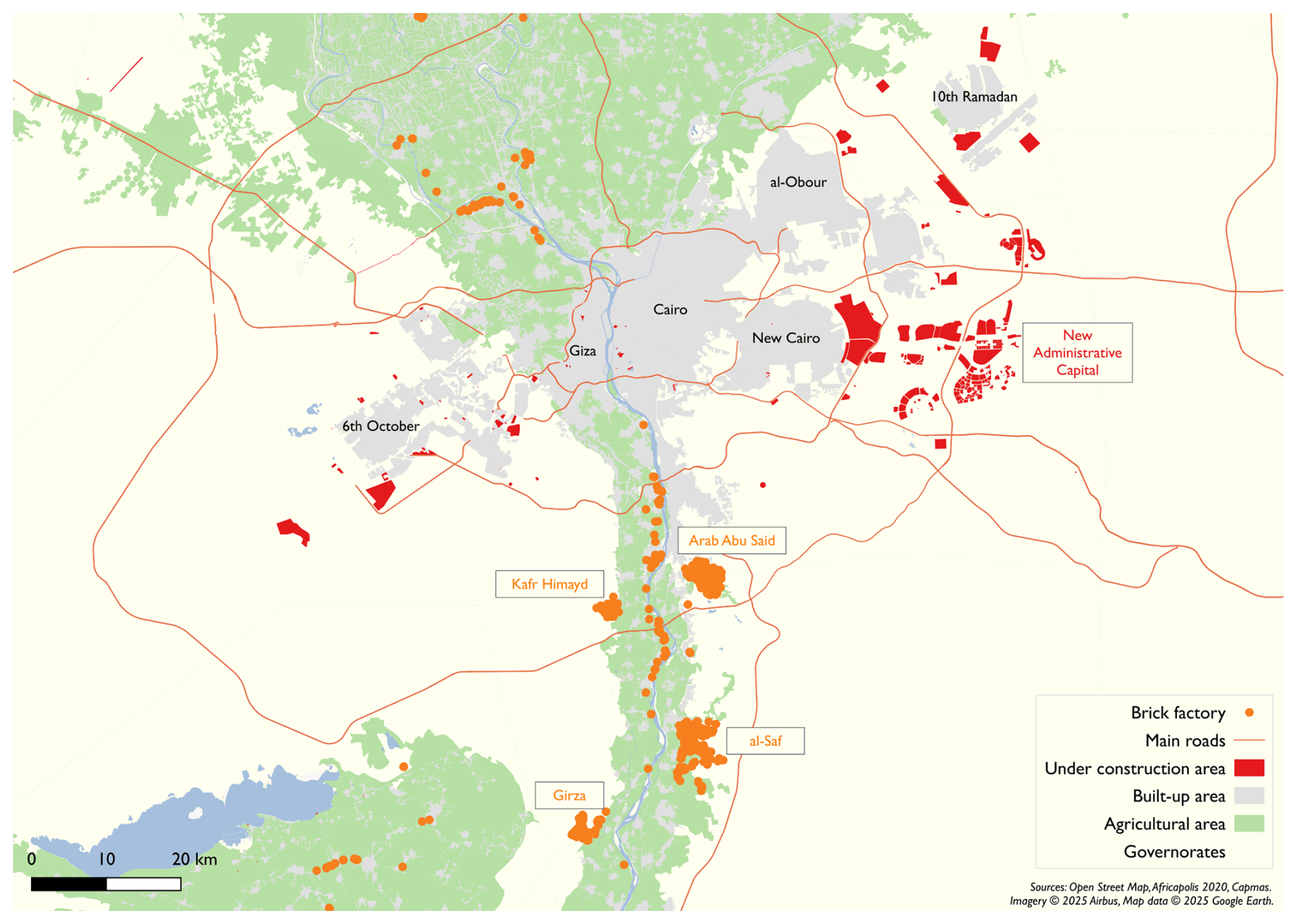
Figure 12From industrial zones to construction sites in the New Administrative Capital – a new axis of development?
This exclusion of small to medium producers through the standardization of production and the economic capacities of industrialists therefore transcends the opposition between red brick and concrete block. It mainly reflects the stranglehold of public and military actors on the construction sector and indirectly on the materials sector. This is what a major producer based in the Arab Abu Said area described in 2018 in response to an interview with the media Youm 7 (Diaa, 2018) According to him, the construction market was dominated until 2014 by the private sector at 80 % compared to 20 % for the public sector. But from that date, corresponding to al-Sisi's rise to power, the proportions were reversed. Also in this interview, this producer said that this negatively affects the red brick industry because it breaks with the flexibility of the negotiations that used to take place with each construction company. Public and military actors impose fixed prices, standards and a mode of operation, causing the gradual interruption of the activity of hundreds of indebted producers. More than a simple opposition between two materials, it is power relationships between different actors and modes of city production that leads to an economic fragmentation of peripheral industrial spaces. These transformations are thus indicative of the promotion of a whole socio-technical, productive and constructive regime controlled by public and military institutional actors. Rather than a homogenized urban extension, they reflect an increasingly conflicting urbanization between distinct production and construction systems. Some monopolize most of the market to the detriment of others, who find themselves excluded in this conflictual urban production.
Beyond documenting the recent material, economic and landscape transformations of industrial zones at the edges of the Egyptian capital city, this article has sought to show the interest of an analysis of the extension of urban spaces, central or not, through the construction materials that feed it. In the case of red brick in Cairo, the high visibility and omnipresence of this material in the recent construction of the capital contrasts with the current economic marginalization of its production infrastructures. This process has been going on since the beginning of the factories' delocalization away from the urban areas and the Nile valley, but it is intensifying with the authoritarian urban policies implemented by al-Sisi's government and aiming at modernizing Cairo's image at an international level. Brick kilns are in fact subject to a capitalist selection process, based on technical principles of standardization but also on competition between producers in relation to a market that is increasingly controlled by government actors. The study of these processes of marginalization, at the interaction of norms, productive practices and modernization urban policies, led by a military-oriented government, makes it possible to qualify the phenomenon of planetary urbanization by showing its strong heterogeneity according to the spaces and actors involved. More precisely, this article is about going beyond the reading of peripheries as only subordinated and dominated places, serving the capitalist urbanization and its elites. By looking at the logistical and production areas that enable urban growth itself, it highlights the political struggles that underlie the processes of hierarchization and the selection of places, actors and economic sectors throughout the building material supply chains.
The article has shown the gradual exclusion of this material from the main active construction sites in Greater Cairo but also its permanence in urban spaces and the maintenance of a certain number of producers. Indeed, these transformations are part of a context in which Cairo's development is increasingly turning towards its desert margins. The policy of extension towards the desert is particularly visible for agriculture (Acloque, 2017, 2024) and urbanization (Sims, 2018; Adham, 2023; Lehmann, 2023; Rommel, 2023). The case of the production and use of building materials illustrates a similar logic. Already located on the outskirts of the Egyptian capital, industrial zones specializing in materials may be increasingly connected to urban spaces that extend both eastward and westward (Fig. 12). Thus, while economic activities have historically been centred around the Nile valley in Egypt, development axes may bypass these central spaces and directly connect urban and industrial peripheries. This logic of developing flows between peripheries is at the core of current industrialization policies led by al-Sisi's government. The forthcoming industrial city of Tarboul, the “Largest Investment Zone in the Middle East” (https://tarboul.com/, last access: 4 March 2026), is planned to be inaugurated on a 109 million m2 area to the east of the Fayoum Oasis. On its website, the industrial city is promoted for its proximity for variegated peripheral areas (New Administrative Capital, 6th October City, the Red Sea, Ain el Sokhna port and Helwan). Thus, these are no longer to be seen as repellents of urban centres, but, being considered by government actors as fronts of urbanization and industrial development, they could become new centralities. Yet, one could assume that most of the red brick producers will probably be bypassed by these new axes of economic development, which seem to rely on cooperation between governmental actors and large private companies; however, this would need further fieldwork in order to better ground these hypotheses.
Then, this case study highlights the importance of considering city edges, whether be it residential, industrial or office areas, in order to analyse the contemporary evolutions of urban production. Beyond the Egyptian context, it also argues for an overcoming of the debates on whether the planetary urbanization theory may be relevant to describe cities' transformation or not. Beyond defining what is urban and what is not, focusing on cities' materiality helps to identify who builds it and for whom. The focus on so-called urban peripheries mainly leads us to explain the ins and outs of economic marginalization processes. It highlights the importance of a precise analysis of the diverse material trajectories of productive peripheries, among which some might be declining, but some other still directly make capitalist urbanization possible. In other words, the issue is not only to consider if areas are urban or not, central or peripheral, but rather to study, from a material point of view, who is taking on urban production and who is excluded from it. Following on from previous works on cities' materiality in the Southern and Northern contexts, the paper argues for a needed politicization of the debates on planetary urbanization in order to better highlight the selection and marginalization processes that underpin urban production.
No data sets were used in this article.
The author has declared that there are no competing interests.
Publisher's note: Copernicus Publications remains neutral with regard to jurisdictional claims made in the text, published maps, institutional affiliations, or any other geographical representation in this paper. The authors bear the ultimate responsibility for providing appropriate place names. Views expressed in the text are those of the authors and do not necessarily reflect the views of the publisher.
I would like to thank the two special issue editors, Mosè Cometta and Giulia Scotto, for the rich scientific exchanges and for their trust and support from the symposium in July 2022 until the publication of this paper. I would like also to thank all the interviewees who dedicated time to answering my questions, to Antoine Fleury and his writing workshop participants, and to the reviewers and editors of the journal who contributed to the improvement of the paper. This research also benefited from scientific support from the ANR SpacePol (Space and Politics in the Capital City), supervised by Gülçin Erdi.
This paper was edited by Hanna Hilbrandt and reviewed by two anonymous referees.
Abul-Magd, Z.: Militarizing the Nation: The Army, Business, and Revolution in Egypt, Columbia University Press, https://doi.org/10.7312/abul17062, 2017.
Acloque, D.: Recomposition des acteurs et des espaces agricoles égyptiens: enjeux politiques, socio-économiques et alimentaires, Revue d'Économie Régionale & Urbaine, Juin, 457–482, https://doi.org/10.3917/reru.173.0457, 2017.
Acloque, D.: Conquérir le désert: recomposition des acteurs et des territoires agricoles en Égypte, Karthala, Paris, ISBN 9782384091638, 2024.
Adham, K.: The Power of the Speculative Image: On Branding Desert Developments and Selling Cairo's Urban Future, Studies on Modern Orient, 479 pp. https://doi.org/10.1515/9783110741100-028, 2023.
Adib, A.: The red brick houses present a gloomy and ugly landscape and I am happy with the presidential initiative to repaint them in one color, al-Hikaya, https://www.youtube.com/watch?v=NkkL-cxQ55I (last access: 4 March 2026), 2019.
AFP: Le béton-ciment, troisième “pays” des émissions de gaz à effet de serre, GEO, https://www.geo.fr/environnement/le-beton-ciment-troisieme-pays-des-emissions-de-gaz-a-effet (last access: 18 March 2026), 2021.
Ahmed, S. and Atta, A.: The turn of al-Borsa … The silence of the chimneys reveals the crisis of the brick kilns in Arab Abu Said, al-Borsa, https://alborsaanews.com/2019/10/21/1256520 (last access: 4 March 2026), 2019.
Akrich, M.: Comment décrire les objets techniques?, Techniques & Culture. Revue semestrielle d'anthropologie des techniques, https://doi.org/10.4000/tc.863, 1987.
Al Hiwar TV: Construction ban in Egypt for ten years except for government projects, Al Hiwar TV, https://www.youtube.com/watch?v=o-LAoXXUmOM (last access: 4 March 2026), 2022.
Amar, P.: Military Capitalism: In Egypt and Brazil, the foundations of a terrifying new “para-populism”are taking shape at the intersection of international finance, mega-construction, and military rule, NACLA Rep. Am., 50, 82–89, https://doi.org/10.1080/10714839.2018.1448601, 2018.
Angelil, M. and Malterre-Barthes, C. (Eds.): Housing Cairo-The informal response, Ruby Press, ISBN 9783944074177, 2016.
Appadurai, A. (Ed.): The Social Life of Things: Commodities in Cultural Perspective, in: 1st Edn., Cambridge University Press, https://doi.org/10.1017/CBO9780511819582, 1986.
Arboleda, M.: Spaces of Extraction, Metropolitan Explosions: Planetary Urbanization and the Commodity Boom in Latin America, Int. J. Urban Reg. Res., 40, 96–112, https://doi.org/10.1111/1468-2427.12290, 2016.
Archambault, J. S.: `One beer, one block': concrete aspiration and the stuff of transformation in a Mozambican suburb, J. R. Anthropol. Inst., 24, 692–708, https://doi.org/10.1111/1467-9655.12912, 2018.
Augiseau, V.: La dimension matérielle de l'urbanisation: flux et stocks de matériaux de construction en Ile-de-France, Thèse de doctorat, Paris 1, https://theses.fr/2017PA01H111 (last access: 17 March 2026), 2017.
Bastin, A.: Des métabolismes territoriaux en transformation? Gouvernance des matériaux de chantier et expérimentations de nouvelles valorisations en Ile-de-France et dans la région de Bruxelles, Thèse de doctorat, Paris, Institut d'études politiques, https://theses.fr/2022IEPP0020 (last access: 17 March 2026), 2022.
Bautès, N.: Penser les espaces de l'artisanat ordinaire en Inde. Matérialités, configurations et politique, Soutenance d'HDR, Université Paris 1, Panthéon-Sorbonne, 289 pp., https://shs.hal.science/tel-04215122 (last access: 17 March 2026), 2022.
Beier, R. and Elmouelhi, H.: Constructing Legitimacy through Pro-poor Housing? Branding Cities in Egypt and Morocco as “Slum-free,” in: Branding the Middle East, edited by: Wippel, S., De Gruyter, 459–478, https://doi.org/10.1515/9783110741100-027, 2023.
Biswas, A. and Tortajada, C.: Impacts of the High Aswan Dam, Springer, 379–395, https://doi.org/10.1007/978-3-642-23571-9_17, 2012.
Boukhari, J.: La mainmise des généraux sur le ciment égyptien, Orient XXI, https://orientxxi.info/magazine/mainmise-des-generaux-sur-le-ciment-egyptien,2767 (last access: 4 March 2026), 2018.
Brenner, N. and Schmid, C.: Towards a new epistemology of the urban?, City, 19, 151–182, https://doi.org/10.1080/13604813.2015.1014712, 2015.
Brenner, N., Madden, D. J., and Wachsmuth, D.: Assemblage urbanism and the challenges of critical urban theory, City, 15, 225–240, https://doi.org/10.1080/13604813.2011.568717, 2011.
Bridge, G.: The Hole World: Scales And Spaces Of Extraction, New Geogr., 2, 43–48, 2015.
Bush, R. and Ayeb, H.: Marginality and Exclusion in Egypt, Bloomsbury Publishing, 258 pp., ISBN 9781780320847, 2012.
Choplin, A.: Produire la ville en Afrique de l'Ouest: Le corridor urbain de Accra à Lagos, L'information géographique, 2, 85–103, 2019.
Choplin, A.: Matière grise de l'urbain. La vie du ciment en Afrique, Métis Presses, Genève, 256 pp., ISBN 978-2-940563-74-6, 2020.
Choplin, A.: Building concrete futures: materiality and urban lives in West Africa, Africa, 93, 20–39, https://doi.org/10.1017/S0001972023000104, 2023.
Cook, I.: Follow the Thing: Papaya, Antipode, 36, 642–664, https://doi.org/10.1111/j.1467-8330.2004.00441.x, 2004.
Dawson, K.: Geologising Urban Political Ecology (UPE): The Urbanisation of Sand in Accra, Ghana, Antipode, 53, 995–1017, https://doi.org/10.1111/anti.12718, 2021.
Denis, E.: Cairo as Neoliberal Capital? From Walled City to Gated Communities, in: Cairo Cosmopolitan, edited by: Singerman, D. and Amar, P., American University in Cairo Press, 47–71, ISBN 9774249283, 2006.
Desvaux, P.: Pour une approche qualitative du métabolisme urbain. L'exemple des voies métaboliques des déchets plastiques au Caire (Égypte), Flux, 116–117, 147–160, https://doi.org/10.3917/flux1.116.0147, 2019.
Diaa, M.: The President of the Red Brick House: 40 % of Factories Are Shut Down After Energy and Raw Materials Price Increase, Youm 7, https://shorturl.at/7hpuh (last access: 4 March 2026), 2018.
El-Hamawy, M. A.: An Evaluation of the Usage of Environmentally Friendly Bricks for Housing in Egypt, Mémoire de recherche, Degree of Master of Science in Integrated Urbanism and Sustainable Design, Ain Shams University and University of Stuttgart, 100 pp., https://iusd.asu.edu.eg/wp-content/uploads/2021/03/9-IUSD-VIII_-MT-Final_-Malek-Amr.pdf (last access: 17 March 2026), 2020.
El-Husseiny, M.: Questions of cityness at the extensions: Law, discrimination and Cairo's desert from the lens of Frantz Fanon's urban passant, Dialog. Hum. Geogr., 15, 28–32, https://doi.org/10.1177/20438206231212029, 2023.
El-Husseiny, M.: Spaces of the maybe: fragments as new urban possibilities in Cairo's extended urbanisation, J. Urbanism: Int. Res. Placemak. Urban Sustain., 18, 195–215, https://doi.org/10.1080/17549175.2022.2137686, 2025.
El Kadi, G.: L'urbanisation spontanée au Caire, URBAMA, Institut de géographie, O.R.S.T.O.M, Tours, 376 pp., https://horizon.documentation.ird.fr/exl-doc/pleins_textes/divers18-02/25420.pdf (last access: 17 March 2026), 1987.
Elsheshtawy, Y.: From Dubai to Cairo. Competing Global Cities, Models, and Shifting Centers of Influence?, in: Cairo cosmopolitan: politics, culture, and urban space in the new globalized Middle East, edited by: Singerman, D. and Amar, P., The American University in Cairo Press, https://doi.org/10.5743/cairo/9789774162893.003.0008, 2006.
Fahmy, K.: The perils of conducting academic research in Sisi's Egypt, Khaled Fahmy, https://khaledfahmy.org/en/2022/01/16/the-perils-of-conducting-academic-research-in-sisis-egypt/ (last access: 30 November 2022), 2022.
Florin, B.: Réforme de la gestion des déchets et reconfigurations des territoires professionnels des chiffonniers du Caire, geocarrefour, 109–118, https://doi.org/10.4000/geocarrefour.7812, 2010.
Fontein, J. and Smith, C.: Introduction: the stuff of African cities, Africa, 93, 1–19, https://doi.org/10.1017/S000197202300013X, 2023.
Fouda, Y. E.: A GIS for environmental assessment of air pollution impacts on urban clusters and natural landscape at Rosetta City and region, Egypt, Urban Ecosyst., 5, 5–25, https://doi.org/10.1023/A:1021818317675, 2001.
Fry, M.: Cement, carbon dioxide, and the `necessity' narrative: A case study of Mexico, Geoforum, 49, 127–138, https://doi.org/10.1016/j.geoforum.2013.06.003, 2013.
Gastrow, C.: DIY Verticality: The Politics of Materiality in Luanda, City Soc., 32, 93–117, https://doi.org/10.1111/ciso.12242, 2020.
Ghiglia, M.: Chapitre 15. Comment la dimension de la surveillance participe à la fabrique d'une recherche. Expérience d'enquête dans l'Égypte post-janvier 2011, in: L'enquête en danger, Armand Colin, Paris, 313–330, https://doi.org/10.3917/arco.aldri.2022.01.0313, 2022.
Ghodbane, D.: Without a plan? An ethnography of architecture, domestic microclimates, and building practices in contemporary Cairo, Università della Svizzera italiana, 284 pp., https://susi.usi.ch/usi/documents/319397 (last access: 17 March 2026), 2020.
Gomaa, A.: Sisi plans urban face-lift for Egypt's cities, al-Monitor, https://www.al-monitor.com/originals/2019/01/egypt-painting-building-scheme-unified-color-urbanisation.html (last access: 4 March 2026), 2019.
Higazy, M., Essa, K. S. M., Mubarak, F., El-Sayed, E.-S. M., Sallam, A. M., and Talaat, M. S.: Analytical Study of Fuel Switching from Heavy Fuel Oil to Natural Gas in clay brick factories at Arab Abu Saed, Greater Cairo, Sci. Rep., 9, 10081, hhttps://doi.org/10.1038/s41598-019-46587-w, 2019.
Jaglin, S.: Regulating Service Delivery in Southern Cities: Rethinking urban heterogeneity, in: The Routledge Handbook on Cities of the Global South, Routledge, ISBN 9780203387832, https://doi.org/10.4324/9780203387832, 2014.
Kanai, J. M.: On the peripheries of planetary urbanization: Globalizing Manaus and its expanding impact, Environ. Plan. D, 32, 1071–1087, 2014.
Keil, R.: Extended urbanization, “disjunct fragments” and global suburbanisms, Environ. Plan. D, 36, 494–511, https://doi.org/10.1177/0263775817749594, 2018.
Khalil, M. M.: Sha'rawy: Meeting with `Fine Arts' and `Urban Coordination' to Choose the Color of Building Facades in the Governorates, al-Masry al-Youm, https://www.almasryalyoum.com/news/details/1362289 (last access: 4 March 2026), 2019.
Lefebvre, H.: La révolution urbaine, Gallimard, Paris, France, 248 pp., ISBN 2070352161, 1970.
Lehmann, V.: Islands in the Desert, in: Urban Ecologies of the Lower Nile Valley, June 2023, https://cedej-eg.org/wp-content/uploads/2024/02/Urban-Ecologies-Conference-2023_Agenda.pdf (last access: 17 March 2026), 2023.
MacKenzie, D.: Egypt's Great Brick Crisis, no. 1458, New Scientist, p. 10, 1985.
Mada Masr: Government campaign to demolish informal buildings sparks anger, Mada Masr, https://www.madamasr.com/en/2020/09/10/news/politics/ (last access: 18 March 2026), 2020.
Marcus, G. E.: Ethnography in/of the World System: The Emergence of Multi-Sited Ethnography, Annu. Rev. Anthropol., 24, 95–117, 1995.
Mishra, P.: Urbanisation Through Brick Kilns: The Interrelationship Between Appropriation of Nature and Labour Regimes, Urbanisation, 5, 17–36, https://doi.org/10.1177/2455747120965199, 2020.
Mongeard, L.: De la démolition à la production de graves recyclées: analyse des logiques de proximité d'une filière dans l'agglomération lyonnaise, Flux, 108, 64–79, https://doi.org/10.3917/flux1.108.0064, 2017.
Myers, G. A.: Political ecology and urbanisation: Zanzibar's construction materials industry, J. Mod. Afr. Stud., 37, 83–108, https://doi.org/10.1017/S0022278X99002980, 1999.
Pérez-Houis, C.: The Deserted Red Brick Factories in Greater Cairo: From One Welfare State to Another, Égypte Soudan Mondes Arabes, 25, 27–48, https://doi.org/10.4000/134aj, 2024.
Pilo', F.: Material Politics: Utility Documents, Claims-Making and Construction of the “Deserving Citizen” in Rio de Janeiro, City Soc., 32, 71–92, https://doi.org/10.1111/ciso.12244, 2020.
Pilo', F. and Jaffe, R.: Introduction: The Political Materiality of Cities, City Soc., 32, 8–22, https://doi.org/10.1111/ciso.12252, 2020.
Ramadan, F.: The International Financial Corporation and the enforcement of environmental and social sustainability standards: a case study of Titan Cement Company, Egyptian Initiative for Personal Rights, https://eipr.org/sites/default/files/reports/pdf/ifc_and_the_enforcement_of_sustainability_standards.pdf (last access: 17 March 2026), 2014.
Ravelli, Q.: Les briques rouges. Logement, dettes et luttes sociales en Espagne, Amsterdam Editions, 187 pp., ISBN 978-2-35480-158-8, 2017.
Robinson, J.: Ordinary cities: between modernity and development, Routledge, London, New York, 204 pp., ISBN 9781134406944, 2006.
Rommel, C.: Where State and Popular Economy meet: Dreams of projects in a purpose-built Egyptian desert city, in: ECAS2023 Conference, The state and its economic futures in Africa: work, wealth, welfare, https://nomadit.co.uk/conference/ecas2023/paper/72899 (last access: 17 March 2026), 2023.
Sayigh, Y.: Owners of the Republic. An anatomy of Egypt's military economy, Carnegie Middle East Center, https://carnegieendowment.org/research/2019/12/owners-of-the-republic-an-anatomy-of-egypts-military-economy (last access: 17 March 2026), 2019.
Schindler, S.: Towards a paradigm of Southern urbanism, City, 21, 47–64, https://doi.org/10.1080/13604813.2016.1263494, 2017.
Sharp, D.: Haphazard urbanisation: Urban informality, politics and power in Egypt, Urban Stud., 59, 734–749, https://doi.org/10.1177/00420980211040927, 2022.
Shawkat, Y.: Egypt's Housing Crisis: The Shaping of Urban Space, The American University in Cairo Press, https://doi.org/10.2307/j.ctv2ks6zb8, 2020.
Simone, A.: People as infrastructure: Intersecting fragments in Johannesburg, Publ. Cult., 16, 407–429, 2004.
Sims, D.: Understanding Cairo: The Logic of a City Out of Control, American University in Cairo Press, https://doi.org/10.5743/cairo/9789774164040.001.0001, 2011.
Sims, D.: Egypt's desert dreams: development or disaster?, Le Caire, Égypte, The American University in Cairo Press, ISBN 9781617978845, 2018.
Stadnicki, R.: Sissi-City, la “nouvelle capitale” d'Égypte. Enquête sur une publicité bien gardée, Revue du Crieur, 8, 62–89, https://doi.org/10.3917/crieu.008.0062, 2017.
Stadnicki, R.: L'imagerie urbanistique à Koweït: de l'image de ville à l'image-ville, arabianhumanities, 11, https://doi.org/10.4000/cy.4180, 2019.
Tarek, M.: Egypt's battle over buildings: The government takes on informal housing, Mada Masr, https://www.madamasr.com/en/2020/09/16/feature/politics/egypts-battle-over-buildings-the-government-takes-on-informal (last access: 4 March 2026), 2020.
Tsing, A. L.: Le champignon de la fin du monde: sur la possibilité de vivre dans les ruines du capitalisme, La Découverte, Paris, ISBN 978-2-35925-136-4, 2017.
Verkaaik, O.: The Anticipated Mosque: The Political Affect of a Planned Building, City Soc., 32, 118–136, 2020.
Wahba, D.: Militarized Governance and Counterrevolutionary Infrastructure in Egypt, Curr. Hist., 123, 342–346, https://doi.org/10.1525/curh.2024.123.857.342, 2024.
Wahdan, D.: Transport thugs: spatial marginalization in a Cairo suburb, in: Marginality and Exclusion in Egypt, Bloomsbury Publishing, ISBN 9789774165771, 2012.
Wallace, I.: The Campaign to Reshape Egypt's Cityscapes and Eliminate Informal Housing, Jadaliyya, https://www.jadaliyya.com/Details/42781 (last access: 4 March 2026), 2021.
Zaazaa, A.: The Extractive Sector: Real Estate Urbanism in Greater Cairo and its Toll on the Environment, in: Middle Eastern Cities in a Time of Climate Crisis, edited by: Deboulet, A. and Mansour, W., CEDEJ – Égypte/Soudan, Le Caire, 49–74, https://doi.org/10.4000/books.cedej.8564, 2022.
To my knowledge, this acceleration of the demolition process and the multiplication of destruction campaigns have not been academically documented yet, but many press articles refer to it. See, for example, Mada Masr (2020) and Wallace (2021).
In October 2022, I carried out a manual nationwide mapping of all brick factories. By relying on the field visits and Google Earth satellite images, I have establish a typology of factories' operating status: active brickworks can be identified by the presence of bricks drying around the kiln; brickworks that have stopped operations correspond to all factories that are clearly no longer in operation (no bricks drying, no signs of activity around the kiln) but which remain in working order; finally, abandoned brickworks cover all production sites in a more or less advanced state of disrepair (damaged kiln, only chimney remaining, conversion of the land). This survey, which provides information on the situation of the factory at a specific point in time, depends, however, on the available satellite images and, in part, on a personal assessment of the state of activity of these factories. Nevertheless, it provides an order of magnitude and an overview of the situation in this productive sector. The analysis of these images makes it possible to document spaces and activities for which little statistical data are available. The use of Google Earth also enables the researcher to go back in time and study the evolution of industrial areas.
For a more detailed analysis of the legislative arsenal deployed by successive governments, and in particular that of al-Sisi, see the various articles published by the Built Environment Observatory, a collective of urban planning researchers (https://marsadomran.info/en/2021/04/2162/, last access: 4 March 2026).
This institution, created in 1979 and chaired by the Minister of Housing, is in charge of supervising urban development in Egypt. This involves identifying sites for the construction of new towns, allocating housing in residential complexes, managing public infrastructure and formulating strategies for relocating residents outside the Nile valley.
- Abstract
- Introduction
- Towards a material approach to urban peripheries
- The recent decline of the red brick industry
- From red brick to concrete block, from one city to another?
- The economic and technical selection among red brick and concrete blocks producers as a reflection of the monopolization of urban production
- Conclusion
- Data availability
- Competing interests
- Disclaimer
- Acknowledgements
- Review statement
- References
- Abstract
- Introduction
- Towards a material approach to urban peripheries
- The recent decline of the red brick industry
- From red brick to concrete block, from one city to another?
- The economic and technical selection among red brick and concrete blocks producers as a reflection of the monopolization of urban production
- Conclusion
- Data availability
- Competing interests
- Disclaimer
- Acknowledgements
- Review statement
- References