
the Creative Commons Attribution 4.0 License.
the Creative Commons Attribution 4.0 License.
 | 03 Jul 2026
When the city wakes the dead – silence, noise pollution, and politics within the contemporary French cemetery
Louis Dall'Aglio
This article underlines how cemeteries, despite being designed and managed as silent spaces, have recently started to see their soundscapes become increasingly entangled with the surrounding urban noise. I propose an analysis of the soundscape produced by local cemetery rules and regulations from the Lyon metropolitan area (France) through the lenses of legal geography before contrasting their normative ambitions with observed noise data. I then discuss those results' meaning through reference to H. Lefebvre's Right to the city (1968) and C. Chivallon's definition of the “in-human” (2023). The dead, as a socially produced category of people or things who or which, despite being granted a legal status that should shield them from degradation, lack the ability to leverage legal resources and are consequently deprived of their right to the city. While local rules and regulations aim to produce a silent soundscape, actual noise data show that contemporary urban cemeteries, because of their geographical locations within the metropolis, are noisier than expected.
- Article
(5888 KB) - Full-text XML
- BibTeX
- EndNote


“Then I grew angry and cursed, with the curse of silence, the river, and the lilies, and the wind, and the forest, and the heaven, and the thunder, and the sighs of the water-lilies. And they became accursed, and were still.”
Edgar Allan Poe, “Silence”, Baltimore Books, 1838
In his 1838 short story, “Silence”, Edgar Allan Poe assimilates the act of silencing and the act of cursing. A demon curses the landscape, forcing the plants, the rocks, and the people alike to become silent and, metaphorically, to die, symbolism also found in another of Edgar Allan Poe's works, the sonnet “Silence”, published in 1840, in which he dwells on the dual nature of silence, akin to the dual nature of the body and soul. In those two examples, silence, far from being a simple metric of perceivable frequencies, is also the expression of a form of power, a feat elegantly expressed by the turn of phrase “to silence someone”. This article is, similarly, an exploration of the way silence can be seen as a sign of respect and, hypothetically, how noise pollution might be used as a proxy for the study of marginalized, powerless categories of urban inhabitants. It contrasts the supposed and actual soundscapes of cemeteries in order to question the relation between silence and respect within a French metropolis.
1.1 Silence and the city
Since Schafer's work on soundscapes (1977), i.e., on the heterogenous set of sounds born from a particular environment, and Smith's call for geographers (Smith, 1997) to investigate sound as part of their cognitive horizon, much has been said about the way spaces produce and/or are produced by sound (Bull, 2019). A natural avenue for that investigation was the question of silence (Hogg, 2018). Silence, literature remarks, is not solely a quantitative measure, expressed in decibels (dB), but also a qualitative measure that varies over space and time (Chesnokova et al., 2019). A place can be considered to be silent enough should the surrounding noises be considered to be legitimate (such as the sound of children in an otherwise silent park), as long as some quantitative levels are not surpassed. In that sense, producing silent spaces is a selective activity that implies the possibility of erasing certain sounds and, by extension, controlling the persons or things responsible for them (Jones et al., 2012).
The cities' soundscapes have been under scrutiny from geographers who have pointed out the role that noise plays in such spaces, especially traffic noise. Smith, in particular, in his introduction to his work on early modern England soundscapes (Smith, 1999), argues that the contemporary low-frequency noises of traffic lessen our ability to perceive a wide variety of sounds. Noise, understood as “what lies beneath silence” (Rath, 2018), i.e., what can be heard even where one would wish not to hear anything, is strongly associated with urban settings (Montès, 2003) and is particularly studied through the lens of noise pollution. Because of its unwanted nature, noise can be defined as a form of pollution, an accidental reject of a productive or reproductive activity, such as industrial construction or automobile commute. Similarly to other types of pollution, it can have detrimental effects on one's health (Basner et al., 2014). The reduction in noise within the city (or, in other words, the engineering of silence), whether it be accidental (for instance, during the early 2020s' coronavirus pandemic (Garcia, 2024)) or planned (through noise mitigation regulations (Eren et al., 2024)), can become a political subject as sound's “ability to alter our bodily state” implies a “socio-political power of sonically incited affect” (Stirling, 2019). This might lead some local urban authorities to enact rules regarding noise within the city and, as such, makes silence a promising subject of inquiry from the perspective of a legal geography.
1.2 Silence through the lenses of legal geography
Legal geography (Blomley, 1994; Braverman et al., 2014) is a contemporary field of study dedicated to understanding how space and law interact with each other in a dialectic manner or, as L. Pruitt puts it elegantly, how “space tames law tames space” (2014). Spontaneously, as Philippopoulos-Mihalopoulos (2010) points out, the law appears to have a “fear of space” as it is supposed to be applied whatever the geographic situation might be. However, legal geographers have been prone to point out how the law often implies a form of normative space in the same way it implies a normative citizen (Asoni, 2024), an idea best expressed through the concept of the “lawscape” (Philippopoulos-Mihalopoulos, 2007), i.e., the landscape as envisioned by local legislation (i.e., what space should look like) or how local actors can often influence the content of local laws (Garcier, 2014); how the law can, in effect, be mobilized or ignored by local officers depending on the type of space they're dealing with (Pruitt, 2014); or, to put it simply, how the law is best understood as a resource, unequally understood and utilized in different spaces and by different groups.
This constructivist approach to norms and regulations that sees the law as a collective, negotiated tool and as a mean to produce a certain type of space draws heavily from the works of Lefebvre (1968, 1974) in the sense that it emphasizes the dialectic relationship between the “abstract” space (of the urban planner, the architect, the lawyer) and the “lived” space (of inhabitants, of city-dwellers, of the homeless). Here, thus, lies a promising avenue for investigation that some have already started to explore: the role of rules and regulations in the production of silence and silent spaces from a critical legal perspective. MacFarlane's article on sound regulation in Seattle (2020), in particular, suggests stimulating prospects by including sonic regulations in the broader category of Foucaldian biopolitics. Developing a more qualitative approach, Marguiles (2023) shows how bordering (i.e., the act of producing a border) is also an acoustic process. Similarly, in this article, I propose an analysis of the way silence is produced and of the way noise is relegated within the documentation of local rules and regulations to see how the law envisions, defines, and produces a soundscape, and I contrast those findings with a more quantitative approach to the cemeteries' soundscapes. This exploratory article will be concerned with a specific type of space whose users are often quiet and whose residents are always silent: urban cemeteries.
1.3 Silence and urban cemeteries
Cemeteries and “deathscapes” (Kong, 1999; Maddrell and Sidaway, 2012) have been the subject of an increasing number of studies since the development of death studies in the second half of the 20th century. While researchers have provided us with varying definitions of cemeteries (Rugg, 2000), the lasting influence of M. Foucault's dissertation on “otherly spaces” (1967) within death studies (Gandy, 2012) shows how much cemeteries are still mainly perceived as “heterotopias”, which can be defined as highly regulated spaces which aim to provide a feeling of otherworldliness (with other examples including places like libraries or theaters). Cemeteries, much like theaters or libraries, allow us to communicate with things that are not there, such as deceased persons or, for some, the divine and the immaterial (Harvey, 2006), in no small part thanks to their silence.
Silence, in cemeteries, plays a role analogous to the role of an anechoic chamber. A famous story featuring John Cage involves the young composer visiting such a place and feeling like he could hear his blood flowing and his nervous system (Rath, 2018). Similarly, silence within the heterotopic space of the cemetery is supposed to help one reach a state of peaceful, silent meditation, suitable for mourning and introspection. In that sense, the cemetery's soundscape – and, particularly, its silence – is supposed to be somewhat “therapeutic” (Nordh et al., 2017). Cerwén et al. (2026) show that, in over 100 architectural projects submitted for a new cemetery in Stockholm, over 59 % incorporate some form of sound reduction measures, such as mounds, and 20 % explicitly mention traffic noise as a major risk for the cemetery's tranquility. Disrespecting that silence is both an attack on other visitors' abilities to access that otherworldliness and, depending on one's beliefs, an attack on the dead, whose own silence translates a desire to “rest in peace”. Christidis (2024) remarks that, in Cyprus cemeteries, the general silence “expresses the greatness of the grief”. That silence, just like any other, can accept moderate and clearly defined interruptions, such as prayers; whispers; and, occasionally, religious hymns during individual and collective ceremonies (Faeta, 2011). Being heterotopias, cemeteries are highly regulated places. This regulation is enacted by visitors themselves, who, in Foucaldian fashion, internalize and incorporate a very nebulous set of rules regarding what is and is not allowed in the cemetery. However, those rules are also enacted by the cemetery managers, i.e., local authorities, who produce sets of regulations; they are, to some extent, a formalized and public version of the values and expectations that one type of actor, local authorities, has regarding cemeteries, including, potentially, its soundscape. Thus, the first questions I shall ask are the following: to what extent do cemeteries' planning documents include silence within their framework? What role do legal rules and regulations play in producing a space considered to be silent, i.e., producing a selective relationship to low-level sounds?
While those questions represent an interesting lead in and of themselves, they do rely on a somewhat almost modern view of the cemetery, much like most of the Foucaldian theorization, as J. Baudrillard points out (1977). In the context of ever-growing European metropolises, urban cemeteries have been increasingly challenged to provide new services to the urban population, such as ecological (Säumel et al., 2023) or leisure services (Grabalov, 2018). Those changes call into question the heterotopic nature of the cemetery. In contemporary western Europe, cemeteries were historically segregated from the city for sanitary and religious reasons. Suburbanization, urban sprawl, and the development of larger urban entities have increased the number of intra-urban cemeteries, both because of the increase in population and because of the integration of formerly rural cemeteries into the urban matrix (Grabalov and Nordh, 2022). As previously discussed, urban settings are known for their relationship with noise, including, but not limited to, the noise of automobile transportation. Thus, one can also raise the following question: to what extent do contemporary, urban cemeteries manage to perpetuate their silent soundscape within increasingly dense and noisy metropolises?
My goal is to contrast the normative ambitions of local rules and regulations and actual sound levels observed within cemeteries. My methodology will, consequently, consist of both a close study of regulatory practices related to sound and measures of the cemetery's soundscape. This project was conducted in a French context, within an urban territory emblematic of the contemporary transformations of the French urban matrix.
2.1 The Lyon metropolitan area and its cemeteries
The Lyon metropolitan area, located about 150 km west of Geneva, is a 533 km2 metropolis consisting of 58 municipalities and home to 1 435 354 inhabitants. Having gained about half a million inhabitants since 1968, it is the 2nd largest urban area in France and, depending on the metrics used, about the 15th largest urban area in Europe. It holds 91 cemeteries, including one military necropolis and two private Jewish cemeteries, which we shall exclude from our study to focus on publicly owned and managed cemeteries. Those cemeteries vary in size, going from less than 0.5 ha up to 14 ha (Cimetière nouveau de la Guillotière). Those cemeteries are managed directly by local municipalities (mairies), except for two cemeteries which are managed at the metropolitan level. As such, communal and metropolitan cemeteries are considered to be public equipment, and the mayor is considered to be legally responsible for law enforcement within its premises.
2.2 Collected materials and analysis method
2.2.1 Data-gathering context
This research was conducted as part of a PhD dedicated to the transformations of urban cemeteries in Lyon, France, which involved semi-structured interviews, surveys, legal analysis, ethnographic observation, and cartographic visualization (Dall'Aglio, 2025). Data were collected during field trips to local cemeteries. In the following analysis, I shall mobilize two main sets of data, occasionally accompanied by quotes from interviews (n=48) conducted with cemetery workers (mostly gardeners and keepers, i.e., people who work within the cemetery premises every day) when relevant.
2.2.2 Data regarding local rules and regulations
Local rules and regulations were collected within the metropolis' municipalities, when available, sometimes at the cemetery site, sometimes at the local municipal offices. In total, 34 documents, varying in length (some being 1 page long, some being over 60 pages long, averaging at 15 pages), were collected. Those documents were subsequently analyzed qualitatively and quantitatively through the comparison of their relationship with national regulations and by quantifying mentions of silence, sounds, and noisy practices. While modest, this legal corpus still required careful reading and analysis as wording, despite often being similar between municipalities, can offer rich insights within the normative ambitions of their writers. My main observation regarding local rules and regulations is a clear desire to eradicate any form of sound within the cemetery that does not relate to funerary activities. Because of their innate transcendental nature, as a place that allows for the mediation between the living and the dead (Baudry, 1999), I hypothesize that French cemeteries' rules aim to produce a silence characterized by the lack of mundane sounds that would ground visitors within the cemetery instead of allowing them to escape within themselves. Thus, particular attention was dedicated to mentions of any type of noise-producing behaviors, from visitors as much as funerary workers. Silence is also expected out of deference for the dead as national legislation makes it explicit that the mayor is responsible for the “decency” of the communal cemetery and enforcing the “respect due to the dead” (General Code of Local Authorities). This notion was reinforced in 2008, with a law stating that “the respect due to the human body does not cease with death” (2008 Law on the Respect for the Deceased). This implies that, in the same way too much noise can be considered to be disrespectful or dangerous to the living (whether it be from an airport, a worksite, or a neighbor's party), too much noise is also disrespectful to the dead.
2.2.3 Data regarding sound levels within cemeteries
In order to contrast with the normative ambitions of the local rules and regulations, I used available data provided publicly by the Lyon metropolis through its open data portal. These data, collected by the local association Acoucités, consist of raster files of measured automobile and train noise levels within the metropolis obtained through fixed and mobile stations during a single day in 2022 via noise-averaging sonometers. Noise levels were measured during the day and then factored negatively by 5 and 10 to approximate evening and night values. Noise values in the vicinity of roads were then interpolated from the sonometer measurements in order to estimate exposition to traffic noise. Those values were then subsequently averaged within cemetery polygons in QGIS and contrasted with the surrounding noise levels. While cars and trains are not the only source of noise pollution within urban settings, they nonetheless represent a respectable amount of it (Basner et al., 2014); while this proxy has merits, it is a proxy nonetheless, and, as such, my conclusions ought to be understood as exploratory. Similarly, while those data do not represent a thorough, exhaustive analysis of noise pollution within the Lyon metropolis (as they do not take into account other sources of noise, such as industrial or social activities), they allow for an exploratory analysis of the noise levels within the cemeteries. Despite their quantitative nature, those measurements ought to be interpreted more as general noise level indicators; a minima, they are useful for comparison within the city. My main hypothesis regarding noise levels is that, while those levels might remain relatively low, they far exceed the levels that one might associate with silence and permeate the cemetery's soundscape in a way that makes it hard to ignore the presence of surrounding traffic within the cemetery's premises – in other words, the observed sound levels show an increasing intertwining of the cemetery's soundscape with the city's soundscape. I will successively present the results of this analysis of local rules and regulations before commenting on the data regarding noise levels within urban cemeteries.
My results show two apparent contradictory phenomena, which I shall discuss successively. The analysis of local rules and regulations show a clear ambition, on the part of municipalities, to keep the cemeteries as quiet as they can; however, the observed noise levels seem to indicate that contemporary urban cemeteries are actually rather noisy places.
3.1 Silence within the lawscape: how cemetery regulations try and produce a silent soundscape
3.1.1 The biopolitics of sound within the cemetery
French cemeteries, being vastly publicly managed at the municipal (communal) level (at around 95 %), rely, for the enactment of their rules and regulations, on the local mayor, who possesses law enforcement powers. Regulations are often written by local public workers, either alone or with the help of more experienced colleagues; passed down over the years; and potentially updated in the case of a change in the national legislation (which could also be accidentally or deliberately ignored by local authorities). This type of legal document is thus highly likely to be negotiated, informed, and transformed by local practices and actors, making it an instrument of legal differentiation between municipalities, especially with regard to burial plot prices, which can vary, in the Lyon metropolitan area, from EUR 100 to 600 (for a 15-year, 2 m2 lease). At the same time, the lack of legal expertise from local public workers when it comes to funerary legislation often incentivizes them to copy (and, sometimes, copy and paste) other rules and regulations, which can create a very unified local “nomosphere” (Delanay, 2010) through imitation and pastiche. While national legislation regarding cemetery operations does not mention sound, it does mention the importance, for mayors, to enforce “decency” within the cemetery. Thus, any mention of sound within local rules and regulations has to be interpreted as a local translation of that general mission. Smaller municipalities, when asked about their lack of local rules and regulations, mentioned a lack of need for such documents, one worker defending it as a more “human” way of handling conflicts and contrasting his municipality (about 3500 residents) with the “administrative machine” that would supposedly be the neighboring, more populated municipality, which does possess local regulations (about 10 000 residents). This anecdote is another example of the way legislation is a resource, mobilized when needed and discarded when pointless, even to those in charge of its writing and application. It is also to be noted that, while some cemeteries do not possess rules and regulations, observed visitor behaviors within the cemetery show a clear continuity in terms of practices, implying that even the cemeteries which do not possess legal rules benefit from the rules established within other cemeteries as they help constitute a general discipline when it comes to visiting cemeteries.
The first thing that appears is the fact that mentions of sound are, mostly, quite explicit. A total of 25 out of 34 legal documents explicitly forbid, to one degree or another, making noise within the cemetery, especially with one's body. While varying from one document to another, most wordings are structured along this line: “It is forbidden to scream, shout, sing, argue, or have loud conversations within the cemetery”. An interesting remark regarding mentions of sound within the cemetery's lawscape is that, with 25 documents mentioning it, making noise is among the most regulated types of practices, in front of eating (17 out of 34) or smoking (16 out of 34), topped only by an interdiction to bring one's dog within the cemetery (27 out of 34). Activities that involve physical, corporeal activities, in general, are highly discouraged.
Here, one may provide a distinction between explicit attempts at regulating sounds and noises within the cemetery and indirect ways of producing a silent soundscape through the regulation of activities considered to be noisy, such as working, driving, and talking. For instance, 6 documents explicitly forbid having “loud conservations” within the cemetery, but 12 explicitly forbid “meetings within the cemetery that have no relation with funerary matters”, i.e., friendly or professional reunions that would likely involve talking out loud. Similarly, one document optimistically forbids “disputes” within the cemetery, which one would assume might lead to the participants raising their voices. Finally, two documents produce singular interdictions: one forbidding “telephone alarms” and the other forbidding “laughing” within the cemetery.
While explicit interdictions regarding noise mostly seem to target private visitors (families and friends of the deceased), professional workers within the cemetery and the noise caused by their daily practices are also accounted for. Here, the general approach adopted by regulators seems to be to try and reduce, as much as possible, noisy professional activities within the cemetery. Stonecutting, in particular, is forbidden in 17 documents, with companies thus being expected to bring in the monuments already ready for installation on the burial plots, with the exception of engravings, which can be updated when necessary. One explicitly calls for workers, should a funeral procession approach, to “cease their work at once and adopt a respectful and dignified attitude”. Moreover, machinery-heavy duties are regularly forbidden on weekends (25 out of 34) and on holidays (27 out of 34), especially around the religious holiday known as “Toussaint” (All Saints Day) on 2 November. Finally, 25 out of 34 documents explicitly forbid driving within the cemetery, except for funerary processions. While cars can be forbidden for many reasons, particularly for the risk they pose to the visitors and the monuments alike, they are also responsible for the introduction of mechanical noises into the soundscape, much like the machinery used by construction workers.
3.1.2 Towards a transcendental Christian soundscape
As previously mentioned, it becomes apparent quickly that the local regulators' relation to sound is mostly qualitative, and, when they simply do not expect private or professional visitors to be completely silent, they engage not in a quantitative identification of acceptable noise levels but in a qualitative identification of cases where making noise is acceptable. While noise pollution was the subject of national law in 1992, inviting local authorities to map and characterize noise pollution in certain areas, cemetery rules and regulations, in their wording as much as their goal, show a more qualitative approach to noise regulation, favoring lists and catalogues. This selective process allows us, by looking at what regulators perceive as legitimate noises within an otherwise silent soundscape, to gain a better understanding of how they see the cemetery.
In the case of local rules and regulations, a common occurrence is the mention of funerary ceremonies as a time when, exceptionally, noise can be made by visitors. Out of the 25 documents forbidding making noise within the cemetery, 22 make an exception for ceremonies, with the use of wording such as the following: “It is forbidden to shout, sing, talk loudly within the cemetery, except in the case of a ceremony”. However, while local rules and regulations, much like many legal documents, offer a great deal of identical wording, those rules do differ widely from one municipality to another and allow us a glimpse into the normative funerary practices expected by the regulators. Eight documents, for instance, explicitly allow for no type of noise to be made, except for music. One municipality thus forbids all “types of music, except religious”; another states that “singing, making music and any type of audible nuisances are forbidden outside of funerary ceremonies”.
An obvious remark would be to point out how the mention of music is revelatory of a certain vision of funerary practices, typically those of Christian origins. As a matter of fact, the interdiction of bodily practices such as eating or dancing is at odds with funerary practices often observed outside of Europe, such as the consumption of food on one's grave (a practice effectively observed in France on Buddhist graves) or ritual dances. Virtually, one could judge, due to the fact that freedom of funerary practice is part of the national legislation (1887 Law on funeral liberty), that municipalities do not possess the right to forbid anyone from eating in a cemetery as long as it is for religious reasons. However, the identification of music as an exception to the very strict biopolitics of the French cemetery, understood as a telltale clue of the implicit Christian backgrounds of French cemeteries' rules and regulations, needs no thought experiment because some municipalities do, explicitly, use Christian wording in their legal documents. Two municipalities, for instance, forbid any type of music except for the recital of “psalms”, and while one might argue that such a term can be used to describe any type of religious verse, it is strongly associated with the Christian religion and with the Book of Psalms. Similarly, one municipality forbids any singing outside of “liturgic chants”, a wording strongly associated with the Catholic church despite its potentially wider applications. This phenomenon is also echoed in the Canadian setting by J. Page (2025), who remarks, regarding Canadian burial law, that “while Canadian society has become increasingly secularized, cemetery law reveals the privileged status of Christian understanding of sacredness”.
Overall, when considered from a legal perspective, the French cemeteries' soundscapes are dominated by a simple principle, which is the evacuation of the organic; the bodily; and, by extension, the mundane, the banal, and the ordinary. This produces a lawscape defined by ghostly, mostly Christian visitors, whose only goal within the premises is to engage in a solitary, silent meditation, except for funerary ceremonies, during which some regulators consider it legitimate to engage in musical activities such as singing or praying. This soundscape, in the Christian faith, also allows one to await peacefully their ultimate resurrection, a principal recently reiterated by the current Pope, Leo XIV, who tweeted the following: “Christians do not call burial places `necropolises', that is, `cities of the dead', but `cemeteries', which literally means `sleeping places', places where one rests, awaiting resurrection”1.
Cemetery workers, similarly, are expected to work in silence, and their labor is expected to be as quiet as possible. One cemetery manager, met during a set of interviews, proudly mentions how they deal with workers they deem to be too loud: “Sometimes, the lads [les gars], they're working, they start to forget where they are, they put on the radio, they start to sing, but I'm always watching, so I go up to them, and remind them it's a cemetery, and that is not acceptable. Usually, that does the trick” (Lyon, May 2022).
While my analysis of sound within the context of local rules and regulations seems to confirm K. MacFarlane's suggestion regarding the strong biopolitical nature of sound regulation (2020) as an attempt to regulate how one might make noise, implicitly meaning to regulate the way they move, talk, and speak, in a very corporeal manner, the question that now remains is the following: to what extent is this legal prospect efficient? As M. Gigot (2020) remarks, legal geography is highly concerned with the distinction between the law's efficiency and the law's effectiveness, i.e., between what the law aims to do and what it actually does. In the light of their local rules and regulations, how silent are French cemeteries?
3.2 Are French cemeteries actually silent? Using traffic noise measures around cemeteries
Before diving into the results of my cartographic analysis of sound levels, the use of dB(A) metrics in order to study the threats to silence within urban cemeteries ought to be discussed as, as previously mentioned, silence is not only reducible to the lack of sound but also possesses a qualitative aspect. In other words, moderate to high measures of dB do not suffice to consider silence as being threatened. However, as seen in the previous subsection, the cemetery's particular type of silence is particularly hostile to worldly sounds, which threaten the cemetery's soundscape's ability to connect the (present) grieving visitor with their (absent) loved one(s). In that sense, car and train traffic noises can be considered to be obstacles to a silent soundscape within French cemeteries. Moreover, it is to be noted that this discussion revolves solely around car traffic noise and does not include other parts of the urban soundscape, which might also constitute obstacles to the production of a silent soundscape.
3.2.1 Urban cemeteries' contemporary soundscapes
Looking at a map of car and train noises, I find the patterns of the city's highways and train tracks, along which data were collected. What remains to be seen is how the cemetery's geography falls within that pattern in order to evaluate how much of the cemetery's soundscape is enmeshed with the city's soundscape. Figure 1 allows for the comparison of a map of the car and train noise within the Lyon metropolitan area and a map of noise levels within cemeteries.
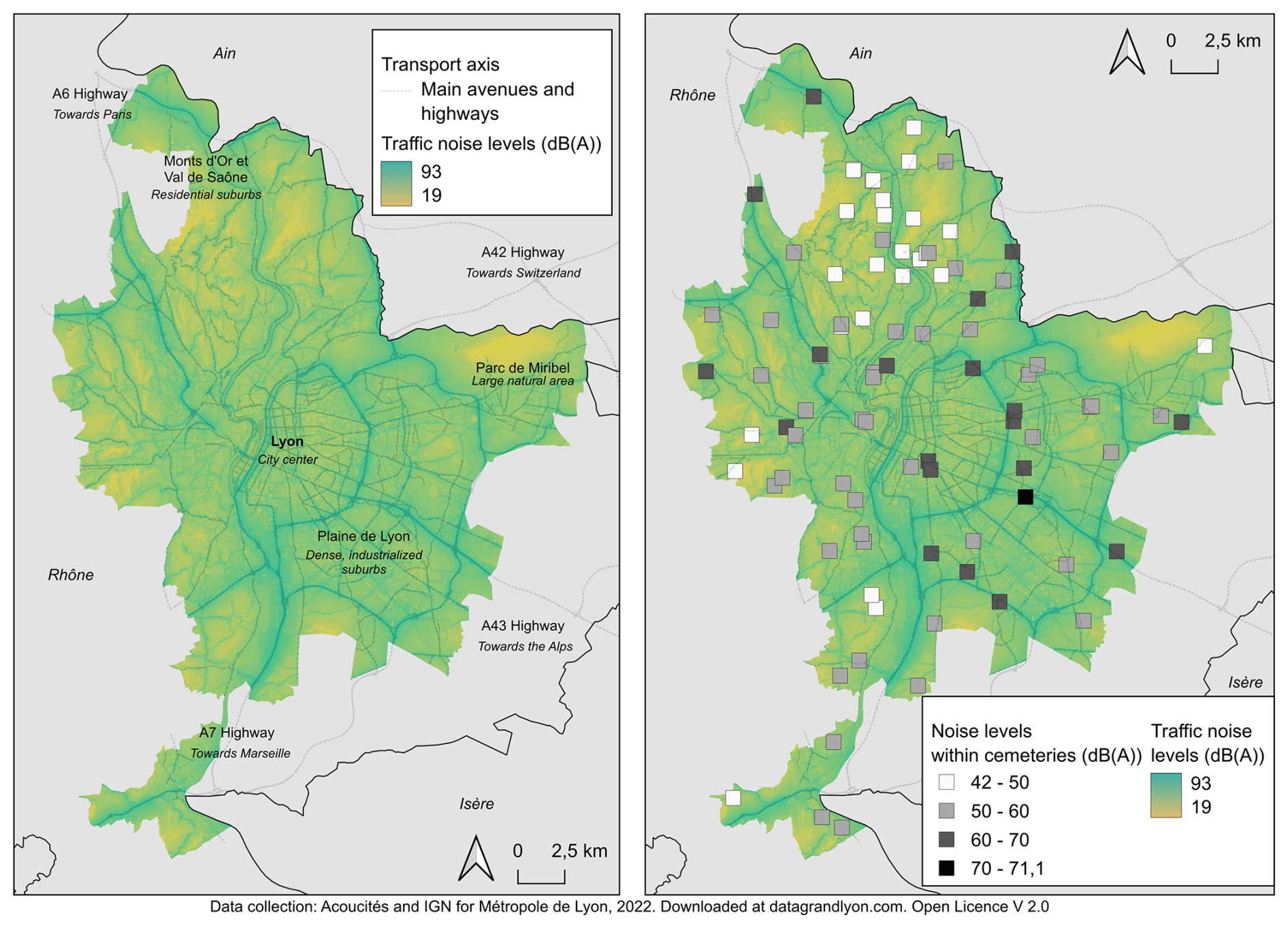
Figure 1Car traffic noise levels (dB(A)) in the Lyon metropolis and its cemeteries (Dall'Aglio, 2025).
On average, regarding car traffic noise pollution, cemeteries' sound levels were measured at 54 db(A), with one as low as 41 dB(A) and one as high as 71 dB(A). Those levels are akin to those of soft music (50 dB), a lively conservation (60 dB), or a busy street (70 dB). While some parts of the cemetery will surely be quieter than others, those levels make it, nonetheless, impossible to consider the cemetery to be silent in the sense that the sound of traffic will, inevitably, be heard, especially during rush hour. This is especially true in the eastern part of the metropolis, whose denser geography implies the presence of numerous large highways and avenues. One cemetery worker, met at the Guillotière cemetery during a set of interviews near a large avenue and the train tracks of the train line between Lyon and Marseille, also mentions the car and train noise: “When I started working here, I thought I wouldn't last. It was so noisy, with the Berthelot Avenue, after 15 days, I had massive headaches” (Lyon, September 2022). On the other hand, the cemeteries located within the more residential suburbs of the Val de Saône and Monts d'Or show noise levels much closer to those expected from a French cemetery as envisioned by local rules and regulations.
3.2.2 Understanding the urban cemetery soundscape: cemeteries as a marginal, public equipment
Looking at car and train noise levels within cemeteries, one ought to be surprised by how noisy some cemeteries seem to get. However, in order to understand this geography, one ought to look at how cemeteries were (re)integrated within the urban fabric over the course of the industrial era.
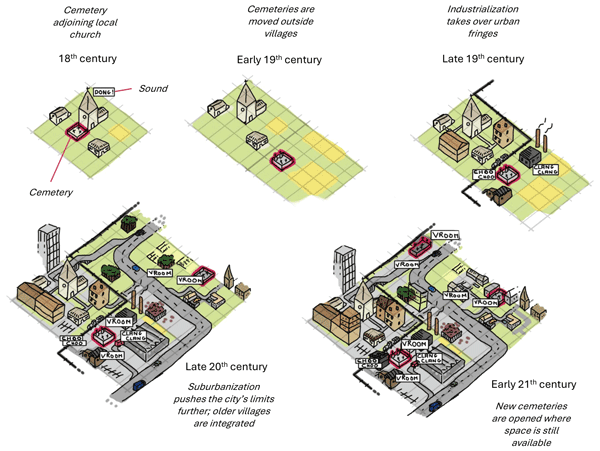
Figure 2 describes, in a schematic way, the way cemeteries within the Lyon metropolitan area were progressively pushed out of the city, only for urban sprawl to slowly reintegrate them back in. At the beginning of the 19th century, municipalities were strongly encouraged by national authorities to take their cemeteries out of the city centers and to find “secluded, uphill terrains” (23 Prairial an XII decree) in order to protect the living from the supposed sanitary risks posed by the cemetery (mostly gases and “miasmas” emitted by the dead, as understood by early 19th century medical science (Bertrand and Carole, 2016). This marginalization of the cemetery, previously located next to the local churches, led to an increasing proximity between cemeteries and large, space-consuming equipment that was also (re)located to the city's margins for sanitary, technical, and aesthetic purposes, such as landfills; train tracks; and, later, highways. Recent cemeteries, such as the Lyon metropolitan cemeteries, which were built at the end of the 20th century to accommodate the needs of the growing metropolis, were, in return, built where land was deemed to be available and where the future cemetery would be easy to access: next to highways and expressways. The quieter cemeteries within the metropolis are either cemeteries located in municipalities that are not home to a large highway, such as the northern municipalities, or cemeteries which were relocated atop a hill in the 19th century, which was advised by medical authorities at the time (fresh air being believed to be needed in order to disperse the cadavers' “miasma”).
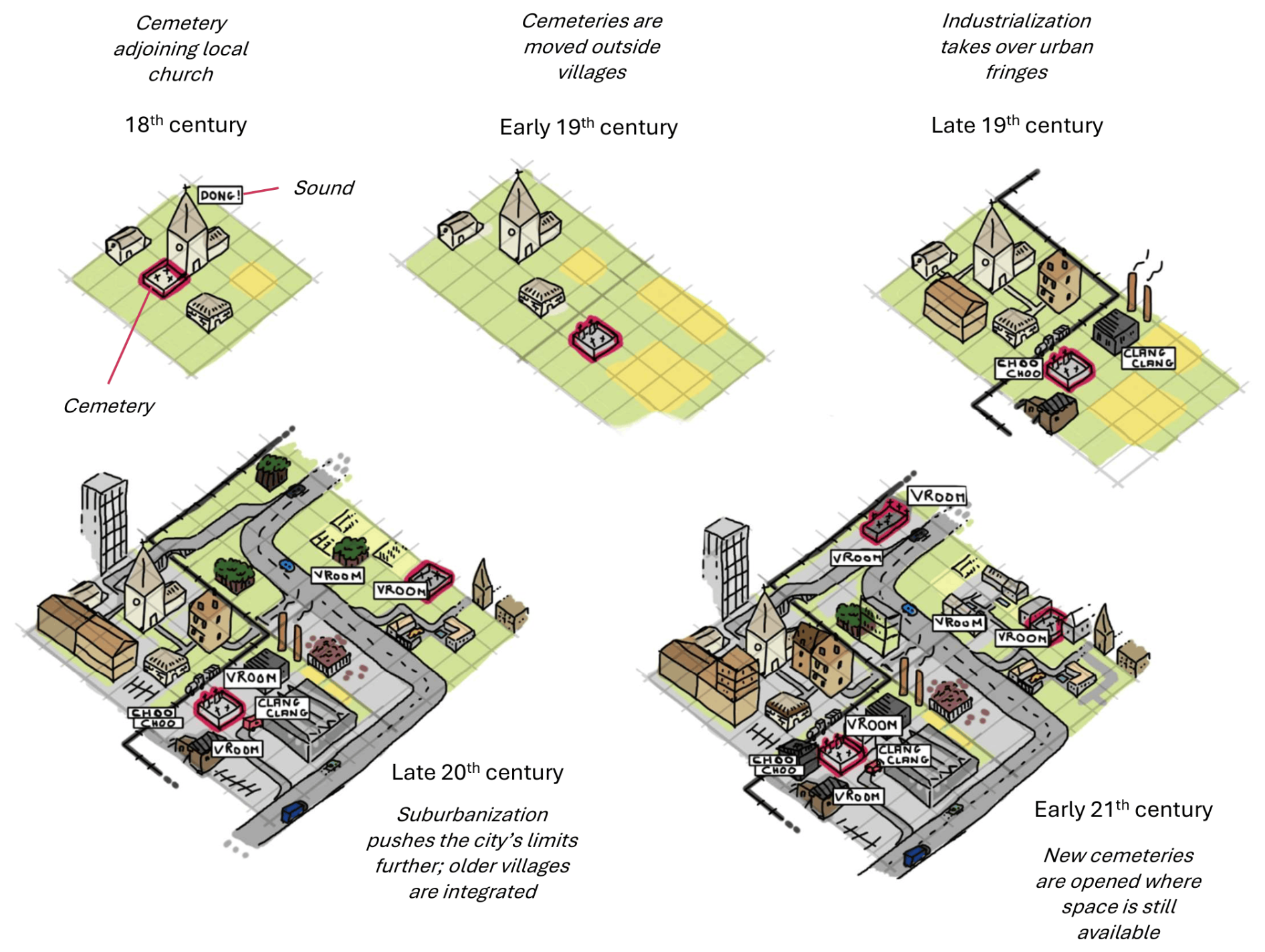
Figure 2A simplified model of cemeteries” movement towards peripherality in France (Dall'Aglio, 2025).
Figure 3, locating the biggest cemeteries in the eastern Lyon metropolitan area, allows for an easy understanding of the close link between cemeteries and collective, space-consuming traffic infrastructures. The Bron cemetery, for instance, one of the two cemeteries managed at the metropolitan level, built in 1988, was, from the start, conceived as a way to fill up space in an otherwise empty construction area. The Guillotière cemetery, next to the train lines, was opened 10 years after those were finished. The ramp leading up to the beltway west of Villeurbanne's cemetery, built in the late 60s, was built on was what supposed to be an extension of the cemetery, leaving only a small space for the Jewish section at the south.
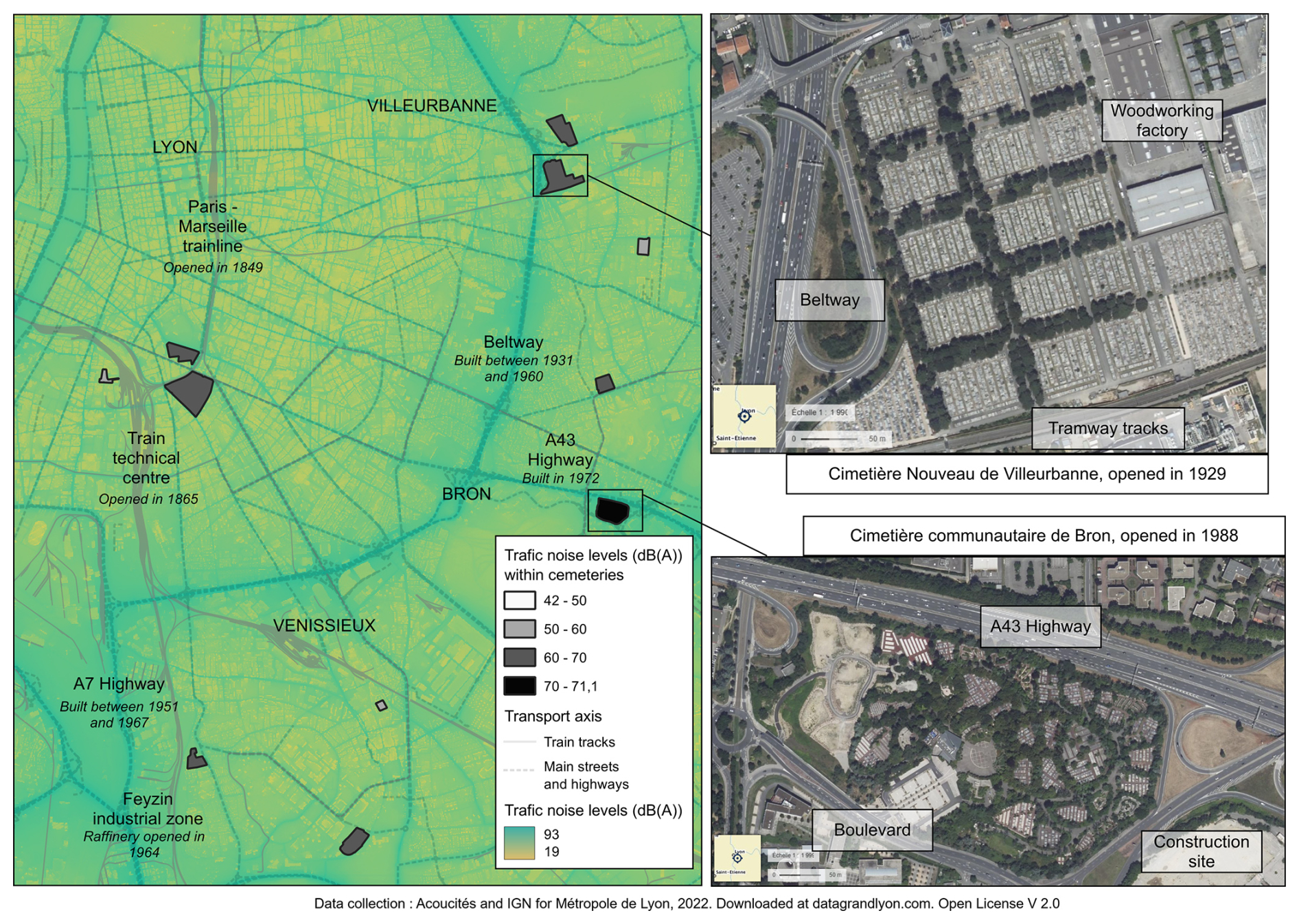
Figure 3Cemeteries in the industrialized suburbs and their respective noise levels (Dall'Aglio, 2025).
Overall, I feel confident in saying that the Lyon metropolis cemeteries, despite a legal framework that aims to produce a silent, melancholic soundscape, do not live up to those ambitions, an intuitive sense confirmed by many a field trip to cemeteries that involved long walks near highways, ditches, and train tracks. While cemeteries can be noisy in and of themselves, because of the construction work, most of the noise comes from the surrounding urban activities, which raises the question regarding the relation between the city and the dead.
Having answered my two questions regarding the way legal resources are utilized in order to produce a silent soundscape and the (in)ability of said soundscape to keep existing within a quickly urbanizing, car-dependent metropolis, I shall now take the time to reflect on that apparent paradox. If producing a silent cemetery, a cemetery where the dead can rest, was spiritually and legally so important, why was the urban cemetery's soundscape allowed to become so noisy at all? As pointed out, rules and regulations are resources meant to be utilized, and, as such, they can easily be willingly or unwillingly ignored. While it is certain that the rarefaction of silence within the Lyon metropolis' cemeteries can be attributed to a multitude of factors, such as the lack of any form of sonic planning or funerary cooperation between municipalities and the lack of mastery over legal matters from some of the lower-level public workers, I would like to seize the opportunity that this study gives to dwell on the matter of the dead's legal agency and the way contemporary urban planning perceives the dead. This discussion arises from the exploration of my two sets of data and, as such, is envisioned as more of an example of the heuristic potential of a political approach to sound than a careful legal demonstration.
It is necessary here to make clear that, when I speak of “the dead”, I do not imply a valid, existing group of deceased people whose well-being in a theoretical afterlife would be affected by the changes brought to the cemetery. “The dead”, here, is understood as a social and legal category used to describe the concept of people who have passed away and to which we are, supposedly, bound through a series of moral and legal obligations. Under French law, the deceased, while not being considered to be persons, are given rights akin to those of a person (Touzeil-Divina and Bouteille-Brigant, 2015). Regulations regarding the profanation of a dead body are categorized, within criminal code (Code pénal), as harm to a person (Atteinte à la personne) and not as harm to a possession (Atteinte aux biens). Since 2008, the law has made it clear that “the respect due to a human body does not cease with death” (2008 Law on the dignity of the dead or Loi Sueur). While cemeteries can produce waste (ornaments, gravel), human remains found while digging ought to be separated from the excavation products and placed in ossuaries, underlining this singular nature of the dead, existing between humans and things. The dead also possess, to a certain degree, a form of legal capacity through their wills, whatever form they may take. Article 433-31-1 of the criminal code thus states than anyone who would, for instance, organize a different funeral ceremony than the one explicitly ordered by the deceased can be prosecuted, implying that is a criminal offense to go against the will of the dead.
What I thus want to underline is that the dead, as a social category and despite the dignity with which the law provides them, are widely considered to be unimportant and secondary to the necessities of the contemporary metropolis. The contrast between the cemetery's lawscape and the cemetery's soundscape suggests that, despite the respect granted de jure to the dead, the actual materialization of that legal deference is secondary when it comes to urban planning. Rebutted to the city's margins, the urban dead are spatially implied to be ontologically akin to waste, and the cemetery is considered to be akin to merely a necessary infrastructure, analogous to the landfill (with two of Lyon's cemeteries actually being adjacent to one). The transcendental gravitas of silence, found within the cemetery or the religious garden (Grésillon, 2009), promised within the rules and regulations, is thus utilized to fulfill a social obligation to the dead, but their innate inability to speak up against the breaching of that contract implies little to no consequences of such. In that sense, the dead have no ability to fight for their right to the city and, thus, against the deliquescence of the heterotopic nature of the cemetery towards a “hypertopic” (Vannelli and D'Agostino, 2023) integration into the urban space, understood as a vast, equal fabric made up of flows, lines, and nodes. In that homogeneous, “brutalist” (Mbembe, 2023) space, the dead (much like any other group) are envisioned as an adjustment variable, whose location ought to be determined by a rationale of optimization. While some groups are able to coalesce, structure their action, and modify their role within the urban matrix, the dead are dependent on the actions of spokespeople and advocates. H. Klingemann (2022), in his article regarding the transformation of derelict cemeteries in Switzerland in parks, mentions the vocal group of the “order-loving advocates of the status quo”, who oppose the transformation on the behalf of the dead.
This is reinforced by the perception of the dead as potentially insensitive beings. Again, the point here is not to know whether or not the dead feel disrespected or not by their noisier environment but rather to note that a right that has been historically and legally granted to this group, the right to rest in peace and silence with dignity, is being discarded in practice. Part of this comes from the fact that the dead are, effectively, considered to be unable to hear and, in general, unable to perceive and suffer. This statement, however, will ring differently depending on one's spiritual and philosophical opinions. We shall simply note that, during our investigation, informal discussions with visitors regarding the quality of life within the cemetery often implied, half-jokingly, that it really did not matter to the dead, a sentiment echoed in H. Klingemann's paper (2022).
While these positions can absolutely be legitimate philosophically, they do, regardless of one's opinion on the matter, raise the question of the metropolis' capacity to respect the existing rights of groups that have very little capacity to actualize them. The disturbance of silence within cemeteries because of metabolistic metropolitan imperatives (i.e flow management) is, thus, comparable to other practices such as displacement of populations, human or “in-human” (i.e., excluded from humanity in a way that gives humans power over them (Chivallon, 2022)), in spite of their constitutional or local rights, considered to be detrimental to the metropolitan organism. Noise pollution, being integral to the metropolis' metabolism, just like any other form of waste, is similarly poured into spaces inhabited by groups that are, in practice, considered to be lesser citizens (either because they have little to rights or because they have little ability to stand for them) or lesser beings (either because they are considered to be insensitive or because their suffering is considered to be unimportant). In the case of the dead, this is reinforced by their alleged inability to suffer from such pollution; however, nevertheless, there is a lack of consideration from communal and metropolitan authorities for some group's right to a city made up of “signifiers, marks, traces, clues”, a city that makes sense (Lefebvre, 1974, p. 231). In our case, it seems clear that the dead have a right not to the city, with its succession of busy streets and silent heterotopias, but merely to the urban, with its continuous flow of noise. While the right to a healthy environment for citizens was integrated into the French constitution in 2004, such a right does not seem to extend to the afterlife, despite the intermediary legal status of the dead, who or which retain some of their former legal dignity. From a certain ethical point of view, one might find it troubling to be paralleling the rights of the dead and the right of poorer citizens or illegal migrants, whose geography often also overlaps with the geography of pollution and who often, as a group, are considered with less decency and respect than the dead; however, following Achille Mbembe's notion regarding “necropolitics” (2002), we want to underline that it is not that the dead are treated as if they were a marginalized social group but that some marginalized social groups are treated as if they were already dead (i.e., insensitive, unable to speak, and easy to forget about).
This, however, raises the same issue that is faced by advocates of natural judiciary representation, the “parliament of things” (Latour, 1993), and so forth: that there is no guarantee that the people chosen to represent the rights of beings unable to communicate (or the people pretending to represent them) will effectively work towards that goal. In H. Klingemann's previously cited article, the people advocating against the transformation of the cemetery are also highly politicized and organized, and, in their case, it is hard to know if protecting the dead's right to rest in peace is an honest opinion or merely a way to gain political leverage by defending a group that has very little way to express itself. This phenomenon was observed in some visitors' remarks: in a comment left on an online survey regarding the city's cemeteries and their possible evolutions, one respondent mentions his fear that the cemeteries will become “a noisy place, for games” before immediately fulminating against the current political, left-leaning majority and calling them “accomplices” in degrading the cemetery. Similarly, L. Matthey et al. (2013) show how “nomosphere technicians” (i.e., from a legal geography perspective, people who present as experts in the inner workings of the law, the same way a biologist can present themselves as an expert in the inner workings of the biosphere) working in cemetery management use the dead as a way to “express themselves on behalf of groups which they do not represent”, to become “legitimate spokespeople … who are able to express themselves in the name of the living and the dead in order to consider the proper organization of the space of the living”. The dead, because of their inability to express themselves and the sympathy (and sometimes fear) they generate by virtue of their status, are a prime target for political instrumentalization. At the same time, the dead are unable to react against transformations in their immediate environment, transformations that come, as we have seen, in the form of noise (and, most likely, air) pollution. Thus, the failure of the local regulations to shield the dead from a noise they legally rule as unwanted within the cemetery is, overall, another example of the failure of the contemporary metropolis to account for “in-human” beings (Chivallon, 2022).
In this article, I have tried to establish a dialogue between the legal and audio geographies, two active fields of study whose junction is yet to be realized. Through the example of cemeteries, I have tried to show how the soundscape and the lawscape can communicate with each other. While it is easy to assume that the soundscape is ever escaping the lawscape's attempt to contain and refrain it, I have also emphasized that the failure of the cemeteries' regulations to produce an effectively silent soundscape tells us less about local laws' supposed efficiency and more about their virtual nature. Regulations are always in need of spatial actualization, and the dead, as it appears, are not quite capable of that despite their legal existence and, to some degree, legal capacity. While local regulations try to regulate noise within the cemetery, it is their growing inclusion within the urban matrix that seems mostly responsible for the changing soundscape of cemeteries. To say that this urban soundscape is incompatible with mourning and remembrance is not my point; mine is simply to point out that it is incompatible with the legal dignity conferred to the dead as it currently stands within local regulations, whether or not that dignity and what it encompasses are actually legitimate or even necessary. Here, there simply lies one contradiction between an inherited legal and spiritual order and a contemporary urban and technical order; how that contradiction ought to be resolved is, manifestly, a political question.
In that sense, this article suggests a strong heuristic potential in listening to the geographies of domination and inequalities.
If, as E. Swyngedouw (2004) proposes, mapping flows within the city allow the geographer to map the flows of power and if noise pollution can be considered to be a form of air pollution akin to fine particles or gases, flowing through the city in irregular patterns, then mapping noise pollution might, similarly, allow geographers to unearth logics of relegation within the urban space. While mostly exploratory, this article has tried to propose an example of how the circulation of sound can effectively be analyzed, too, as a reflection of the circulation of power (or, in the case of the dead, lack thereof).
Data regarding legal documents will be available upon request. Data regarding sound levels in Lyon can be found at https://data.grandlyon.com/ (last access: 29 June 2026).
The author has declared that there are no competing interests.
Publisher's note: Copernicus Publications remains neutral with regard to jurisdictional claims made in the text, published maps, institutional affiliations, or any other geographical representation in this paper. The authors bear the ultimate responsibility for providing appropriate place names. Views expressed in the text are those of the authors and do not necessarily reflect the views of the publisher.
The author thanks the reviewers for their invaluable comments and the editors for their work.
This paper was edited by Laura Péaud and reviewed by two anonymous referees.
Asoni, E.: Away from the border and into the frontier: The paradoxical geographies of US immigration law, Environ. Plan. D, 40, 4, 744–760, https://doi.org/10.1177/02637758221110575, 2024
Basner, M., Babisch, W., Davis, A., Brink, M., Clark, C., Janssen, S., and Stansfeld, S.: Auditory and non-auditory effects of noise on health, Lancet, 383, 1325–1332, https://doi.org/10.1016/S0140-6736(13)61613-X, 2014
Baudrillard, J.: Oublier Foucault, Editions Galilée, 87 pp., ISBN 2718606339, 1977.
Baudry, P.: La Place des morts, L'Harmattan, Paris, 206 pp., ISBN 2296012574, 1999.
Bertrand, R. and Carole, A.: Aux origines des cimetières contemporains. Les réformes funéraires de l'Europe occidentale, XVIIIe-XIXe siècle, Presses Universitaires de Provence, 390 pp., https://doi.org/10.4000/books.pup.33910, 2016.
Braverman, I., Blomley, N., Delaney, D., and Kedar A. S. (Eds.): The Expanding Spaces of Law: a Timely Legal Geography, Stanford University Press, Stanford, 296 pp., https://doi.org/10.2307/j.ctvqsdzbj, 2014.
Blomley, N.: Law, Space and the Geographies of Power, Guilford Press, New York, 259 pp., ISBN 0898624967, 1994.
Bull, M. (Ed.): The Routledge companion to sound studies, Routledge, London, 404 p., ISBN 0367659743, 2019.
Cerwén, G., Wingren, C., and Qviström, M.: Evaluating soundscape intentions in landscape architecture: A study of competition entries for a new cemetery in Järva, Stockholm, J. Environ. Plan. Manag., 60, https://doi.org/10.1080/09640568.2016.1215969, 2017.
Chesnokova, O., Taylor, J. E., Gregory, I. N., and Purves, R. S.: Hearing the silence: finding the middle ground in the spatial humanities? Extracting and comparing perceived silence and tranquility in the English Lake District, Int. J. Geogr. Inf. Sci., 33, 2430–2454, https://doi.org/10.1080/13658816.2018.1552789, 2019.
Chivallon, C.: L'Humain-l'inhumain: l'impensé des nouveaux matérialismes (matérialité, ontologie, plantacionocène), Atlantiques Déchaînés, 91 pp., ISBN 249218210X, 2022.
Christidis, Y.: Cemeteries are active urban resonant places, or are they not?, Intern. Com. Gazette, 87, https://doi.org/10.1177/17480485241261584, 2024.
Dall'Aglio, L.: La stèle, les mousses et le lierre, Questionner le minéral dans le paysage funéraire de la métropole lyonnaise, PhD in geography, Lyon, 604 pp., https://doi.org/10.70675/b1cad6efz3495z4525zbe3az1b27b953f755, 2025.
Delanay, D.: The Spatial, the Legal and the Pragmatics of World-Making, Routlege, London, 224 pp., ISBN 9780415697774, 2010.
Eren, B., Likos, S., and Çelebi, A.: Effectiveness of noise barriers in sensitive urban areas: a comprehensive study on noise reduction strategies and public health implications, Environ. Sci. Pollut. Res., 31, 60093–60107, https://doi.org/10.1007/s11356-024-35229-y, 2024.
Faeta, F. (Ed.): Dietro il silenzio dei cimiteri. Imago mortis rivisitata, in: Le ragioni dello sguardo. Pratiche dell'osservazione, della rappresentazione e della memoria, Bollati, 219–240, ISBN 8833970736, 2011.
Foucault, M.: Otherly Spaces, presentation given in 1967, Paris, https://doi.org/10.3917/empa.054.0012, 2004.
Gandy, M.: Queer Ecology: Nature, Sexuality, and Heterotopic Alliances, Environ. Plan. D, 30, 727–747, https://doi.org/10.1068/d10511, 2012.
Garcia, C.: Le Silence de la ville: représentations et spatialité du silence urbain bruxellois, master's thesis, Université de Bruxelles, 214 pp., https://dumas.ccsd.cnrs.fr/dumas-04776495v1 (last access: 29 June 2026), 2024
Garcier, R.: Disperser, confiner ou recycler? Droit, modes de gestion et circulations spatiales des déchets faiblement radioactifs en France, L'Espace Géographique, 43, 265–283, https://doi.org/10.3917/eg.433.0265, 2014.
Gigot, M.: Les formes du droit dans les centres anciens: territorialisation et effectivité de la règle patrimoniale, Ann. Géogr., 733–734, 112–137, https://doi.org/10.3917/ag.733.0112, 2020.
Grabalov, P.: Public life among the dead: Jogginin Malmö cemeteries, Urban For. Urban Gree., 33, 75–79, https://doi.org/10.1016/j.ufug.2018.01.027, 2018.
Grabalov, P. and Nordh, H.: The Future of Urban Cemeteries as Public Spaces: Insights from Oslo and Copenhagen, Planning Theory and Practice, 23, 81–98, https://doi.org/10.1080/14649357.2021.1993973, 2022.
Grésillon, E.: Une géographie de l'au-delà? Les jardins de religieux catholiques, des interfaces entre profane et sacré, P.h.D thesis in geography, Paris, 4, 510 pp., https://doi.org/10.70675/dfff0c31z5c74z4950za1c7zff73da4ea00c, 2009.
Harvey, J.: Sacred Spaces, Common Places: The Cemetery in the Contemporary American City, Geograph. Rev., 96, 295–312, https://doi.org/10.1111/j.1931-0846.2006.tb00054.x, 2006.
Hogg, B.: Geographies of silence, in: The Routledge companion to sound studies, edited by: Bull, M., Routledge, London, 166–177, https://doi.org/10.4324/9781315722191, 2018.
Jones, R. D., Robinson, J., and Turner, J.: Introduction. Between Absence and Presence: Geographies of Hiding, Invisibility and Silence, Space Policy, 16, 257–263, https://doi.org/10.1080/13562576.2012.733567, 2012.
Klingermann, H.: Cemeteries in transformation – A Swiss community conflict study, Urban For. Urban Gree., 76, https://doi.org/10.1016/j.ufug.2022.127729, 2022.
Kong, L.: Cemeteries and Columbaria, Memorials and Mausoleums: Narrative and Interpretation in the study of deathscapes in Geography, Aust. Geogr. Stud., 37, 1–10, 1999.
Latour, B.: Nous n'avons jamais été modernes, La Découverte, Paris, ISBN 9782707148490, 1993.
Lefebvre, H.: Le Droit à la ville, Anthropos, Paris, France, 164 pp., ISBN 978-2-7178-5708-5, 1968.
Lefebvre, H.: La Production de l'espace, Anthropos, Paris, France, 485 pp., ISBN 2717839542, 1974.
MacFarlane, K.: Governing the noisy sphere: Geographies of noise regulation in the US, Environ. Plan. C, 38, 539–556, https://doi.org/10.1177/2399654419872774, 2020.
Maddrell, A. and Sidaway, J. (Eds.): Deathscapes: Spaces for Death, Dying, Mourning and Remembrance, Ashgate Publishing, 324 pp., ISBN 9781138269484, 2012.
Marguiles, J.: Sounding Out Borderscapes: A Sonic Geography of the US-Mexico Border at Otay Mountain, California, Geopolitics, 29, https://doi.org/10.1080/14650045.2023.2170788, 2023.
Matthey, L., Felli, R., and Mager, C.: “We do have space in Lausanne. We have a large cemetery”: the non-controversy of a non-existent Muslim burial ground”, Soc. Cult. Geog., 14, 428–445, https://doi.org/10.1080/14649365.2013.790991, 2013.
Mbembe, A.: Brutalisme, La Découverte, 237 pp., ISBN 9782348057496, 2023.
Montès, C.: La ville, le bruit et le son, entre mesure policière et identité urbaine, Géocarrefour, 78, https://doi.org/10.4000/geocarrefour.168, 2003.
Nordh, H., Katinka, E., and Skar, M.: A peaceful place in the city – A qualitative study of restorative components of the cemetery, Landscape and Urban Plan., 167, https://doi.org/10.1016/j.landurbplan.2017.06.004, 2017.
Page, J.: The dead as property marker: A legal geography of the cemetery, Geoforum, 164, https://doi.org/10.1016/j.geoforum.2025.104345, 2025.
Philippopoulos-Mihalopoulos, A.: In the lawscape – Introduction, in: Philippopoulos-Mihalopoulos, A, Law and the City, Routledge, London, ISBN 1904385540, 2007.
Philippopoulos-Mihalopoulos, A.: Geography, Justice and a Certain Fear of Space, Law, Culture Hum., 7, 187–202, https://doi.org/10.1177/1743872109355578, 2010.
Pruitt, L. R.: The Rural Lawscape: Space Tames Law Tames Space, in: The Expanding Spaces of Law: a Timely Legal Geography, edited by: Braverman, I., Blomley, N., Delaney, D., and Kedar A. S., Stanford University Press, Stanford, 190–214, https://doi.org/10.2307/j.ctvqsdzbj, 2014.
Rath, E. C.: Silence and noise, in: The Routledge companion to sound studies, edited by: Bull, M., Routledge, London, 73–81, ISBN 0367659743, 2018.
Rugg, J.: Defining the place of burial: What makes a cemetery a cemetery?, Mortality, 5, 259–275, https://doi.org/10.1080/713686011, 2000.
Säumel, I., Butenschön, S., and Kreibig, N.: Gardens of life: Multifunctional and ecosystem services of urban cemeteries in Central Europe and beyond – Historical, structural, planning, nature and heritage conservation aspects, Front. Environ. Sci., 10, https://doi.org/10.3389/fenvs.2022.1077565, 2023.
Schafer, R. M.: The soundscape: our sonic environment and the tuning of the world, Knopf, New York, 324 pp., ISBN 0892814551, 1977.
Smith, B. R.: The Acoustic World of Early Modern England: Attending to the O-Factor, The University of Chicago Press, Chicago, 400 pp., ISBN 9780226763774, 1999.
Smith, S. J.: Beyond geography's visible worlds: a cultural politics of music, Prog. Hum. Geog., 21, https://doi.org/10.1191/030913297675594415, 1997.
Stirling, C.: Sound, affect, politics, in: The Routledge companion to sound studies, edited by: Bull, M., Routledge, London, 54–69, ISBN 0367659743, 2019.
Swyngedouw, E.: Social Power and the Urbanization of Water. Flows of Power, Oxford University Press, 209 pp., ISBN 0198233914, 2004.
Touzeil-Divina, M. and Bouteille-Brigant, M.: Le droit du défunt, Communications, 97, 29–43, https://doi.org/10.3917/commu.097.0029, 2015.
Vannelli, G. and D'Agostino, A.: Hypertopia. Challenging cemeteries idea: historical urban outposts between preservation and transformation, ISUF 2023: Praxis of Urban Morphology, Belgrade, ISBN 978-86-7924-342-3, 4–10 September 2023.
Tweeted on 2 November 2025 at https://x.com/Pontifex (last access: 4 November 2025). “Cemetery” comes from the Latin coemeterium, taken from the Greek koimêtrion for “sleeping place” or “dorm”.