
Articles | Volume 81, issue 1
https://doi.org/10.5194/gh-81-1-2026
© Author(s) 2026. This work is distributed under
the Creative Commons Attribution 4.0 License.
the Creative Commons Attribution 4.0 License.
https://doi.org/10.5194/gh-81-1-2026
© Author(s) 2026. This work is distributed under
the Creative Commons Attribution 4.0 License.
the Creative Commons Attribution 4.0 License.
Standard article
| 
06 Jan 2026
Standard article |
| 06 Jan 2026
| 06 Jan 2026
Die Geopolitik der Emotionen – Zum Verhältnis von Sprache und Emotionen in geopolitischen Krisenzeiten am Beispiel der Bundestagsdebatten über den russischen Expansionskrieg in der Ukraine
Lilly Anjana Lautermann
CORRESPONDING AUTHOR
Institut für Geographie, Universität Münster, 48149 Münster, Deutschland
Paul Reuber
Institut für Geographie, Universität Münster, 48149 Münster, Deutschland
Related authors
No articles found.
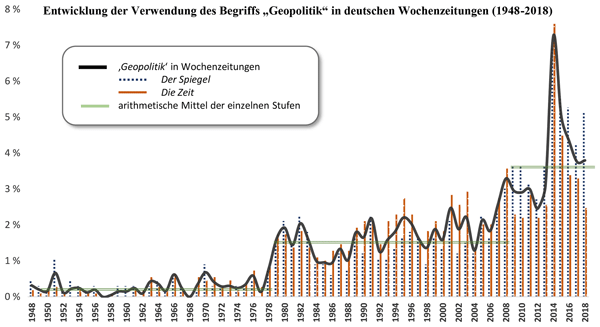
Christoph Creutziger and Paul Reuber
Geogr. Helv., 76, 1–16, https://doi.org/10.5194/gh-76-1-2021, https://doi.org/10.5194/gh-76-1-2021, 2021
Short summary
Short summary
Geopolitical imaginaries and discourses are subject to long-term changes that can be analyzed with computer-based lexicometric tools. Tracing the appearence of keywords like
geopoliticsor the
Cold Warthe manuscript draws on media discourses of the past 75 years to show which phases of emergence, disappearance, and reactualization they go through and how the long-lasting discursive
archives of geopoliticspowerfully weave themselves into current geopolitical representations.
Cited articles
Åhäll, L.: Affect as Methodology: Feminism and the Politics of Emotion, International Political Sociology, 12, 36–52, https://doi.org/10.1093/ips/olx024, 2018.
Ahmed, S.: The politics of fear in the making of worlds, International Journal of Qualitative Studies in Education, 16, 377–398, https://doi.org/10.1080/0951839032000086745, 2003.
Ahmed, S.: The Cultural Politics of Emotion, 2nd Edn., University Press, Edinburgh, ISBN 9780748691135, 2014.
Anderson, B.: Affective atmospheres, Emotion, Space and Society, 2, 77–81, https://doi.org/10.1016/j.emospa.2009.08.005, 2009.
Anderson, K. and Smith, S. J.: Editorial: Emotional geographies, Transactions of the Institute of British Geographers, 26, 7–10, https://doi.org/10.1111/1475-5661.00002, 2001.
Bargetz, B. and Eggers, N. E.: Affektive Narrative: Theorie und Kritik politischer Vermittlungsweisen, Polit Vierteljahresschr, 64, 221–246, https://doi.org/10.1007/s11615-022-00432-4, 2023.
Barrett, L. F.: Context reconsidered: Complex signal ensembles, relational meaning, and population thinking in psychological science, American Psychologist, 77, 894–920, https://doi.org/10.1037/amp0001054, 2022.
Barrett, L. F. and Lindquist, K. A.: The Embodiment of Emotion, in: Embodied Grounding: Social, Cognitive, Affective, and Neuroscientific Approaches, edited by: Smith, E. R. and Semin, G. R., Cambridge University Press, Cambridge, 237–262, https://doi.org/10.1017/CBO9780511805837.011, 2008.
Belo, D. and Rodríguez, F.: The conflict in Ukraine and its global implications, Canadian Foreign Policy Journal, 29, 235–248, https://doi.org/10.1080/11926422.2023.2258227, 2023.
Berg, A. L., von Scheve, C., Ural, N. Y., and Walter-Jochum, R.: Reading for Affect – a Methodological Proposal for Analyzing Affective Dynamics in Discourse, in: Analyzing Affective Societies – Methods and Methodologies, edited by: Kahl, A., Routledge, London, 45–56, ISBN 9780367671082, 2019.
Biersack, J. and O'Lear, S.: The geopolitics of Russia's annexation of Crimea: narratives, identity, silcences, and energy, Eurasian Geography and Economics, 55, 247–269, https://doi.org/10.1080/15387216.2014.985241, 2014.
Bjørge, N. M. and Kalnes, Ø.: Cultures of anarchy: Images of Russia in the narrative of Norwegian main- stream news media during the Ukraine crisis 2014, Media, War & Conflict, 14, 150–173, https://doi.org/10.1177/1750635219864024, 2021.
Brattvoll, J.: The normative security dilemma in making sense of the Kremlin, J. Int. Relat. Dev., 26, 748–761, https://doi.org/10.1057/s41268-023-00312-3, 2023.
Brugger, A. (Bündnis 90/ Die Grünen): Deutscher Bundestag – DIP, BT-PlPr. 20/31, S. 2728 (D), https://dserver.bundestag.de/btp/20/20031.pdf (letzter Zugriff: 11.6.2025), 2022.
Brunk, I. and Hakimi, M.: Russia, Ukraine, and the Future World Order, Am. J. Int. Law, 116, 687–697, https://doi.org/10.1017/ajil.2022.69, 2022.
Chang-Liao, N.-C.: The limits of strategic partnerships: Implications for China's role in the Russia-Ukraine war, Contemp. Secur. Policy, 44, 226–247, https://doi.org/10.1080/13523260.2023.2174702, 2023.
Claessen, E.: The making of a narrative: The use of geopolitical othering in Russian strategic narratives during the Ukraine crisis, Media, War & Conflict, 16, 82–99, https://doi.org/10.1177/17506352211029529, 2023.
Closs Stephens, A., Coward, M., Merrill, S., and Sumartojo, S.: Affect and the Response to Terror: Commemoration and Communities of Sense, International Political Society, 15, 22–40, https://doi.org/10.1093/ips/olaa020, 2021.
Creutziger, C. and Reuber, P.: Diskurse von Geopolitik und ‚Neuem Kaltem Krieg‘ – Zur Veränderung medialer Repräsentationen von Russland und ‚dem Osten‘, Geogr. Helv., 76, 1–16, https://doi.org/10.5194/gh-76-1-2021, 2021.
Crocker, C. A.: Endings and Surprises of the Russia-Ukraine War, Survival, 64, 183–192, https://doi.org/10.1080/00396338.2022.2127518, 2022.
Ditrych, O. and Larys, M.: What can European security architecture look like in the wake of Russia's war on Ukraine?, Eur. Secur., https://doi.org/10.1080/09662839.2024.2347221, 2024.
Dittmer, J. and Bos, D.: Popular Culture, Geopolitics, and Identity, 2nd Edn., Rowman & Littlefield, ISBN 9781538116715, 2019.
Djir-Sarai, B. (FDP): Deutscher Bundestag – DIP, BT-PlPr. 20/27, S. 2275 (B), https://dserver.bundestag.de/btp/20/20027.pdf (letzter Zugriff: 11.6.2025), 2022.
Dobrinth, A. (CDU/CSU): Deutscher Bundestag – DIP, BT-PlPr. 20/19, S. 1367 (A), https://dserver.bundestag.de/btp/20/20019.pdf (letzter Zugriff: 11.6.2025), 2022.
Doris, A. and Graham, T.: What Putin Fights For, Survival, 64, 75–88, https://doi.org/10.1080/00396338.2022.2103258, 2022.
Duncan, S. and Barrett, L. F.: Affect is a form of cognition: A neurobiological analysis, Cognition & emotion, 21, 1184, https://doi.org/10.1080/02699930701437931, 2007.
Dürr, C. (FDP): Deutscher Bundestag – DIP, BT-PlPr. 20/19, S. 1371 (A), https://dserver.bundestag.de/btp/20/20019.pdf (letzter Zugriff: 11.6.2025), 2022.
Dutkiewicz, J. and Smolenski, J.: Epistemic superimposition: the war in Ukraine and the poverty of expertise in international relations theory, J. Int. Relat. Dev., 26, 619–631, https://doi.org/10.1057/s41268-023-00314-1, 2023.
Eberle, J. and Daniel, J.: “Putin, You Suck”: Affective Sticking Points in the Czech Narrative on “Russian Hybrid Warfare”, Political Psychology, 40, 1267–1281, https://doi.org/10.1111/pops.12609, 2019.
Erndl, T. (CDU/CSU): Deutscher Bundestag – DIP, BT-PlPr. 20/27, S. 2281 (A), https://dserver.bundestag.de/btp/20/20027.pdf (letzter Zugriff: 11.6.2025), 2022.
Esken, S. (SPD): Deutscher Bundestag – DIP, BT-PlPr. 20/19, S. 1372 (C), https://dserver.bundestag.de/btp/20/20019.pdf (letzter Zugriff: 11.6.2025), 2022.
Foucault, M.: Archäologie des Wissens, Erste Auflage, Suhrkamp, Frankfurt am Main, IBSN 9783518279564, 1981.
Fregonese, S.: Affective atmospheres, urban geopolitics and conflict (de)escalation in Beirut, Political Geography, 61, 1–10, https://doi.org/10.1016/j.polgeo.2017.04.009, 2017.
Fregonese, S. and Laketa, S.: Urban atmospheres of terror, Political Geography, 96, https://doi.org/10.1016/j.polgeo.2021.102569, 2022.
Fridrichova, K.: Mugged by reality: Russia's strategic narratives and the war in Ukraine, Def. Secur. Anal., 39, 281–295, https://doi.org/10.1080/14751798.2023.2201018, 2023.
Gackowski, T. and Brylska, K.: “Machiavellian Russia” in the Crimean conflict: Clarification of strategic narratives analysis method, Journalism, 23, 773–778, https://doi.org/10.1177/1464884920928157, 2022.
Gehring, P.: Foucault – Die Philosophie im Archiv, Campus Verlag, Frankfurt am Main, ISBN 9783593373935, 2004.
Glasser, S. B.: Putin the Great: Russia's Imperial Impostor, Foreign Affairs, 98, 10–17, 2019.
Glasze, G. and Mattissek, A. (Hrsg.): Diskursforschung in der Humangeographie. Konzeptionelle Grundlagen und empirische Operationalisierungen, in: Handbuch Diskurs und Raum. Theorien und Methoden für die Humangeographie sowie die sozial- und kulturwissenschaftliche Raumforschung, transcript, Bielefeld, 13–62, IBSN 978-3-8376-1155-7, 2021.
Götz, E. and Staun, J.: Why Russia attacked Ukraine: Strategic culture and radicalized narratives, Contemporary Security Policy, 43, 482–497, https://doi.org/10.1080/13523260.2022.2082633, 2022.
Haßelmann, B. (Bündnis 90/ Die Grünen): Deutscher Bundestag – DIP, BT-PlPr. 20/27, S. 2270 (D), https://dserver.bundestag.de/btp/20/20027.pdf (letzter Zugriff: 11.2.2025), 2022.
Heinrich, G. (SPD): Deutscher Bundestag – DIP, BT-PlPr. 20/19, 1379 (A), https://dserver.bundestag.de/btp/20/20019.pdf (letzter Zugriff: 11.2.2025), 2022.
Hellmich, W. (SPD): Deutscher Bundestag – DIP, BT-PlPr. 20/19, S. 1383 (B), https://dserver.bundestag.de/btp/20/20019.pdf (letzter Zugriff: 11.6.2025), 2022.
Hemmings, C.: Invoking Affect: Cultural theory and the ontological turn, Cultural Studies, 19, 548–567, https://doi.org/10.1080/09502380500365473, 2005.
Hendl, T., Burlyuk, O., O'Sullivan, M., and Arystanbek, A.: (En)Countering epistemic imperialism: A critique of “Westsplaining” and coloniality in dominant debates on Russia's invasion of Ukraine, Contemporary Security Policy, 45, 171–209, https://doi.org/10.1080/13523260.2023.2288468, 2024.
Hensell, S. und Schlichte, K.: In der Hysterie-Falle, https://www.ipg-journal.de/rubriken/aussen-und-sicherheitspolitik/artikel/in-der-hysterie-falle-8184/ (letzter Zugriff: 6.11.2025), 2025.
Hentschel, C.: „Das große Erwachen“: Affekt und Narrativ in der Bewegung gegen die Corona-Maßnahmen, Leviathan, 49, 62–85, https://doi.org/10.5771/0340-0425-2021-1, 2021.
Hill, F.: Putin: The one-man show the West doesn't understand, Bulletin of the Atomic Scientists, 72, 140–144, https://doi.org/10.1080/00963402.2016.1170361, 2016.
Hunter, R.: The Ukraine Crisis: Why and What Now?, Survival. Global Politics and Strategy, 64, 7–28, https://doi.org/10.1080/00396338.2022.2032953, 2022.
Hutchison, E.: Emotions, Bodies, and the Un/Making of International Relations, Millennium, 47, 284–298, https://doi.org/10.1177/0305829818811243, 2019.
Hyndman, J.: Unsettling feminist geopolitics: forging feminist political geographies of violence and displacement, Gender, Place & Culture, 26, 3–29, https://doi.org/10.1080/0966369X.2018.1561427, 2019.
Jonsson, M. and Norberg, J.: Russia's War Against Ukraine: Military Scenarios and Outcomes, Survival, 64, 91–122, https://doi.org/10.1080/00396338.2022.2150429, 2022.
Kordan, B.: Russia's war against Ukraine: historical narratives, geopolitics, and peace, Can. Slavon. Pap., 64, 162–172, https://doi.org/10.1080/00085006.2022.2107835, 2022.
Koschut, S.: Macht der Gefühle: Zur Bedeutung von Emotionen für die sozialkonstruktivistische Diskursforschung, Zeitschrift für Internationale Beziehungen, 22, 7–33, https://doi.org/10.5771/0946-7165-2015-2, 2015.
Koschut, S.: Speaking from the Heart: Emotion Discourse Analysis in International Relations, in: Researching Emotions in International Relations: Methodological Perspectives on the Emotional Turn, edited by: Clément, M. and Sangar, E., Springer International Publishing, Cham, 277–301, https://doi.org/10.1007/978-3-319-65575-8_12, 2018.
Koval, N., Kulyk, V., Riabchuk, M., Zarembo, K., and Fakhurdinova, M.: Morphological Analysis of Narratives of the Russian-Ukrainian Conflict in Western Academia and Think-Tank Community, Problems of Post-Communism, 69, 166–178, https://doi.org/10.1080/10758216.2021.2009348, 2022.
Kurylo, B.: The Ukrainian subject, hierarchies of knowledge production and the everyday: An autoethnographic narrative, J. Int. Relat. Dev., 26, 685–697, https://doi.org/10.1057/s41268-023-00310-5, 2023.
Laketa, S.: Geopolitics of Affect and Emotion in a Post-Conflict City, Geopolitics, 21, 661–685, https://doi.org/10.1080/14650045.2016.1141765, 2016.
Laketa, S.: (Counter)Terrorism and the Intimate: Bodies, Affect, Power, Conflict & Society, 7, 9–25, https://doi.org/10.3167/arcs.2021.070102, 2021.
Laliberté, N. and Schurr, C.: The stickiness of emotions in the field: complicating feminist methodologies, Gender, Place & Culture, 23, 72–78, https://doi.org/10.1080/0966369X.2014.992117, 2016.
Lambrecht, C. (SPD): Deutscher Bundestag – DIP, BT-PlPr. 20/24, S. 1986 (C), https://dserver.bundestag.de/btp/20/20024.pdf (letzter Zugriff: 11.6.2025), 2022.
Lambsdorff, A. Graf (FDP): Deutscher Bundestag – DIP, BT-PlPr. 20/20, S. 1436 (A), https://dserver.bundestag.de/btp/20/20020.pdf (letzter Zugriff: 11.6.2025), 2022.
Lindner, C. (FDP): Deutscher Bundestag – DIP, BT-PlPr. 20/30, S. 2665 (B), https://dserver.bundestag.de/btp/20/20030.pdf (letzter Zugriff: 11.6.2025), 2022.
Link, M. (FDP): Deutscher Bundestag – DIP, BT-PlPr. 20/24, S. 1972 (D), https://dserver.bundestag.de/btp/20/20024.pdf (letzter Zugriff: 11.6.2025), 2022.
Lokot, T.: The role of citizens' affective media practices in participatory warfare during Russia's invasion of Ukraine, J. Int. Relat. Dev., 26, 776–790, https://doi.org/10.1057/s41268-023-00317-y, 2023.
Mahon, A., Pearce, J. C., Korobkov, A., Gabdulhakov, R., Gozalishvili, N., Topuria, R., Stercul, N., and Vacarelu, M.: Russia's Invasion of Ukraine: What Did We Miss?, Int. Stud. Perspect., 25, 325–358, https://doi.org/10.1093/isp/ekad006, 2023.
Makarychev, A. and Wicaksana, I. G. W.: Multilateralism at War: Russia's Invasion of Ukraine, the G20 and World Order, Glob. Soc., https://doi.org/10.1080/13600826.2024.2359969, 2024.
Mamedov, I.: A fragile narrative: Transformations and consistency in the Russian representation of the war in Ukraine, Media War Confl., https://doi.org/10.1177/17506352241264436, 2024.
Merten, A. (FDP): Deutscher Bundestag – DIP, BT-PlPr. 20/28, S. 2442 (B), https://dserver.bundestag.de/btp/20/20028.pdf (letzter Zugriff: 11.2.2025), 2022.
Merz, F. (CDU/CSU): Deutscher Bundestag – DIP, BT-PlPr. 20/19, S. 1355 (A), https://dserver.bundestag.de/btp/20/20019.pdf (letzter Zugriff: 11.2.2025), 2022.
Militz, E.: Affective Nationalism: Bodies, Materials and Encounters with the Nation in Azerbaijan, LIT, Münster, ISBN 9783643802781, 2019.
Militz, E.: Killing the joy, feeling the cruelty: feminist geographies of nationalism in Azerbaijan, Environment and Planning. C, Politics and space, 38, 1256–1274, https://doi.org/10.1177/2399654420927413, 2020.
Militz, E.: Affekte und Emotionen, in: Mehr-als-menschliche Geographien. Schlüsselkonzepte, Beziehungen und Methodiken, Herausgeber:innen: Steiner, C., Rainer, G., Schröder, V., and Zirkl, F., Franz Steiner Verlag, Stuttgart, 87–108, ISBN 9783515132305, 2022.
Militz, E. and Schurr, C.: Affective nationalism: Banalities of belonging in Azerbaijan, Political Geography, 54, 54–63, https://doi.org/10.1016/j.polgeo.2015.11.002, 2016.
Mohamed Ali, A. (Die Linke): Deutscher Bundestag – DIP, BT-PlPr. 20/19, S. 1636 (C), https://dserver.bundestag.de/btp/20/20019.pdf (letzter Zugriff: 11.2.2025), 2022a.
Mohamed Ali, A. (Die Linke): Deutscher Bundestag – DIP, BT-PlPr. 20/30, S. 2671 (C), https://dserver.bundestag.de/btp/20/20030.pdf (letzter Zugriff: 11.6.2025), 2022b.
Mölder, M. and Berg, E.: Conflicts and Shifts in the Kremlin's Political Discourse since the Start of the Putin Presidency (2000–2019), Europe-Asia Studies, 75, 564–582, https://doi.org/10.1080/09668136.2022.2069677, 2023.
Moreno, A. P.: Russia's Post-war Evolution in Ukraine: Three Possible Scenario, Rev. Estud. Segur. Int., 10, 163–178, https://doi.org/10.18847/1.19.10, 2024.
Nuland, V.: Pinning Down Putin, Foreign Affairs, 99, 93–106, 2020.
Oleinik, A.: Putting Discourses About the War in Ukraine on a Map: How Different is Everyone's Story?, Int. Polit., https://doi.org/10.1057/s41311-024-00564-x, 2024.
Omand, D.: Understanding Putin's Russia: a continuing challenge for Western intelligence, Intell. Natl. Secur., 39, 386–399, https://doi.org/10.1080/02684527.2024.2322806, 2024.
O'Sullivan, M. and Krulišová, K.: Central European subalterns speak security (too): Towards a truly post-Western feminist security studies, J. Int. Relat. Dev., 26, 660–674, https://doi.org/10.1057/s41268-023-00302-5, 2023.
Palestrino, M.: Neglected times: Laclau, affect, and temporality, Journal of Political Ideologies, 27, 226–245, https://doi.org/10.1080/13569317.2021.1916201, 2022.
Pociask, J.: Zur sprachlichen Kodierung von Emotionen im Diskurs, Forum Filologiczne Ateneum, 125–142, https://doi.org/10.36575/2353-2912/1(10)2022.125, 2022.
Reid, A.: Putin's War on History, Foreign Affairs, 101, 54–63, 2022.
Reuber, P.: Die Archive der Geopolitik – Einige Thesen zur „Wiederkehr“ historischer geopolitischer Deutungsmuster in aktuellen Konflikten, dargestellt an Beispielen aus der Medienberichterstattung über den Konflikt zwischen Russland und Georgien 2008, in: Die Politik räumlicher Repräsentationen. Beispiel aus der empirischen Forschung, vol. 6, Herausgeber:innen: Dzudzek, I., Reuber, P., and Strüver, A., LIT, Münster, 25–42, ISBN 978-3-643-11582-9, 2011.
Reuber, P.: Die gesellschaftliche Konstruktion politischer Räume und geopolitische Leitbilder in Europa, in: Europa – eine Geographie, Herausgeber:innen: Gebhardt, H., Glaser, R., and Lentz, S., Springer, Berlin, Heidelberg, 130–147, ISBN-13: 978-3827420053, 2013.
Richardson, M.: Gestures of Testimony. Torture, Trauma, and Affect in Literature, Bloomsbury Publishing, New York, ISBN 9781501315800, 2016.
Richter, F., Koch, P., Franke, O., Kraus, J., Kuruc, F., Thiem, A., Högerl, J., Heine, S., and Schöps, K.: Open Discourse, Harvard Dataverse [data set], https://doi.org/10.7910/DVN/FIKIBO, 2020.
Ross, A. A. G.: Mixed Emotions: Beyond Fear and Hatred in International Conflict, University of Chicago Press, Chicago, ISBN 9780226077420, 2013.
Roth, M. (SPD): Deutscher Bundestag – DIP, BT-PlPr. 20/27, S. 2277 (A), https://dserver.bundestag.de/btp/20/20027.pdf (letzter Zugriff: 11.6.2025), 2022.
Ruppert, L.: Affective atmospheres of weapons technologies: The case of battle drones, combat fighters and bodies in contemporary German geopolitics, Emotion, Space and Society, 45, 100909, https://doi.org/10.1016/j.emospa.2022.100909, 2022.
Scholz, O. (SPD): Deutscher Bundestag – DIP, BT-PlPr. 20/19, S. 1350 (A), https://dserver.bundestag.de/btp/20/20019.pdf (letzter Zugriff: 11.2.2025), 2022.
Schopper, T.: Zur Analyse von affektiven Atmosphären in audiovisuellen Medien: Kämpfe um Identität in extrem rechter Rap-Musik, Geographische Zeitschrift, 110, 1–21, https://doi.org/10.25162/gz-2021-0015, 2022.
Schurr, C. and Strüver, A.: „The Rest“: Geographien des Alltäglichen zwischen Affekt, Emotion und Repräsentation, Geogr. Helv., 71, 87–97, https://doi.org/10.5194/gh-71-87-2016, 2016.
Smith, S.: Intimate Geopolitics: Love, Territory, and the Future on India's Northern Threshold, Rutgers University Press, https://doi.org/10.36019/9780813598604, 2020.
Solomon, T.: “I wasn't angry, because I couldn't believe it was happening”: Affect and discourse in responses to 9/11, Review of International Studies, 38, 907–928, https://doi.org/10.1017/S0260210511000519, 2012.
Solomon, T.: The affective underpinnings of soft power, European Journal of International Relations, 20, 720–741, https://doi.org/10.1177/1354066113503479, 2014.
Spahn, J. (CDU/CSU): Deutscher Bundestag – DIP, BT-PlPr. 20/21, S. 1524 (D), https://dserver.bundestag.de/btp/20/20021.pdf (letzter Zugriff: 11.6.2025), 2022.
Stoltenberg, J.: NATO Secretary General Jens Stoltenberg's speech to the AUF summer camp, https://www.nato.int/cps/en/natohq/opinions_198141.htm (last access: 6 February 2025), 2022.
Strack-Zimmermann, M. A. (FDP): Deutscher Bundestag – DIP, BT-PlPr. 20/30, 2733 (B), https://dserver.bundestag.de/btp/20/20031.pdf (letzter Zugriff: 11.2.2025), 2022.
Thomson, C., Mader, M., Muenchow, F., Reifler, J., and Schoen, H.: European public opinion: united in supporting Ukraine, divided on the future of NATO, Int. Aff., 99, 2485–2500, https://doi.org/10.1093/ia/iiad241, 2023.
Thrift, N.: Non-Representational Theory: Space, Politics, Affect, Routledge, London, https://doi.org/10.4324/9780203946565, 2008.
Trautmann, F., Schopper, T., and Wiertz, T.: Narrationen ostdeutscher Identität im Diskurs der extremen Rechten, Geographische Zeitschrift, 113, 96–121, https://doi.org/10.25162/gz-2025-0003, 2025.
Treisman, D.: Why Putin Took Crimea: The Gambler in the Kremlin, Foreign Affairs, 95, 47–54, 2016.
Trenin, D.: Russia's Policies toward Ukraine: The Context, Evolution, and Outlook, IPRI J., 22, 30–42, https://doi.org/10.31945/iprij.220202, 2022.
Tsymbalyuk, D.: What my body taught me about being a scholar of Ukraine and from Ukraine in times of Russia's war of aggression, J. Int. Relat. Dev., 26, 698–709, https://doi.org/10.1057/s41268-023-00298-y, 2023.
Tyushka, A.: In “crisis” we trust? On (un)intentional knowledge distortion and the exigency of terminological clarity in academic and political discourses on Russia's war against Ukraine, J. Int. Relat. Dev., 26, 643–659, https://doi.org/10.1057/s41268-023-00313-2, 2023.
Wetherell, M.: Affect and Emotion: A New Social Science Understanding, Sage Academic Books, ISBN 9780857028563, 2012.
Wiese, D. (SPD): Deutscher Bundestag – DIP, BT-PlPr. 20/19, S. 1380 (A), https://dserver.bundestag.de/btp/20/20019.pdf (letzter Zugriff: 11.6.2025), 2022.
Wodak, R.: Politik mit der Angst. Zur Wirkung rechtspopulistischer Diskurse, Edition Konturen, ISBN 9783902968104, 2016.
Woodward, K. and Lea, J.: Geographies of Affect, in: The SAGE Handbook of Social Geographies, edited by: Smith, S. J., Pain, R., Marston, S. A., and Jones, J. P., Sage Publications, London, 154–175, ISBN 1412935598, 2010.
Short summary
In view of the increasingly polarising and emotionally charged geopolitical debates of recent times of war, the present article aims to understand the relationship between emotions and geopolitical imaginations with reference to Sara Ahmed's Cultural Politics of Emotions and introduces a methodologically viable approach for a qualitative-interpretative analysis of the emotionalisations of geopolitical discourses.
In view of the increasingly polarising and emotionally charged geopolitical debates of recent...


