
the Creative Commons Attribution 4.0 License.
the Creative Commons Attribution 4.0 License.
 | 24 Jun 2026
Between planning euphoria and civil resistance: the construction of the “Hüttentalentlastungsstraße” in Siegen (approx. 1960–2000)
Daniela Mysliwietz-Fleiß
This article focuses on the experience of loss in urban spaces in late modernity, taking as a graphic example the construction of an urban highway and its consequences in a densely populated and geographically challenging area in western Germany. This article argues that the shift in social narratives during the transition from modern to late-modern society had a direct impact on the perception of loss caused by previously autocratic urban planning and, thus, also had a direct influence on urban construction projects in times “after the boom” of the 1960s and the early 1970s.
- Article
(8575 KB) - Full-text XML
- BibTeX
- EndNote


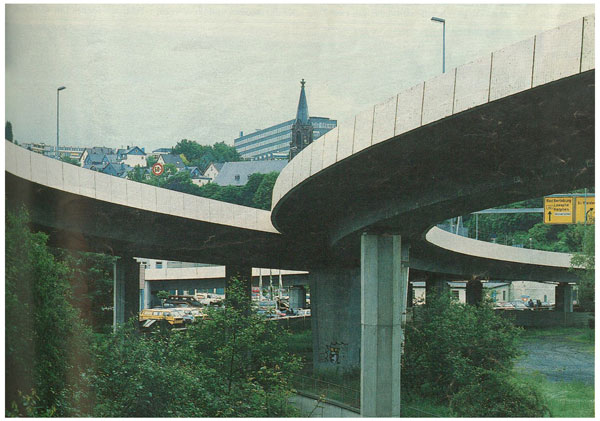
“I wanted to scream. To scream really loud. And cry. But in fact, I was unable to make a sound.” With these words, the journalist Hanjo Seißler gave vent to his feelings when re-visiting the city of Siegen in Northrhine–Westphalia, the tranquil place of his childhood vacations in the 1960s. When returning in the 1990s, he was almost unable to recognize the place. His article in the magazine of the well-known newspaper Süddeutsche Zeitung, published in 1996, shaped the image of the urban centre well beyond the mountainous Siegerland region for decades to come. His criticism was directed at urban planning and development from the late 1960s to the 1980s that prioritized huge concrete structures as a means of urban redesign. The most striking example of such a project in Siegen was the four-lane multi-levelled expressway “Hüttentalstraße”, which runs through the narrow “Hüttental”, along which the former towns of Hüttental, Siegen, and Eiserfeld were lined up (Fig. 1).
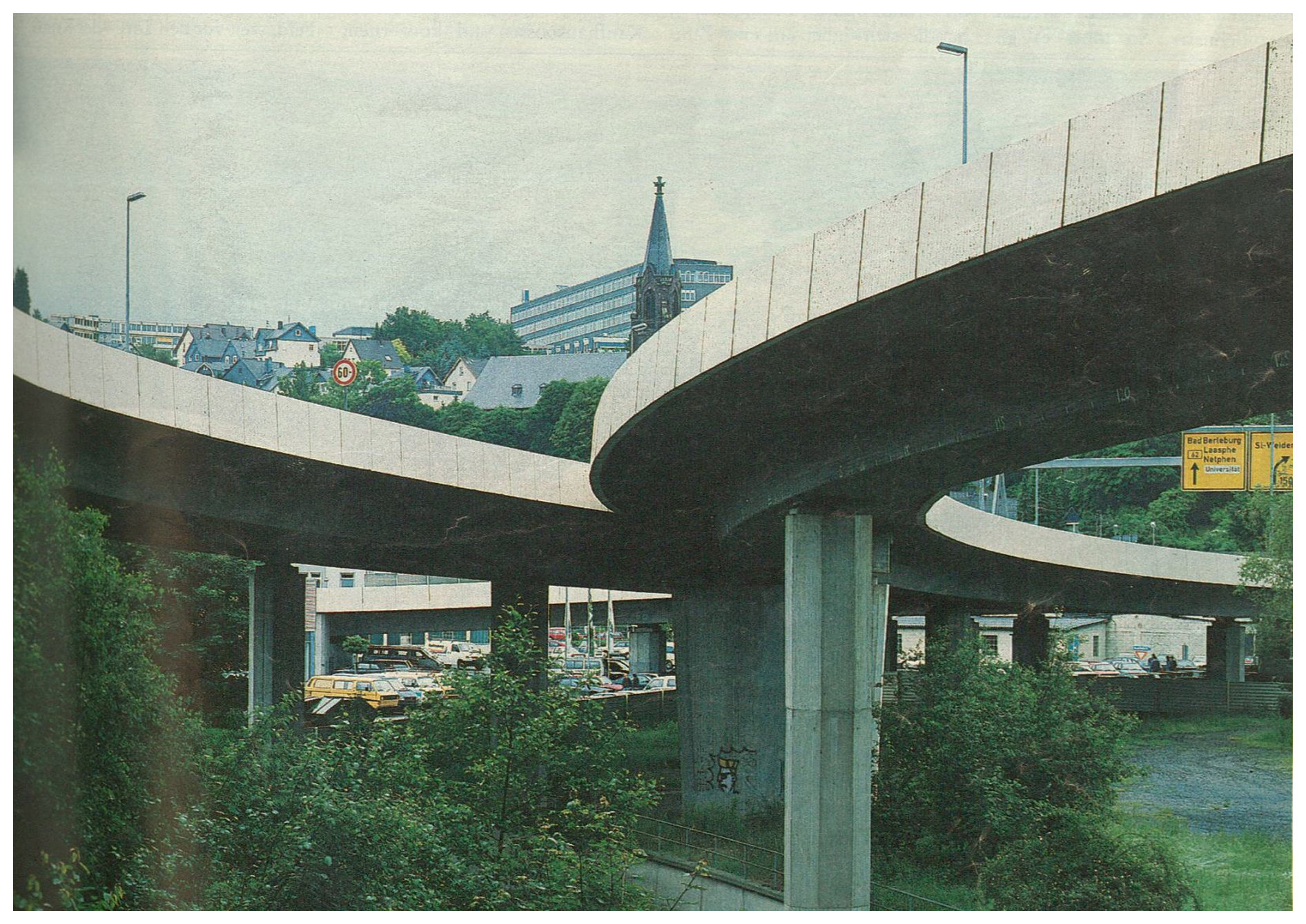
Figure 1The multi-lane entrance ramps to the Siegen expressway and the cityscape (Seißler, 1996). © Thomas Klinger, https://www.atelierklinger.de (last access: 19 June 2026).
While Seißler's sense of loss was a visitor's one, felt on the basis of mere aesthetics, for the place where he had spent his childhood vacations, many residents of the town of Hüttental and the city of Siegen in general were confronted with a considerably more immediate and wider range of losses caused by the construction of the expressway. They ranged from direct material losses to the emotional losses of social ties and familiar surroundings; the loss of a familiar cityscape and the loss of social structures; and, last but not least, the loss of an unpolluted environment. The construction of the Hüttentalstraße is truly an exemplary story of loss in late modernity (Reckwitz, 2024). The essay attempts to synthesize the analysis of urban planning practices in times of social paradigm shifts following the boom of the 1960s and the early 1970s with the examination of the significance and actions of urban protest movements in this context and the connection to feelings of loss in the urban environment in late modernity. The study thus goes beyond the current state of research on the individual topics by relating them to each other using a concrete example.
The city of Siegen, a medium-sized centre with a continuous population of 110 000 since the municipal reform of 1975, which, as a result of the article in the national magazine, attracted attention throughout Germany, is exemplary for various manifestations of urban loss that was caused by urban development in the 1960s to 1980s in West Germany. Bombing during the Second World War destroyed 90 percent of the historic buildings in the city centre (Stadtverwaltung Siegen, 1949), placing Siegen among a great number of West German cities that first had to deal with the very basic concerns of survival and reorganizing the fundamental functions of urban life (Harlander, 1999) when the fighting had stopped. During reconstruction, attempts were made, at least in the immediate city centre, to follow an architectural plan that envisaged a certain degree of reconstruction of the pre-war state by retaining the street layout and property boundaries and also attempting to incorporate at least some elements reminiscent of the previous architectural style. At the same time, the construction measures tried to take into account future requirements for the city centre, such as widening the roads for car traffic. This contradiction between maintaining property boundaries and widening the road was resolved by building arcades over the sidewalks, a solution that attracted attention throughout Germany but was viewed critically by the population (Delius, 1950; Schröteler-von Brandt, 2008; Latsch, 2005). However, this was a half-hearted plan that neither satisfied residents nor prepared for the future.
After the efforts of the immediate post-war period, the Federal Republic of Germany saw a time of boom in the 1960s and the early 1970s. Everything seemed possible, including steady economic growth, as well as gigantic urban redevelopments. In line with the wishes of their inhabitants, the design of cities in the “Fordist” model of the 1960s was geared towards facilitating production and consumption (Esser and Hirsch, 1987). In consequence, city centres were transformed into service centres (Häußermann et al., 2008). The term “autogerechte Stadt” (car-friendly city) was coined during this period – initially with positive connotations (Reichow, 1959; see also Klenke, 1995). On the surface, the 1960s seemed to be a period of gain after the manifold losses caused by the war. Developments in urban planning were often welcomed uncritically by residents. This view is entirely consistent with the narrative of progress in modernity, in which every advance was not only welcomed but actively demanded, and the resulting losses were denied (Reckwitz, 2024). Siegen seemed to be no exception to the rule.
Plans for the “Entlastungsstraße” – a road to free up the existing traffic infrastructure – also fell within this period. The idea had already emerged in the 1930s, was discussed further in the 1950s, and was decided on in 1962 during the course of the rapid increase in traffic volume in the narrow valley. The plans for the expressway were in line with other similar projects, some of which had already existed in West Germany since the mid-1950s, when numerous urban highways were initiated in major cities such as Hamburg, Essen, Düsseldorf, Hanover, and West Berlin (Schmucki, 1998).
Precisely because of the valley location, the planning in Siegen showed strong similarity to US models, which had inner-city expressways at various levels. They were seen as a symbiosis of traffic-related practicality and US-American “modern” aesthetics (Schmucki, 1998). According to the plans of the 1960s, the expressway in Siegen was to be built largely on concrete pillars on a level above the urban development over 24 km through the Sieg valley and was to run through numerous districts.
However, the 1970s unexpectedly destroyed the public's belief in eternal progress with the end of the post-war boom (Jarausch, 2008). The rethinking began “after the boom” (Doering-Manteuffel and Raphael, 2012). In the mid-1970s, a socio-political trend reversal began. The limits of seemingly unlimited growth became increasingly apparent, and criticism of West German urban development policy and its functionalist models grew (Schröteler-von Brandt, 2008). The tertiarization of city centres that had been promoted up to that point, the resulting uncontrolled demolition, and the wide swaths cut into existing urban structures in the name of car traffic had all been carried out in the name of an almost unbridled dynamic of economic growth and expansion (Harlander, 1999). Two decades later, in his polemic “Béton: Arme de construction massive du capitalisme” (2020), Jappe (2020) was to describe this as “capitalist management of public space”. This approach reached its limits in the mid-1970s. Gradually, a growing public began to voice criticism of the “inhospitality of cities” (Mitscherlich, 1965; see also the reception of Jane Jacobs' book The Death and Life of Great American Cities, published in 1961 and translated into German in 1963; Jacobs, 1961), which provided the essential foundations for the emergence of the broad citizens' initiative movement of the 1970s against existing urban development policy (Harlander, 1999). The shift in paradigm in the assessment of urban planning policies can also be seen as part of a greater shift in metanarratives, in which the promise of progress in late modernity was losing credibility, allowing the previously ignored feelings of loss to come to the fore more decisively (Reckwitz, 2024).
This change in urban planning policy also had an impact on the construction of the Hüttentalstraße. While planning was still taking place during the boom, the first sections were not completed until the mid-1970s. The project thus encountered an urban society whose priorities were beginning to change and which was therefore increasingly critical of the dimensions of the construction project, which were only then beginning to be fully recognized. The focus regarding the city highway shifted to its consumption of space and the associated encroachment on the landscape of the established urban space, the deprivation of light and air in the immediate vicinity, and the destruction of social spaces. The loss associated with the further construction of the much-vaunted road became tangible, both for those directly affected and for urban society in general.
The reactions that followed – from acts of protest such as house occupation of certain properties destined for demolition to legal means and planning proposals – will be traced in the course of this paper, examining the discourses on feelings of loss but also on newly awakened community awareness and new visions of the future.
As early as the 1950s, urban motorways in West Germany emerged as a popular solution to the problem of space shortages with regard to buildable ground within cities. Major cities such as Hamburg, Essen, Düsseldorf, Hanover, and West Berlin initiated numerous large-scale construction projects of this kind. In order to integrate the new traffic routes into the old structures, the general consensus was to build them at elevated or underground levels in order to open up new traffic levels. The new traffic structures created by the urban motorways were also intended to bring modern traffic technology to German cities, following the American model (Schmucki, 1998). This fascination, coupled with the boom of the 1950s and 1960s, may have provided a double incentive to push ahead with the construction of urban highways throughout Germany.
In the narrow Hüttental, the problem of the traffic situation had even been discussed as early as the 1930s. In 1936, there was already reportedly a decree by the Inspector General for German Roads to build a bypass for the Hüttental (So teuer wie noch keine, 1972), which, probably due to preparations for war, was not implemented. After World War II, the idea was taken up again in 1952, when the district of Siegen made the irrevocable decision to build an expressway to relieve traffic congestion running north–south. However, preliminary negotiations with the federal government as the sponsor of the construction project dragged on into the 1960s because the future volume of traffic was not yet foreseeable to its full extent (Niederschrift über die Sitzung des Siegener Kreisausschusses, 1952). In the course of planning the A 45 “Sauerlandlinie” highway, which was to connect South Westphalia with the Ruhr region, the road construction administration of the Landschaftsverband Westfalen-Lippe (Regional Association of Westphalia-Lippe) finally came to the conclusion that the construction of the Hüttental road would be unavoidable and thus provided the impetus for more concrete planning in 1961 (Scholz, 1961). The explanatory report on the planning pointed out that, due to the topographical shape of the Hüttental, with an average valley width of only around 1000 m between the steeply rising slopes (Fig. 2), the intersection-free expressway had to pass through existing buildings.
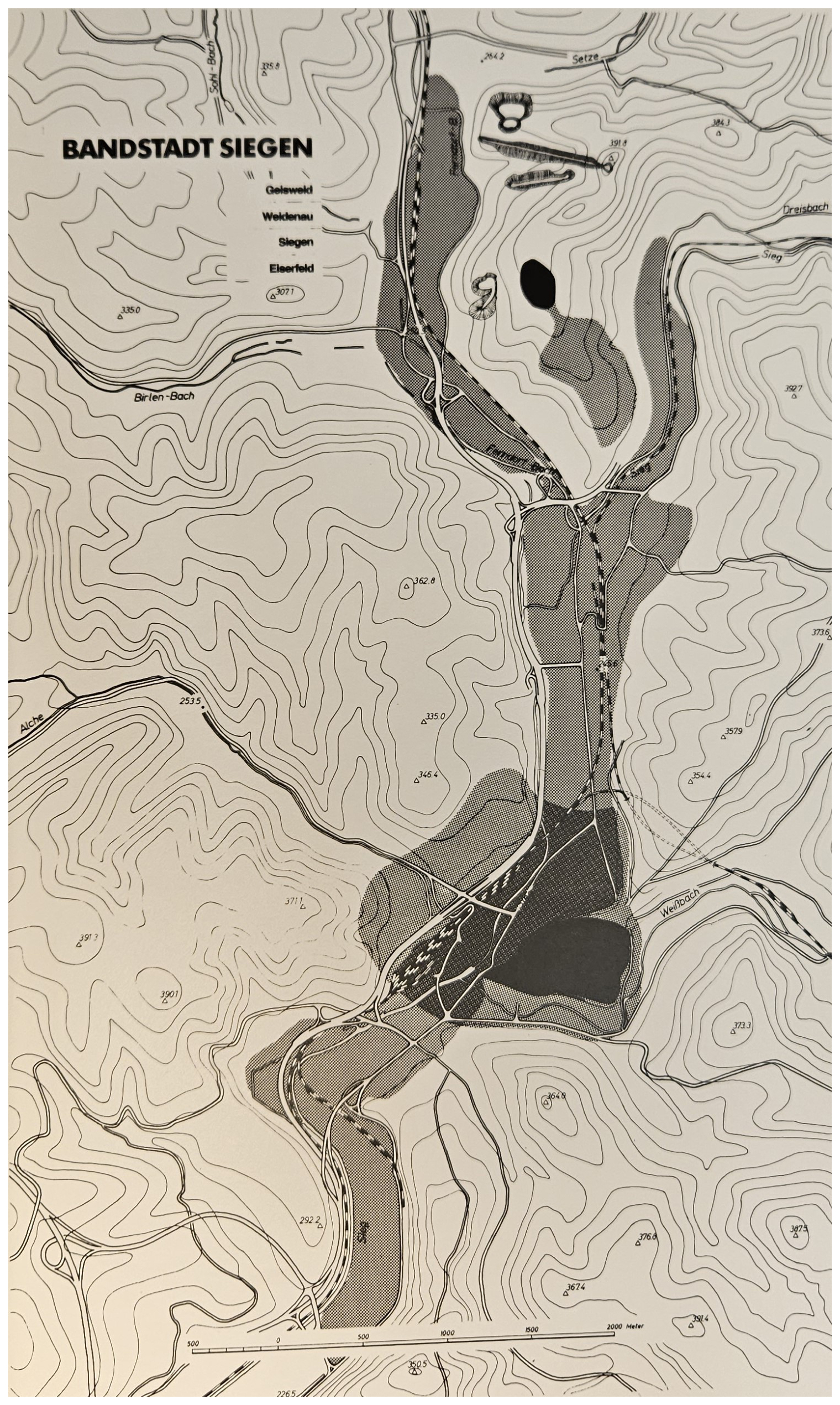
Figure 2Topographic map of the narrow Hüttental (Freese and Stadt Siegen, 1980). Reprinted with the kind permission of Siegen Municipal Archive/Stadtarchiv Siegen.
The description neither questioned the necessity of demolition nor expressed regret about this circumstance. On the contrary, the significance of the demolition was downplayed by wording that belittled the value of the building fabric or portrayed the scope of the demolition as minimal (Scholz, 1961).
Questions about the impact of such demolitions, which resulted in people being driven from their homes and from their familiar surroundings, regarding the effects on spatial identity and affiliation were not addressed in this statement. Homes – which were only addressed as houses – became objects whose demolition did not seem critical. This attitude towards an urban development that also affected the fate of the inhabitants reflected the autocratic nature of planning practices in the 1960s and 1970s. They were characterized by technocratic, segmented, and monological decision-making processes, which disregarded earlier insights into the social implications, for example, as evoked by the American sociologist Lewis Mumford (Mumford, 1963), the fragmentation of the living environment and of social relations being among them.
The press did not react critically to the planners' treatment of people's living environment but presented it as an indisputable fact. As the Siegener Zeitung stated, “it has always been clear to all stakeholders that numerous houses will have to be demolished if space is to be created for traffic in the densely populated Hüttental. There is no doubt that this is necessary. Otherwise we will suffocate from traffic in a few years' time”1 (“Lokaltermin” über Hüttental-Entlastungsstraße, 1965). The future traffic situation foretold in the newspaper article was not really far from later developments; scientific forecasts about traffic development in Hüttental; and everyday experiences at the time with regard to the traffic situation in the narrow, densely populated valley. But were the residents of the areas in the path of the route who were specifically affected or the general public truly aware of the scope of the project? This awareness only seemed to be awakening. The public was thus informed at least but, at this point, did not react critically to the plans for the motorway. Instead, according to the press, the construction was “longingly awaited” (In acht Jahren soll der Verkehr auf der Hüttentalstraße rollen, 1968). On the one hand, there was a climate of euphoria relating to large-scale urban construction projects at the time, as evidenced by the construction of the Siegplatte, a concrete covering over the River Sieg in the city centre to create parking spaces, which was another unquestioned, even celebrated, large-scale project completed in 1968 (Mysliwietz-Fleiß, 2026). On the other hand, the public did not yet seem to be aware of the dimensions and consequences of this major construction project. This changed when construction began in 1972 and the scope of the structure became clear – and, with it, the threat of a more densely built-up area.
With the demolition of the first houses on the planned route and the visual impression conveyed by the first section to be erected, public opinion about the structure changed. For example, a photo in the Westfälische Rundschau newspaper with the caption “The concrete dragon advances on the city centre” (Die sozialen Opfer bleiben unsichtbar, 1979) visualized the enormous scale of the building and its influence on the character of the surrounding urban structure 15 years after planning had begun (Fig. 3). In this image, solid concrete pillars rise so high that they would be equivalent to several storeys in height. The four lanes of the road on top of them wind their way through the narrow valley just a few metres away from the existing buildings. Fallow land accumulates beneath the route. Smaller residential buildings, as well as buses and cars on the existing roads, look like they belong in a toy world.
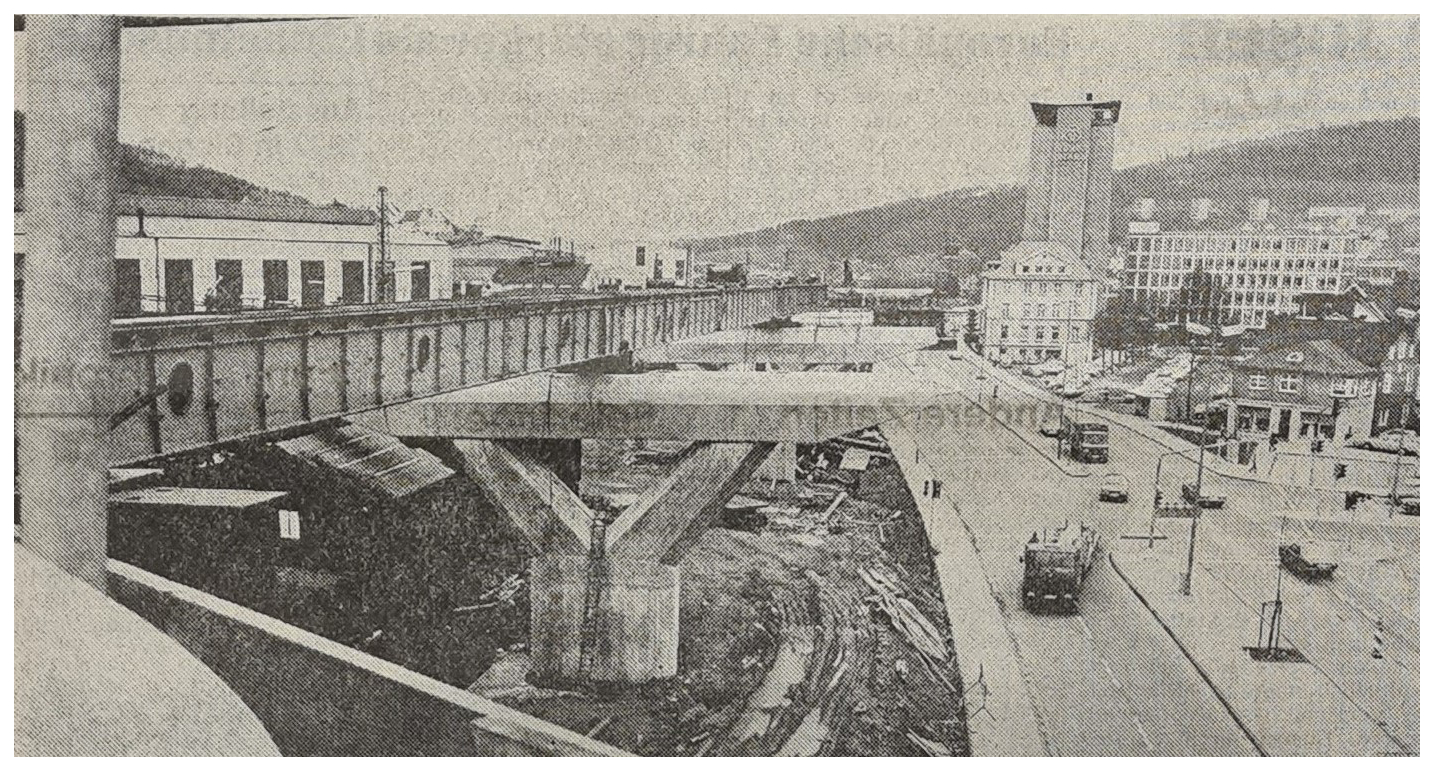
Figure 3The concrete dragon advances on the city centre. Photo from the Siegen local newspaper Westfälische Rundschau (Die sozialen Opfer bleiben unsichtbar, 1979). Reprinted with the kind permission of Funke Mediengruppe.
The shift in public opinion was reflected in the texts of reports in the local media, which used vivid language to depict the situation: the expressway was described as a concrete dragon, a monstrous structure that destroyed all the natural life around it. “The favourite child on wheels” was identified as the culprit. Even if the identification of the car as the root of all evil was probably only used in the newspaper article as a stylistic device to break down the complex plans into manageable bits, this criticism also highlighted the shift in opinion away from the optimism about progress that had prevailed in the previous decade. Instead, the newspaper article focused on the loss associated with the construction of the motorway, prominently mentioning the “social sacrifices” in the headline. The reporting focused not only on the material loss of individuals but also on the loss of the cityscape, which, for the majority, was more of an emotional loss.
However, material loss also played a role in another context. When the newly founded University of Siegen was opened in the summer of 1972, the issue of housing shortages was brought to the fore to great effect. The new university was just 2 months old when young people occupied a vacant building that had already been vacated to make way for a feeder road to the Hüttentalentlastungsstraße even though the construction of this road was not due to be completed for several years. The aim of the action was both to save urgently needed living space and to create a self-managed youth centre (Austraße 13, 1972; Das Haus Austraße 13, 1972; Hunderte Studenten besetzen das Haus Nr. 13, 1972; Außstraße 13 in Schutt und Asche, 1972; Bald Baubeginn im Bereich der Austraße, 1972). The squatting movement was an early combination of the struggle for housing with youth protest and urban protest. It was driven by young people's desires for autonomous space for their alternative lifestyles. In this respect, it also challenged the autocratic nature of urban planning and was therefore part of an initial wave of urban opposition movements after the Second World War (Mayer, 2008; Templin, 2016).
Fifteen years after the start of the planning process for the Hüttentalstraße, the construction measures encountered a different socio-political era. However, thus far, the planning authorities remained unimpressed, as the discussions about the next construction phase were to show. At that moment, it would have been possible to protect the existing residential development with an underpass, but this was rejected by the building committee with reference to the higher costs, the later completion of the project, and the possibility of 50 parking spaces underneath the elevated version even if less demolition would have been “desirable from an urban planning perspective” (Freudenberger Straße in 11m Höhe durch Siegen, 1978).
A short time later, the planning approval process for the most critical section of the route through the old, established district of Hammerhütte directly adjacent to Siegen's city centre began. In this area, the urban development impact would have been greatest due to the construction of space-consuming access ramps directly located in the residential area. Not only would 15 to 20 houses have to “disappear” (Empfindlicher Eingriff in Stadtteil Hammerhütte, 1979), but streets would also be separated from each other without the possibility of pedestrian accessibility. This would have destroyed the coherence of the district and the established neighbourhood – one of the biggest concerns of the residents in addition to the expected noise pollution (Hammerhütter wollen keine Prügelknaben der Stadt sein, 1979). “The entire face of the Hammerhütte district will be completely changed by this measure, which only looks convincing on paper as a traffic solution,” dreaded the Siegener Zeitung (Empfindlicher Eingriff in Stadtteil Hammerhütte, 1979). The associated loss was a material one in the form of the destruction of established, traditional buildings typical of the region (Fig. 5), as well as an emotional one for the residents of the houses to be demolished, who had to leave their familiar living environment. The loss of familiar routes through the neighbourhood and of an environment free of traffic noise also had a more material dimension. This, in turn, was associated with an emotional loss for the remaining population, whose established neighbourly relationships were severed by the construction measures. Finally, an aesthetic loss was also to be expected, not only for the immediate residents but also for the urban community as a whole.
Despite the clearly articulated objections of the population – whether officially in the planning approval procedure or at citizens' meetings and initiatives – the planning approval decision for this section of the route was made by the state of Northrhine–Westphalia. The federal state's government responded to the objections in a way that made it clear that, firstly, the city of Siegen's approval of the general plans many years ago meant that all objections by residents to the specific plans were now unjustified and, secondly, that citizens had nothing to expect apart from financial compensation. A reduction in the quality of life and the abandonment of so much more than the building fabric was not an issue for the Ministry of Economic Affairs and Transport (Der Minister für Wirtschaft, Mittelstand und Verkehr des Landes Nordrhein-Westfalen, 1980).
In addition to the formal responses, the city of Siegen and the state of Northrhine–Westphalia worked hand in hand to create facts by demolishing houses that they had already been able to acquire even before the start of construction of the section of the route was in sight. This was to reduce the quality of life in the neighbourhoods and thus undermine the protest of the residents and prevent, for example, too many legal protests.
Overall, a look at the construction phase since 1972 reveals a shift in discourse, which can be explained by the fact that the dimensions of the Hüttentalstraße and its impact on densely populated areas had become visible (Fig. 3). However, this also fitted into a changed socio-political climate that had abandoned the deference to authority of the 1950s and 1960s and no longer followed the planning technocrats unquestioningly (Pross, 1992). In addition, contemporaries increasingly became aware of the limits of growth at both the global and local levels. In Siegen, however, this position was met with interest not only from the city administration and politicians but also from a section of the citizenry, above all the Chamber of Industry and Commerce. The latter wanted functional transport links between Siegen and the surrounding area as the regional centre (Oberzentrum) in the Siegerland region aimed to position itself (according to Christallers Central Place Theory, Christaller, 1968) as an easily accessible commercial and shopping city (Mysliwietz-Fleiß, 2026).
When urban planners in Siegen persisted in interfering with existing living conditions in favour of a functional cityscape, ignoring the emerging discontent, various forms of urban protest arose that went beyond the previously isolated squatting of houses to preserve living space in times of housing shortages. Caused by the structural contradictions of late-capitalist society, these protests in Siegen can be classified as part of a broad movement of urban social movements in western industrialized countries, pursuing the goal of intervening in the process of social and political change at the urban level, and the wide-ranging landscape of protest movements of the 1970s and 1980s in general.2
These urban social movements took the form of civic initiatives, which, in the tradition of bourgeois associations (Honoratiorenverbände, Bürgervereine), preferred professionally oriented strategies of confrontation, for example, in the form of public debates or expert opinions. At the same time, they were part of a youth protest that, since the 1968 movement, had fought for the right to political participation at the urban level and resorted to more radical forms such as squatting or public demonstrations (Mayer, 2008; Templin, 2016).
4.1 Alternative planning proposals
As one part of the movement against the planning autocracy concerning the Hüttentalentlastungsstraße, an initiative developed in the form of the “Arbeitsgemeinschaft Rettet Siegen”. Surprisingly enough, the organization did not question the construction of the Hüttentalentlastungsstraße (HTS) in general but wanted to mitigate the effects on the residential areas instead. The Arbeitsgemeinschaft was a middle-class movement that emerged from among those directly affected. In 1979, the group had around 130 members and an extended circle of supporters consisting of around 1700 fellow citizens, most of whom came from the Hammerhütte residential area affected by the plans for the Hüttentalstraße (“Rettet Siegen” will auf die Barrikaden gehen, 1979). Accordingly, their concern was not to criticize traffic planning in the entire Hüttental valley and its overall social consequences but rather to preserve the quality of life in the specific neighbourhood of Hammerhütte:
We are not only thinking of the houses that will fall victim to demolition and the necessity for many people to leave their familiar living and memory space, but also of the residents in the vicinity of the elevated roads and bridge structures, who will now see them from below in their mighty dimensions, whose world will become darker, who will be exposed day and night to the increased noise and immission levels and whose property will lose value. (Alternativplanung Hüttentalstraße, 1980)
The loss that the Arbeitsgemeinschaft Rettet Siegen feared was specifically related to the situation within the neighbourhood.
During the negotiation process in 1980, in order to impress upon the public the impact of the planned construction measures, the initiative sketched a draft that not only traced the course of the planned road within an aerial photograph of the existing buildings but also worked in three dimensions, thus illustrating the impact of the expressway's height (Fig. 4).
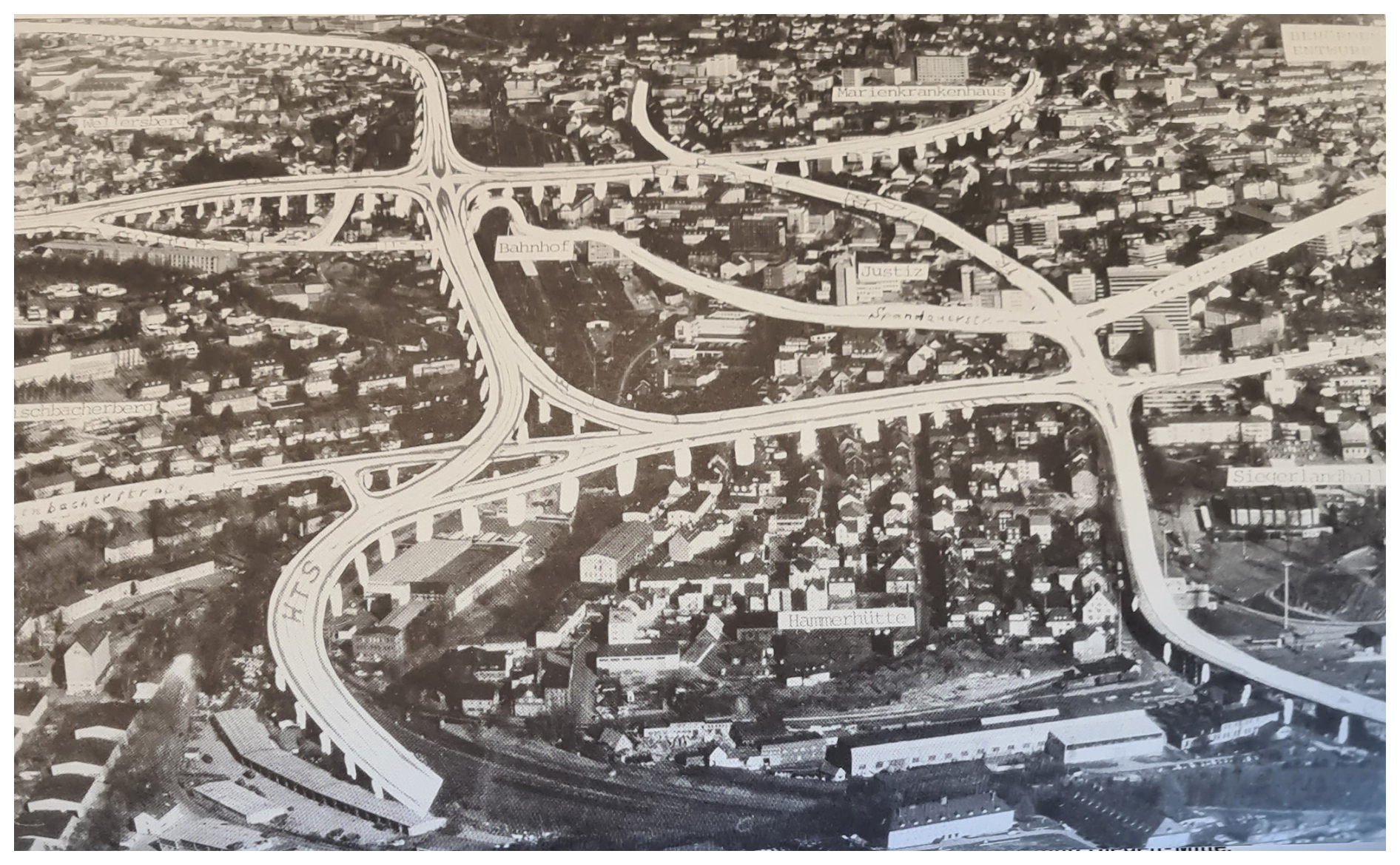
Figure 4Planning presentation by AG Rettet Siegen for the Hammerhütte (AG Rettet Siegen, 1980). Reprinted with the kind permission of Siegen Municipal Archive/Stadtarchiv Siegen.
The representation of the HTS clearly drew on the familiar conventions used to depict large transport infrastructures as symbols of modernity (see, for example, the illustrations of extensive motorways in the USA in Seitz, 1983). However, by superimposing the urban motorway onto the existing building fabric, the sketch revealed the horror of these visions of modernity. The small-looking houses seemed to be crushed beneath the comparatively massive concrete pillars, and the elevated roadway obscured the sky.
To counteract this vision, the “AG Rettet Siegen” used private funds to develop an alternative design for the construction of the Hüttentalstraße in the area of central Siegen. Instead of the official plans of an elevated road, the alternative proposal envisioned a ground-level design and a change in the position of the exits (Arbeitsgemeinschaft Rettet Siegen, 1980). The ground-level design was presented as one that took greater account of local residents, as well as their needs and wishes. Its central claim was to be much more respectful of the cityscape than the authorities' solution.
However, both the city administration and the state authority insisted on the existing plan. Though it was recognized as inferior in terms of urban development, the traffic concerns were deliberately given greater weight (Untersuchung und Bewertung von Varianten der Hüttentalstraße in Siegen-Mitte, 1980). The first houses in the Hammerhütte district were vacated and demolished in order to create facts even though construction of the section of the motorway was still years away.
4.2 Squatting as a means of communication
When it became clear that another building in the Hammerhütte, this time the prominent former Hotel Klein, was about to be demolished, it was squatted in by a spontaneous group of students, apprentices, and other young adults under the name “Initiative für eine lebenswerte Stadt” (Initiative for a city worth living in). Due to its long history as a place of meeting for the locals, it had acquired a particularly high symbolic value for the neighbourhood. In contrast to earlier actions, this squatting was not specifically about housing but rather about symbolic meaning and the right to enter into a dispute over it. As the actors themselves put it, “Squatting a building is a means of starting a public conversation” (Initiative für eine lebenswerte Stadt, 1980).
What the squatters disputed was the authorities' visions of the future urban and social character of Siegen. Instead, they presented one of their own ex negativo:
We do not want our city to continue to be made hostile to people by oversized administrative and insurance palaces, shopping centres and urban highways. That the stench of exhaust fumes and noise make life in this city impossible. We have witnessed how in Weidenau, Geisweid [the locations of the construction of earlier sections, D.M.] and in Siegen around Koch's corner established residential areas with decades-old neighbourhoods have been destroyed. We witnessed the fate of elderly people in particular, who were driven out of their homes. We have watched the brutality of “modern urban planning” for years and see great dangers for us if this development is not stopped. (Initiative für eine lebenswerte Stadt, 1980)
In the documentation the group provided in relation to the squatting, the initiative contrasted the “concrete dragon” with the established building fabric of the Hammerhütte, consisting of the typical Siegerland buildings of half-timbered houses, slate cladding, and bay windows that had developed over time and, so they emphasized, had a homely feel (Fig. 5).
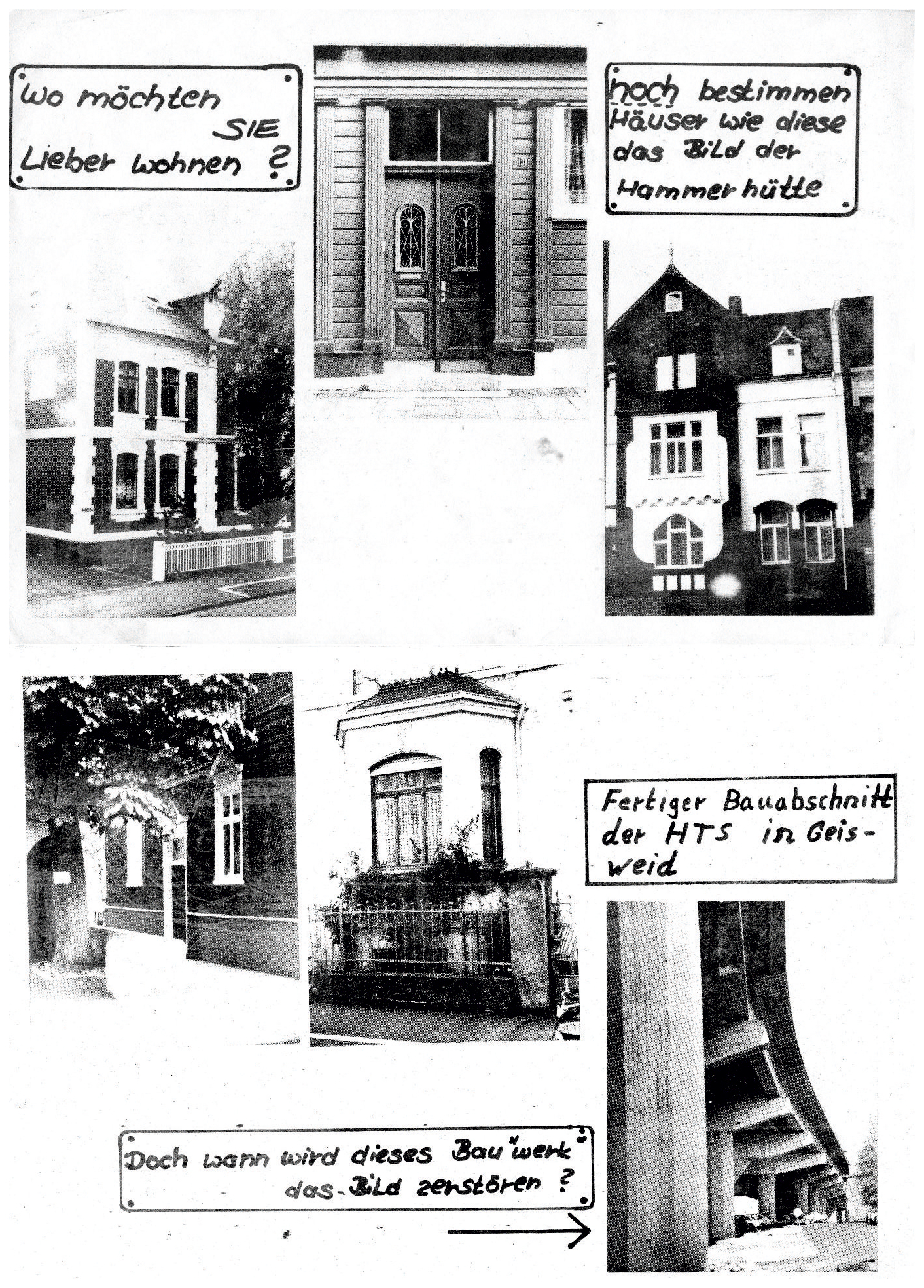
Figure 5“Where would you prefer to live?” (Initiative für eine lebenswerte Stadt, 1980).
With this criticism, the Initiative for a livable city – as its name suggests – was referring to the quality of life in the entire city of Siegen. The Hammerhütte neighbourhood ultimately served only as a focal point for its criticism of modern urban planning.
The emphasis the Initiative für eine lebenswerte Stadt put on traffic congestion and the resulting environmental impact was also noteworthy. The brochure published as part of the squatting campaign repeatedly referred to the loss of green spaces, clean air, and freedom from noise not only for the Hammerhütte but for the whole of Siegen (Initiative für eine lebenswerte Stadt, 1980). The ecologization of the protest can be seen as a general characteristic of the phase of urban social movements in the late 1970s and early 1980s (Mayer, 2008). The threatening effects of industrial exploitation of nature on people's living conditions came to the fore (Brand, 2008).
However, although the squatters were only indirectly connected to the residents of the Hammerhütte and although the inhabitants of the neighbourhood were hesitant about the method of squatting and the social formation of the squatters, as the initiative itself recognized (Initiative für eine lebenswerte Stadt, 1980), the initiative finally got the general public on their side. This mainly resulted from their intensive public relations activities, consisting of press releases, information events, and other well-considered actions. At the same time, the squatters managed to evoke great solidarity within the citizenry. Parts of the population of Siegen finally voiced harsh criticism of the actions of the responsible authorities (Bürger üben Kritik am Häuserabriß, 1980). The fact that the building was finally evacuated by Special Task Forces in a seemingly excessive night campaign was ultimately only conducive to the squatters' goal.
As in the criticism levelled by the AG Rettet Siegen, the Initiative für eine lebenswerte Stadt denounced both a material and an emotional loss and ultimately also an aesthetic loss. Even though the two initiatives differed in character as urban social movements and chose different methods to express their criticism, their substantive points were nevertheless the same.
Ultimately, it was the legal action that paved the way for a new plan. The Arbeitsgemeinschaft Rettet Siegen, acting on behalf of and together with the affected citizens, filed a lawsuit against the planning act in various instances and continued to work on drafts for a new route. The planning approval decisions for downtown Siegen were finally revoked in 1985. The reasons given were essentially the adverse effects on and fragmentation of residential areas (Gegenüberstellung und Beurteilung der untersuchten Varianten für den Neubau der B 62n in Siegen-Mitte, 1986). The necessary redesign of the road layout, which was submitted to the Siegen City Council in 1986, then showed the necessary change of mind:
The recording and consideration of the effects of the road, such as noise pollution, fuel consumption, time requirements, separation effect, accessibility, space requirements, etc. must not be neglected, but must be integrated into the dominant objective – protection of residential areas – and treated in an urban planning manner. A utility value analysis based only on the Hüttentalstraße and its connections is therefore no longer appropriate. (Gegenüberstellung und Beurteilung der untersuchten Varianten für den Neubau der B 62n in Siegen-Mitte, 1986)
With this in mind, the vote ultimately went in favour of an alternative that tunnelled under residential areas, relocated junctions to less built-up areas, used already well-developed feeder roads, and lowered the overall height of the roadway. As many examples in Germany showed, the time when urban highways were planned on an oversized scale was over. Instead, plans were devised that construction should be subordinate to people's living space (Schmucki, 1998). This shows that new “planning cultures” can emerge from the complex interaction between the established and the radically new, as well as between what is decreed by the state and what is fought for through protest (Haumann, 2011).
“We want to live without the street, we want trees instead of concrete.”3 This demand from the documentation of the occupation of the Hotel Klein, which is set out in the “The Ballad of Cyclist Mack the Knife”4 as part of the documentation of the squatting, ultimately raises the question, half ironically, regarding who ultimately has power over public space or how it is exercised (Initiative für eine lebenswerte Stadt, 1980). The impending loss not just of a few houses in certain neighbourhoods but of the fundamental character of the city, whose transformation had previously been determined too much by the concrete modernism of the post-war boom era, had shaken up urban society and put the protest against administration and politics on a broad level. The events in Siegen can be placed in a broader international context of protests against urban highways, which were conducted using similar means and arguments, for example, in Philadelphia (Haumann, 2011) or San Francisco (Roth, 1969). It was the changed interpretive patterns of late modernity that led to a changed perception of loss in urban space.
Ironically, the publication that finally documented the completion of the Hüttentalstrasse in 1998 described this development as positive and desirable: “Only with the participation and cooperation of federal, state and local politicians as well as critical citizens and associations was it possible to achieve the overall goal of traffic management that was compatible with the city.” This quote completely ignores the almost narrow-minded attitude of politicians and administrators from the years of protest, assuming that they could determine the built urban landscape through bureaucratic procedures from above, which dated back to a time when all planning fantasies still seemed feasible.
The underlying research data can be found either in the archives, newspapers, or scholarly publications mentioned. Online access to the archives, newspapers, and most academic publications is not available.
The author has declared that there are no competing interests.
Publisher's note: Copernicus Publications remains neutral with regard to jurisdictional claims made in the text, published maps, institutional affiliations, or any other geographical representation in this paper. The authors bear the ultimate responsibility for providing appropriate place names. Views expressed in the text are those of the authors and do not necessarily reflect the views of the publisher.
I would like to thank the Siegen Municipal Archive for its support.
This paper was edited by Manuel Schramm and reviewed by three anonymous referees.
Alternativplanung Hüttentalstraße Siegen-Mitte: Informationen, Dokumentationen der AG Rettet Siegen, 3. Juni 1980, Siegen Municipal Archive/Stadtarchiv Siegen, Best. 762/Behördendrucksachen, Nr. 1017, 1980.
Arbeitsgemeinschaft Rettet Siegen: Informationen, Dokumentation der AG Rettet Siegen, Siegen 1980, municipal archive/Stadtarchiv Siegen, 762/Behördendrucksachen, Nr. 1017, 1980.
Austraße 13: Auf das häßliche Haus kommt es gar nicht an – Diskussionen im Kerzenschimmer – Verworrene Situation – Haus soll besetzt gehalten werden, in: Westfalenpost, edition for the Siegerland region, 28 July 1972.
Austraße 13 in Schutt und Asche: Morgens kam der Bagger – Samstag: Protestmarsch – Gespräch gestern Nachmittag war sinnlos, in: Westfalenpost, edition for the Siegerland region, 13 December 1972.
Bald Baubeginn im Bereich der Austraße: Ziel: Billig und schnell praktischen Nutzen schaffen – Hausbesetzer schrieben an den Bundesverkehrsminister, in: Siegener Zeitung, 16 December 1972.
Brand, K.-W.: Umweltbewegung, in: Die sozialen Bewegungen in Deutschland seit 1945, Ein Handbuch, edited by: Roth, R. and Rucht, D., Campus-Verlag, Frankfurt am Main, 219–244, ISBN 3-593-38372-1, 2008.
Bürger üben Kritik am Häuserabriß, in: Westfälische Rundschau, edition for the Siegerland region, 20 September 1980.
Christaller, C.: Die zentralen Orte in Süddeutschland: Eine ökonomisch-geographische Untersuchung über die Gesetzmäßigkeit der Verbreitung und Entwicklung der Siedlungen mit städtischen Funktionen, 2nd Edn. of the reprint of the 1933 edition, Wissenschaftliche Buchgesellschaft, Darmstadt, 1968.
Das Haus Austraße 13, in: Siegener Zeitung, 12 December 1972.
Delius, H.: Die Wiederaufbaupläne der Stadt Siegen, Siegerland, 1, 43–56, 1950.
Der Minister für Wirtschaft, Mittelstand und Verkehr des Landes Nordrhein-Westfalen: Planfeststellungsbeschluß, Betr. Bundesstraße 54/62n (Hüttentalstraße); hier: Neubau von km 21+900 bis km 23+057 einschließlich der Anschlußstelle “Freudenberger Straße” in der Stadt Siegen, Düsseldorf, 29 October 1980.
Die sozialen Opfer bleiben unsichtbar, in: Westfälische Rundschau, edition for the Siegerland region, 22 December 1979.
Doering-Manteuffel, A. and Raphael, L.: Nach dem Boom. Perspektiven auf die Zeitgeschichte seit 1970, 3rd Edn., Vandenhoeck & Ruprecht, Göttingen, ISBN 978-3-647-30013-9, 2012.
Empfindlicher Eingriff in Stadtteil Hammerhütte: Kreuzung Achenbacher Straße wird vielgliedriges Ornament – Planfesstellungsverfahren läuft zur Zeit bis 22. Juni – Ley erklärt Projekt vor Bausschuß – Bis zu 20 Häuser fallen, in: Siegener Zeitung, 13 June 1979.
Esser, J. and Hirsch, J.: Stadtsoziologie und Gesellschaftstheorie: Von der Fordismus-Krise zur “postfordistischen” Regional- und Stadtstruktur, in: Die Materialität des Städtischen: Stadtentwicklung und Urbanität im gesellschaftlichen Umbruch, edited by: Prigge, W., Birkhäuser, Basel, 31–56, ISBN 978-3-7643-1917-5, 1987.
Freese, H. and Stadt Siegen: Gesamtgutachten. Eine Untersuchung über die geplante Hochstraße B 54/62n (HTS km, 140 – 24,700) mit Anschlussstellen Freudenberger Straße und Achenbacher Straße, 07.02.1980, Stadtarchiv Siegen, 762/Behördendrucksachen, Nr. 1034, 1980.
Freudenberger Straße in 11m Höhe durch Siegen: Unterführung von der Wellersbergstraße bis zur Sandstraße städtebaulich wünschenswert, aber 4.6 Mill. DM teurer, in: Siegener Zeitung, 18 April 1978.
Gegenüberstellung und Beurteilung der untersuchten Varianten für den Neubau der B 62n in Siegen-Mitte: Vorlage des Rates der Stadt Siegen am 26.02.1986, SNBA Siegen, Februar 1986, Siegen Municipal Archive/Stadtarchiv Siegen, Best. 762/Behördendrucksachen, Nr. 932, 1986.
Hammerhütter wollen keine Prügelknaben der Stadt sein – Bewohner luden Ärger auf Bürgerversammlung ab – Zwei “gelbe Häuser” schaffen Verdruß, in: Siegener Zeitung, 22 August 1979.
Harlander, T.: Wohnen und Stadtentwicklung in der Bundesrepublik, in: Geschichte des Wohnens, Vol. 5: 1945 bis heute: Aufbau, Neubau, Umbau, edited by: Flagge, I., Deutsche Verlangsanstalt, Stuttgart, 233–418, ISBN 3421031150, 1999.
Jacobs, J.: The Death and Life of Great American Cities, Vintage Books, New York, 1961.
Haumann, S.: “Schade, daß Beton nicht brennt…” Planung, Partizipation und Protest in Philadelphia und Köln 1940–1990, Franz Steiner Verlag, Stuttgart, ISBN 978-3-515-09889-2, 2011.
Häußermann, H., Läpple, D., and Siebel, W.: Stadtpolitik, Suhrkamp, Bonn, ISBN 978-3-518-12512-0, 2008.
Hunderte Studenten besetzten das Haus Nr. 13: Polizisten mit Diensthunden räumten das Feld – Junge Leute: “Selbst Baggern wollen wir trotzdem!” – Straßenneubauamt verzichtet auf Stellungnahme, in: Westfälische Rundschau, edition for the Siegerland region, 27 October 1972.
In acht Jahren soll der Verkehr auf der Hüttentalstraße rollen, in: Westfälische Rundschau, edition for the Siegerland region, 23 February 1968.
Initiative für eine lebenswerte Stadt: Dokumentation zur Hausbesetzung des ehemaligen “Hotel Klein”, Koblenzerstr., Siegen, vom 12.9–30.9.80, webpage Materialien zur Analyse von Opposition (MAO), edited by: Kesten, D. and Schröder, J., filed in: Internet Archive, Wayback Machine, https://web.archive.org/web/20241205102455/https:/www.mao-projekt.de/BRD/NRW/ARN/Siegen_Hausbesetzung_1980_Hotel_Klein.shtml (last access: 16 October 2025), 1980.
Jappe, A.: Béton: Arme de construction massive du capitalisme, Montreuil, L'Echappée, ISBN 978-2-37309-077-2, 2020.
Jarausch, K. H.: Verkannter Strukturwandel. Die siebziger Jahre als Vorgeschichte der Probleme der Gegenwart, in: Das Ende der Zuversicht? Die siebziger Jahre als Geschichte, edited by: Jarausch, K. H., Vandenhoeck and Ruprecht, Göttingen, 9–28, ISBN 978-3-525-36153-5, 2008.
Klenke, D.: “Freier Stau für freie Bürger”: Die Geschichte der bundesdeutschen Verkehrspolitik 1949–1994, Wissenschaftliche Buchgesellschaft, Darmstadt, ISBN 3534123018, 1995.
Latsch, A.: Die Stadtentwicklung Siegens nach dem Zweiten Weltkrieg: Phasen und Leitbilder des Wiederaufbaus, Master's Thesis, Siegen 2005.
“Lokaltermin” über Hüttental-Entlastungsstraße, in: Siegener Zeitung, 29 January 1965.
Mayer, M.: Städtische soziale Bewegungen, in: Die sozialen Bewegungen in Deutschland seit 1945, Ein Handbuch, edited by: Roth, R. and Rucht, D., Campus-Verlag, Frankfurt am Main, 293–318, ISBN 3-593-38372-1, 2008.
Mitscherlich, A.: Die Unwirtlichkeit unserer Städte: Anstiftung zum Unfrieden, Suhrkamp Verlag, Frankfurt, 1965.
Mumford, L.: The Highway and the City, Harcourt, Brace, Jovanovich, New York, ISBN 978-0-15-640216-3, 1963.
Mysliwietz-Fleiß, D.: Vom Parkdeck zur Flusslandschaft. Aushandlung von Urbanität am Beispiel von Bau und Abriss der Siegplatte als Doing City, in: Moderne Stadtgeschichte: “Doing City” – Praktiken von Urbanität, Perspektiven in westdeutschen Städten, 2026.
Niederschrift über die Sitzung des Siegener Kreisausschusses:25.3.1952, Siegen-Wittgenstein District Archive/Kreisarchiv Siegen-Wittgenstein, A72, 1952.
Pross, H.: Protestgesellschaft: Von der Wirksamkeit des Widerspruchs, Artemis & Winkler, München, ISBN 3760819419, 1992.
Reckwitz, A.: Verlust: Ein Grundproblem der Moderne, Suhrkamp Verlag, Berlin, ISBN 978-3-518-78065-7, 2024.
Reichow, H. B.: Die autogerechte Stadt: Ein Weg aus dem Verkehrs-Chaos, Maier, Ravensburg, 1959.
“Rettet Siegen” will auf die Barrikaden gehen, in: Siegener Zeitung, 18 December 1979.
Roth, U.: Amerikanischen Bürgern wird vermehrte Einflussnahme auf Autobahnentscheide gewährt, in: Das Werk: Architektur und Kunst, 56, 605–607, 1969.
Schmucki, B.: Schneisen durch die Stadt – Sinnbild der “modernen” Stadt, Stadtautobahnen und amerikanisches Vorbild in Ost- und Westdeutschland, 1925–1975, in: WerkstattGeschichte, 21, 43–63, https://werkstattgeschichte.de/wp-content/uploads/2017/01/WG21_043-063_SCHMUCKI_STADT.pdf (last access: 19 June 2026), 1998.
Scholz, G.: Hüttental-Entlastungsstraße.,Bundesstraßen 54 und 62, Erläuterungsbericht, Teil 1, 1961, Siegen Municipal Archive/Stadtarchiv Siegen, 762/Behördendrucksachen, Nr. 930, 1961.
Schröteler-von Brandt, H.: Stadtbau- und Stadtplanungsgeschichte: Eine Einführung, 2nd Edn., Springer Fachmedien, Wiesbaden, ISBN 9783658025618, 2008.
Seißler, H.: Was ist schlimmer als verlieren? Siegen, in: Süddeutsche Zeitung, Magazin, Nr. 31, 26–31, 2 August 1996, Siegener Zeitung, 1 September 1979.
So teuer wie noch keine: Hüttentalstraße 400 Millionen, in: Siegener Zeitung, 20 April 1972.
Stadtverwaltung Siegen: Siegen. Kriegsschäden und Wiederaufbau: Denkschrift aus Anlaß des Besuches der Landesregierung Nordrhein-Westfalen, Siegen 1949, Siegen Municipal Archive/Stadtarchiv Siegen, 762/Behördendrucksachen, Nr. 781, 1949.
Templin, D.: Beyond the Metropolises: Youth Centre Initiatives in the “Youth Revolt” of 1980–81 in West Germany, in: A European Youth Revolt: European Perspectives on Youth Protest and Social Movements in the 1980s, edited by: Andresen, K. and van der Stehen, B., Palgrave Macmillan, Basingstoke, 67–80, ISBN 9781137565709, 2016.
Untersuchung und Bewertung von Varianten der Hüttentalstraße in Siegen-Mitte: Heft 1: Erläuterungsbericht. Dipl.-Ing. Gerhard Salveter, Mai 1980, Siegen Municipal Archive/Stadtarchiv Siegen, 762/Behördendrucksachen, Nr. 1032, 1980.
Es sei “allen Beteiligten schon immer klar gewesen, daß zahlreiche Häuser fallen müssen, wenn man dem Verkehr im dicht besiedelten Hüttental Raum schaffen will. Daß dies notwendig ist, darüber gibt es keinen Zweifel. Sonst werden wir in einigen Jahren am Verkehr ersticken.”
If one were to trace the complete history of the construction of the Hüttental Relief Road, this would naturally also involve examining the political actors in greater detail. In this study, this aspect is set aside in favour of focusing on Siegen's civil society.
“Wir wollen leben ohne die Straße, wir wollen Bäume, statt Beton.”
“Moritat vom Fahrradfahrer Macky Messer”