
Articles | Volume 81, issue 2
https://doi.org/10.5194/gh-81-255-2026
© Author(s) 2026. This work is distributed under
the Creative Commons Attribution 4.0 License.
the Creative Commons Attribution 4.0 License.
https://doi.org/10.5194/gh-81-255-2026
© Author(s) 2026. This work is distributed under
the Creative Commons Attribution 4.0 License.
the Creative Commons Attribution 4.0 License.
Standard article
| 
14 Apr 2026
Standard article |
| 14 Apr 2026
| 14 Apr 2026
Cellular agriculture in the media: newspaper coverage in Australia, Brazil, Germany, and India
Brenda Buhr Voth
CORRESPONDING AUTHOR
Cellular Animal Science Laboratory, Federal University of Paraná, Rua dos Funcionários, 1540, Cabral, CEP 80.035-050, Curitiba, Paraná, Brazil
Peter Rothe
Institute of Geography – TUD Dresden University of Technology, Helmholtzstraße 10, 01069 Dresden, Germany
Rodrigo Luiz Morais-da-Silva
Graduate Program in Management (PPGADM), Federal University of Paraná (UFPR), 632 Prefeito Lothário Meissner Avenue, Jardim Botânico, Curitiba/Paraná, Brazil
Mariana Hase Ueta
Wageningen University & Research, Building 201, Hollandseweg 1, 6706KN, Wageningen, the Netherlands
Frank Meyer
Leibniz Institute for Regional Geography, Schongauerstr. 9, 04328 Leipzig, Germany
Carla Forte Maiolino Molento
Cellular Animal Science Laboratory, Federal University of Paraná, Rua José Brusamolin, 157, São Lourenço, CEP 82.210-280, Curitiba, Paraná, Brazil
Related authors
No articles found.
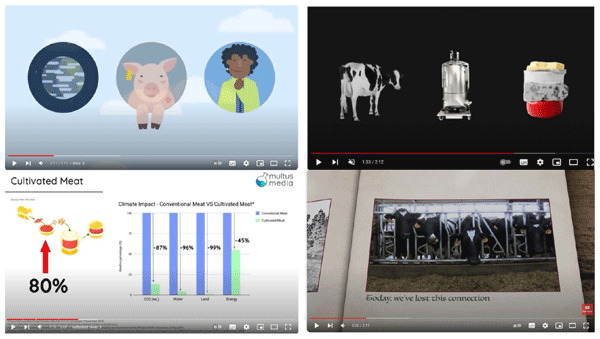
Frank I. Müller, Frank Meyer, and Judith Miggelbrink
Geogr. Helv., 81, 463–479, https://doi.org/10.5194/gh-81-463-2026, https://doi.org/10.5194/gh-81-463-2026, 2026
Short summary
Short summary
We look at how cellular agriculture (CellAg) companies use visual storytelling to embed research on and the production of lab-grown meat within larger environmental themes. The videos highlight lab-grown meat as a necessary shift from traditional farming towards a more sustainable food production. We identified six main narrative patterns, such as technological advancement, scale of production, and ethical benefits, showing how CellAg companies promote their technology as eco-friendly and viable.
Kristine Beurskens, Frank Meyer, and Francis Harvey
Geogr. Helv., 77, 317–322, https://doi.org/10.5194/gh-77-317-2022, https://doi.org/10.5194/gh-77-317-2022, 2022
Short summary
Short summary
Population geography shows a marked trend towards the increased relevance of qualitative research methods. The article discusses how the visualisation of qualitative research in particular has the potential to provide impulses for progressive developments of both theoretical and methodological dimensions of population geography research. The opportunities call for systematic exploration and exchange on qualitative visualisation and on the conditions for its further development.
Cited articles
Adi, P., Mulyani, R., Yudhistira, B., Chang, C. K., Gavahian, M., and Hsieh C. W.: Designing cultivated meat: Overcoming challenges in the production process and developing sustainable packaging solutions, Trends in Food Science & Technology, 152, 104675, https://doi.org/10.1016/j.tifs.2024.104675, 2024.
Ampudia, R.: Carne de laboratório tenta ganhar escala para chegar ao supermercado, Folha de S. Paulo, https://www1.folha.uol.com.br/tec/2020/01/carne-de-laboratorio-tenta-ganhar-escala-para-chegar-ao-supermercado.shtml (last access: 11 May 2023), 6 January 2020.
Arora, R. S., Brent, D. A., and Jaenicke, E. C.: Is India Ready for Alt-Meat? Preferences and Willingness to Pay for Meat Alternatives, Sustainability, 12, 4377, https://doi.org/10.3390/su12114377, 2020.
Balasubramanian, D.: Vegans, vegetarians, and “invitrotarians”. Researchers are applying cell and tissue engineering to grow edible meat in the laboratory, or in vitro, The Hindu, https://www.thehindu.com/sci-tech/Vegans-vegetarians-and-lsquoinvitrotarians/article15456954.ece (last access: 11 May 2023), 24 February 2011.
Baum, C. M., Bröring, S., and Lagerkvist, C. J.: Information, attitudes, and consumer evaluations of cultivated meat, Food Quality Preference, 92, 1–14, https://doi.org/10.1016/j.foodqual.2021.104226, 2021.
Baum, C. M., Verbeke, W., and De Steur, H.: Turning your weakness into my strength: How counter-messaging on conventional meat influences acceptance of cultured meat, Food Qual. Prefer., 2, 104485, https://doi.org/10.1016/j.foodqual.2021.104485, 2022.
Beckers, M. and Dietz, C.: So essen wir in Zukunft, Süddeutsche Zeitung, https://www.sueddeutsche.de/wissen/forschung-zur-ernaehrung-weniger-tier-mehr-technik-1.1898724 (last access: 13 March 2024), 10 March 2014.
Bidoglio, G. A., Schwarzmueller, F., and Kastner, T.: A global multi-indicator assessment of the environmental impact of livestock products, Global Environmental Change, 87, 102853, https://doi.org/10.1016/j.gloenvcha.2024.102853, 2024.
Bild: Was steckt hinter dem Fleisch der Zukunft?, Bild, https://www.bild.de/ratgeber/verbrauchertipps/verbrauchertipps/ fleischlose-alternativen-bill-gates-investiert-in-fleisch-der-zukunft-59681198.bild.html (last access: 4 March 2024), 22 January 2019.
BLE: Consumption of meat per capita falls below 52 kilograms, https://www.ble.de/SharedDocs/Meldungen/EN/2024/240510_Meat-Consumption.html (last access: 2 August 2024), 2023.
Bogueva, D. and Marinova, D.: Cultured Meat and Australia's Generation Z, Frontiers in Nutrition, 7, 148, https://doi.org/10.3389/fnut.2020.00148, 2020.
Broad, G. M.: Understanding the (Fake) Meat Debates: The Alternative Protein Ideological Circle, Nutr. Today, 58, 181, https://doi.org/10.1097/NT.0000000000000617, 2023.
Bruckert, M.: Chicken Politics, Gastronomica, 21, 33–46, https://doi.org/10.1525/gfc.2021.21.2.33, 2021.
Bryant, C. and Barnett, J.: Consumer acceptance of cultured meat: A systematic review, Meat Science, 143, 8–17, https://doi.org/10.1016/j.meatsci.2018.04.008, 2018.
Bryant, C. J. and Barnett, J. C.: What's in a name? Consumer perceptions of in vitro meat under different names, Appetite, 137, 104–113, https://doi.org/10.1016/j.appet.2019.02.021, 2019.
Bryant, C. and Krelling, F.: Proteínas Alternativas no Brasil: um Estudo de Nomenclatura sobre Carnes Vegetais e Carnes Cultivadas, https://gfi.org.br/wp-content/uploads/2021/02/Estudo-de-nomenclatura.pdf (last access: 7 August 2024), 2021.
Bryant, C. J. and van der Weele, C.: The farmers' dilemma: Meat, means, and morality, Appetite, 167, 105605, https://doi.org/10.1016/j.appet.2021.105605, 2021.
Bryant, C., Szejda, K., Parekh, N., Deshpande, V., and Tse, B.: A Survey of Consumer Perceptions of Plant-Based and Clean Meat in the USA, India, and 135 China, Frontiers in Sustainable Food Systems, 3, 11, https://doi.org/10.3389/fsufs.2019.00011, 2019.
Burla, L., Knierim, B., Barth, J., Liewald, K., Duetz, M., and Abel, T.: From Text to Codings: Intercoder Reliability Assessment in Qualitative Content Analysis, Nursing Research, 57, 113–117, https://doi.org/10.1097/01.NNR.0000313482.33917.7d, 2008.
Carolan, M.: Sustainable Protein Transitions or Transformations: Contested Agrifood Frames Across “No Cow” and “Clean Cow” Futures, Sustainability, 17, 6, https://doi.org/10.3390/su17062637, 2025.
Chelladurai, K. S., Christyraj, J. D. S., Rajagopalan, K., Yesudhason, B. V., Venkatachalam, S., Mohan, M., Vasantha, N. C., and Christyraj, J. R. S. S.: Alternative to FBS in animal cell culture: An overview and future perspective, Heliyon, 7, e07686, https://doi.org/10.1016/j.heliyon.2021.e07686, 2021.
Chen, Z., Jin, J., and Li, M.: Does media coverage influence firm green innovation? The moderating role of regional environment, Technology in Society, 70, 102006, https://doi.org/10.1016/j.techsoc.2022.102006, 2022.
Chriki, S., Ellies-Oury, M., Fournier, D., Liu, J., and Hocquette, J.: Analysis of Scientific and Press Articles Related to Cultured Meat for a Better Understanding of Its Perception, Frontiers in Psychology, 11, https://doi.org/10.3389/fpsyg.2020.01845, 2020.
Chriki, S., Ellies-Oury, M.-P., and Hocquette, J.-F.: Is “cultured meat” a viable alternative to slaughtering animals and a good comprise between animal welfare and human expectations?, Animal Frontiers, 12, 35–42, https://doi.org/10.1093/af/vfac002, 2022.
Chriki, S., Alhujaili, A., Hallman, W. K., Payet, V., Ellies-Oury, M. P., and Hocquette, J. F.: Attitudes toward artificial meat in Arab countries, Journal of Food Science, 89, 9711–9731, https://doi.org/10.1111/1750-3841.17559, 2024.
Companhia Nacional de Abastecimento: Perspectivas para a agropecuária, Brasília, v.12 – safra 2024/25, 1–144, http://www.conab.gov.br (last access: 23 July 2025), 2024.
Curtis, K. R., McCluskey, J. J., and Swinnen, J. F.: Differences in global risk perceptions of biotechnology and the political economy of the media, International Journal of Global Environmental Issues, 8, 77–89, https//doi.org/10.1504/IJGENVI.2008.017261, 2008.
Dilworth, T. and McGregor, A.: Moral Steaks? Ethical Discourses of In Vitro Meat in Academia and Australia, Journal of Agricultural and Environmental Ethics, 28, 85–107, https://doi.org/10.1007/s10806-014-9522-y, 2015.
Faccio, E. and Guiotto Nai Fovino, L.: Food neophobia or distrust of novelties? Exploring consumers' attitudes toward GMOs, insects and cultured meat, Applied Sciences, 9, 4440, https://doi.org/10.3390/app9204440, 2019.
FAO (Food and Agriculture Organization of the United Nations): Food safety aspects of cell-based food, FAO, https://doi.org/10.4060/cc2241en, 2022.
FAO (Food and Agriculture Organization of the United Nations): Meat market review, FAO, https://openknowledge.fao.org/server/api/core/bitstreams/ae4eb1ec-613d-478c-8361-c9bdba1df559/content (last access: 9 April 2024), 2023.
Fasanelli, R., Casella, E., Foglia, S., Coppola, S., Luongo, A., Amalfi, G., and Piscitelli, A.: Is Cultured Meat a Case of Food or Technological Neophobia? On the Usefulness of Studying Social Representations of Novel Foods, Appl. Sci., 15, 5, https://doi.org/10.3390/app15052795, 2025.
Ford, H., Zhang, Y., Gould, J., Danner, L., Bastian, S. E. P., Ford, R., and Yang, Q.: Applying regression tree analysis to explore willingness to reduce meat and adopt protein alternatives among Australia, China and the UK, Food Quality and Preference, 112, 105034, https://doi.org/10.1016/j.foodqual.2023.105034, 2023.
Ford, H., Zhang, Y., Gould, J., Danner, L., Bastian, S. E. P., and Yang, Q.: Comparing motivations and barriers to reduce meat and adopt protein alternatives amongst meat-eaters in Australia, China and the UK, Food Quality and Preference, 118, 105208, https://doi.org/10.1016/j.foodqual.2024.105208, 2024.
Fidder, L. and Graça, J.: Aligning cultivated meat with conventional meat consumption practices increases expected tastefulness, naturalness, and familiarity, Food Quality and Preference, 109, 104911, https://doi.org/10.1016/j.foodqual.2023.104911, 2023.
Gerber, P. J., Steinfeld, H., Henderson, B., Mottet, A., Opio, C., Dijkman, J., Falcucci, A., and Tempio, G.: Tackling climate change through livestock – A global assessment of emissions and mitigation opportunities, Food and Agriculture Organization of the United Nations (FAO), Rome, https://www.fao.org/4/i3437e/i3437e.pdf (last access: 23 March 2026), 2013.
Gómez-Luciano, C. A., De Aguiar, L. K., Vriesekoop, F., and Urbano, B.: Consumers' willingness to purchase three alternatives to meat proteins in the United Kingdom, Spain, Brazil and the Dominican Republic, Food Quality and Preference, 78, 103732, https://doi.org/10.1016/j.foodqual.2019.103732, 2019.
Good Food Institute: The State of Global Policy on Alternative Proteins 2023, https://gfi.org/wp-content/uploads/2024/05/State-of-Global-Policy-on-Alternative-Proteins-2023.pdf (last access: 27 November 2024), 2024.
Goodman, M., Wylie, A., Sexton, A., Lewis, K., Rose, D., MacMillan, T., and Manning, L.: Analysis of the Narrative Grammars of Cultured Meat in UK Food and Farming Media, The International Journal of Sociology of Agriculture and Food, 30, 117–138, https://doi.org/10.48416/ijsaf.v30i2.684, 2024.
Goodwin, J. N. and Shoulders, C. W.: The future of meat: a qualitative analysis of cultured meat media coverage, Meat Science, 95, 445–450, https://doi.org/10.1016/j.meatsci.2013.05.027, 2013.
Guthman, J. and Biltekoff, C.: Magical disruption? Alternative protein and the promise of de-materialization, Environment and Planning E: Nature and Space, 4, 1583–1600, https://doi.org/10.1177/2514848620963125, 2021.
Hansen, J., Sparleanu, C., Liang, Y., Büchi, J., Bansal, S., Caro, M. Á., and Staedtler, F.: Exploring cultural concepts of meat and future predictions on the timeline of cultured meat, Future Foods, 4, 100041, https://doi.org/10.1016/j.fufo.2021.100041, 2021.
Happer, C. and Wellesley, L.: Meat consumption, behaviour and the media environment: a focus group analysis across four countries, Food Sec., 11, 123–139, https://doi.org/10.1007/s12571-018-0877-1, 2019.
Heidemann, M. S., Molento, C. F. M., Reis, G. G., and Phillips, C. J. C.: Uncoupling meat from animal slaughter and its impacts on human-animal relationships, Frontiers in Psychology, 11, 1824, https://doi.org/10.3389/fpsyg.2020.01824, 2020.
Heinke, J., Lannerstad, M., Gerten, D., Havlík, P., Herrero, M., Notenbaert, A. M. O., Hoff, H., and Müller, C.: Water Use in Global Livestock Production – Opportunities and Constraints for Increasing Water Productivity, Water Resources Research, 56, e2019WR026995, https://doi.org/10.1029/2019WR026995, 2020.
Helliwell, R. and Burton, R. J. F.: The promised land? Exploring the future visions and narrative silences of cellular agriculture in news and industry media, Journal of Rural Studies, 84, 180–191, https://doi.org/10.1016/j.jrurstud.2021.04.002, 2021.
Henry, B., Charmley, E., Eckard, R., Gaughan, J. B., and Hegarty, R.: Livestock production in a changing climate: Adaptation and mitigation research in Australia, Crop and Pasture Science, 63, 191, https://doi.org/10.1071/CP11169, 2012.
Herald Sun: Australians under-30 riding the green investment wave, Herald Sun, registration required, https://www.dailytelegraph.com.au/subscribe/news/1/?sourceCode=DTWEB_WRE170_a_GGL&dest=https%3A%2F%2Fwww.dailytelegraph.com.au%2Ftechnology%2Fenvironment%2Faustralians-under30-riding-the-green-investment-wave%2Fnews-story%2Feb13e7cf1e7b5237402f0a13cea89224&memtype=anonymous&mode=premium&v21=GROUPA-Segment-1-NOSCORE (last access: 24 March 2026), 22 October 2021.
Herziger, A.: Moving beyond meat: Perceived unnaturalness and disgust across cultured foods, Journal of Environmental Psychology, 98, 102384, https://doi.org/10.1016/j.jenvp.2024.102384, 2024.
Hiranandani, A.: Restructuring our food system for a healthy world, The Hindu, https://www.thehindu.com/opinion/op-ed/restructuring-our-food-system-for-a-healthy-world/article31273787.ece (last access: 23 March 2026), 7 April 2020.
Hocquette, J.-F.: Is in vitro meat the solution for the future?, Meat Science, 120, 167–176, https://doi.org/10.1016/j.meatsci.2016.04.036, 2016.
Hocquette, J.-F., Chriki, S., Fournier, D., and Ellies-Oury, M. P.: Review: Will “cultured meat” transform our food system towards more sustainability?, Animal, 19, 101145, https://doi.org/10.1016/j.animal.2024.101145, 2024.
Hopkins, P. D.: Cultured meat in western media: The disproportionate coverage of vegetarian reactions, demographic realities, and implications for cultured meat marketing, Journal of Integrative Agriculture, 14, 264–272, https://doi.org/10.1016/S2095-3119(14)60883-2, 2015.
Jakobsen, J. and Hansen, A.: Geographies of meatification: An emerging Asian meat complex, Globalizations, 17, 93–109, https://doi.org/10.1080/14747731.2019.1614723, 2020.
Kamalapuram, S. K., Handral, H., and Choudhury, D.: Cultured Meat Prospects for a Billion!, Foods, 10, 2922, https://doi.org/10.3390/foods10122922, 2021.
Khara, T., Riedy, C., and Ruby, M. B.: The Evolution of Urban Australian Meat-Eating Practices, Frontiers in Sustainable Food Systems, 5, 624288, https://doi.org/10.3389/fsufs.2021.624288, 2021.
Koch, F., Krems, C., Heuer, T., and Claupein, E.: Attitudes, perceptions and behaviours regarding meat consumption in Germany: results of the NEMONIT study, Journal of Nutritional Science, 10, e39, https://doi.org/10.1017/jns.2021.34, 2021.
Komarek, A. M., Dunston, S., Enahoro, D., Godfray, H. C. J., Herrero, M., Mason-D'Croz, D., Rich, K. M., Scarborough, P., Springmann, M., Sulser, T. B., Wiebe, K., and Willenbockel, D.: Income, consumer preferences, and the future of livestock-derived food demand, Global Environmental Change, 70, 102343, https://doi.org/10.1016/j.gloenvcha.2021.102343, 2021.
Kouarfaté, B. B. and Durif, F.: Understanding Consumer Attitudes toward Cultured Meat: The Role of Online Media Framing, Sustainability, 15, 24, https://doi.org/10.3390/su152416879, 2023.
Kovacs, K. F., Kemper, N., Nayga Jr., R. M., Yang, W., and Blumenberg, A.: Positive and negative information effects on consumer preferences for lab grown meat, Q Open, 4, qoad030, https://doi.org/10.1093/qopen/qoad030, 2024.
Krings, V. C., Dhont, K., and Hodson, G.: Food technology neophobia as a psychological barrier to clean meat acceptance, Food Quality and Preference, 96, 104409, https://psycnet.apa.org/doi/10.1016/j.foodqual.2021.104409, 2022.
Laestadius, L. I.: Public perceptions of the ethics of in-vitro meat: Determining an appropriate course of action, Journal of Agricultural and Environmental Ethics, 28, 991–1009, https://doi.org/10.1007/s10806-015-9573-8, 2015.
Laestadius, L. I. and Caldwell, M. A.: Is the future of meat palatable? Perceptions of in vitro meat as evidenced by online news comments, Public Health Nutr., 18, 2457–2467, https://doi.org/10.1017/S1368980015000622, 2015.
Leite, F. P., Septianto, F., and Pontes, N.: “Meat” the influencers: Crafting authentic endorsements that drive willingness to buy cultured meat, Appetite, 199, 107401, https://doi.org/10.1016/j.appet.2024.107401, 2024.
Liu, B., Cifuentes-Faura, J., Ding, C. J., and Liu, X.: Toward carbon neutrality: how will environmental regulatory policies affect corporate green innovation?, Economic Analysis and Policy, 80, 1006–1020, https://doi.org/10.1016/j.eap.2023.09.019, 2023.
Malek, L. and Umberger, W. J.: How flexible are flexitarians? Examining diversity in dietary patterns, motivations and future intentions, Cleaner and Responsible Consumption, 3, 100038, https://doi.org/10.1016/j.clrc.2021.100038, 2021.
Malyska, A., Bolla, R., and Twardowski, T.: The role of public opinion in shaping trajectories of agricultural biotechnology, Trends in Biotechnology, 34, 530–534, https://doi.org/10.1016/j.tibtech.2016.03.005, 2016.
Marques, M., Morais-da-Silva, R. L., Biscarra-Bellio, J. C., Ueta, M. H., and Molento, C. F. M.: Global and Regional Policies for Cultivated Meat, in: Cultivated Meat, edited by: Soccol, C. R., Molento, C. F. M., Reis, G. G., and Karp, S. G., 359–384, Springer Nature Switzerland, https://doi.org/10.1007/978-3-031-55968-6_18, 2024.
Mattick, C. S.: Cellular agriculture: The coming revolution in food production, Bulletin of the Atomic Scientists, 74, 32–35, https://doi.org/10.1080/00963402.2017.1413059, 2018.
Mayring, P.: Qualitative Inhaltsanalyse: Grundlagen und Techniken, Beltz, https://doi.org/10.1007/978-3-658-21308-4_42, 2015.
Mayring, P. and Fenzl, T.: Qualitative Inhaltsanalyse, in: Handbuch Methoden der empirischen Sozialforschung, edited by: Baur, N. and Blasius, J., 633–648, Springer Fachmedien Wiesbaden, https://doi.org/10.1007/978-3-658-21308-4_42, 2019.
McCluskey, J. J., Kalaitzandonakes, N., and Swinnen, J.: Media coverage, public perceptions, and consumer behavior: Insights from new food technologies, Annual Review of Resource Economics, 8, 467–486, https://doi.org/10.1146/annurev-resource-100913-012630, 2016.
Mendes, G., Biscarra-Bellio, J. C., Heidemann, M. S., Taconeli, C. A., and Molento C. F. M.: How much do opinions regarding cultivated meat vary within the same country? The cases of São Paulo and Salvador, Brazil, PLoS ONE, 20, e0317956, https://doi.org/10.1371/journal.pone.0317956, 2025.
Morais-da-Silva, R. L., Reis, G. G., Sanctorum, H., and Molento, C. F. M.: The social impacts of a transition from conventional to cultivated and plant-based meats: evidence from Brazil, Food Policy, 111, 102337, https://doi.org/10.1016/j.foodpol.2022.102337, 2022a.
Morais-da-Silva, R. L., Villar, E. G., Reis, G. G., Sanctorum, H., and Molento, C. F. M.: The expected impact of cultivated and plant-based meats on jobs: the views of experts from Brazil, the United States and Europe, Humanities and Social Sciences Communications, 9, 1–14, https://doi.org/10.1057/s41599-022-01316-z, 2022b.
Melios, S., Gkatzionis, K., Liu, J., Ellies-Oury, M. P., Chriki, S., and Hocquette, J. F.: Potential cultured meat consumers in Greece: Attitudes, motives, and attributes shaping perceptions, Future Foods, 11, 100538, https://doi.org/10.1016/j.fufo.2025.100538, 2025.
Morand, S.: Emerging diseases, livestock expansion and biodiversity loss are positively related at global scale, Biological Conservation, 248, 108707, https://doi.org/10.1016/j.biocon.2020.108707, 2020.
Newton, P. and Blaustein-Rejto, D.: Social and Economic Opportunities and Challenges of Plant-Based and Cultured Meat for Rural Producers in the US, Frontiers in Sustainable Food Systems, 5, https://doi.org/10.3389/fsufs.2021.624270, 2021.
Northrope, K., Howell, T., Kashima, E. S., Buttlar, B., Sproesser, G., and Ruby, M. B.: An Investigation of Meat Eating in Samples from Australia and Germany: The Role of Justifications, Perceptions, and Empathy, Animals: an open access journal from MDPI, 14, 211, https://doi.org/10.3390/ani14020211, 2024.
Painter, J., Brennen, J. S., and Kristiansen, S.: The coverage of cultured meat in the US and UK traditional media, 2013–2019: drivers, sources, and competing narratives, Climatic Change, 162, 2379–2396, https://doi.org/10.1007/s10584-020-02813-3, 2020.
Pio, J.: Demanda por alimento e sustentabilidade puxam setor de carne cultivada, O Estado de S. Paulo, https://pme.estadao.com.br/noticias/geral,demanda-por-alimento-e-sustentabilidade-puxam-setor-de-carne-cultivada,70003801682 (last access: 23 March 2026), 8 August 2021.
Pooja, P.: Lab-grown meat: Cleared in Singapore, an emerging alternative worldwide, The Indian Express, https://indianexpress.com/article/explained/lab-grown-meat-cleared-in-singapore-emerging-alternative-worldwide-7092214/ (last access: 23 March 2026), 10 December 2020.
Porto, L. M. and Berti, F. V.: Cultivated meat: prospects and opportunities for Brazil, São Paulo: Tiki Books: The Good Food Institute Brasil Team, https://doi.org/10.22491/cultivated_meat, 2022.
Post, M. J.: Cultured meat from stem cells: Challenges and prospects, Meat Science, 92, 297–301, https://doi.org/10.1016/j.meatsci.2012.04.008, 2012.
Reis, G. G., Heidemann, M. S., Borini, F. M., and Molento, C. F. M.: Livestock value chain in transition: Cultivated (cell-based) meat and the need for breakthrough capabilities, Technology in Society, 62, 101286, https://doi.org/10.1016/j.techsoc.2020.101286, 2020.
Rzegotta, I.: Alternative Proteine in Deutschland, https://gfieurope.org/wp-content/uploads/2023/05/GFI-Europe-Alternative-Proteine-in-Deutschland-Full-Report.pdf (last access: 16 August 2024), 2023.
Sexton, A.: Alternative Proteins and the (Non)Stuff of “Meat”, Gastronomica, 16, 66–78, https://doi.org/10.1525/gfc.2016.16.3.66, 2016.
Sexton, A. E., Garnett, T., and Lorimer, J.: Framing the future of food: The contested promises of alternative proteins, Environment And Planning E Nature And Space, 2, 47–72, https://doi.org/10.1177/2514848619827009, 2019.
Siddiqui, S. A., Khan, S., Ullah Farooqi, M. Q., Singh, P., Fernando, I., and Nagdalian, A.: Consumer behavior towards cultured meat: A review since 2014, Appetite, 179, 106314, https://doi.org/10.1016/j.appet.2022.106314, 2022.
Silva, B. D. and Conte-Junior, C. A.: Perspectives on cultured meat in countries with economies dependent on animal production: a review of potential challenges and opportunities, Trends in Food Science & Technology, 104551, https://doi.org/10.1016/j.tifs.2024.104551, 2024.
Singh, V.: Mumbai lab to harvest meat that even PETA activists will love, Times of India, https://timesofindia.indiatimes.com/city/mumbai/mumbai-lab-to-harvest-meat-that-even-peta-activists-will-love/articleshow/68055939.cms (last access: 23 March 2026), 21 February 2019.
Sinke, P., Swartz, E., Sanctorum, H., van der Giesen, C., and Odegard, I.: Ex-ante life cycle assessment of commercial-scale cultivated meat production in 2030, The International Journal of Life Cycle Assessment, 28, 234–254, https://doi.org/10.1007/s11367-022-02128-8, 2023.
Stephens, N., Di Silvio, L., Dunsford, I., Ellis, M., Glencross, A., and Sexton, A.: Bringing cultured meat to market: Technical, socio-political, and regulatory challenges in cellular agriculture, Trends in Food Science & Technology, 78, 155–166, https://doi.org/10.1016/j.tifs.2018.04.010, 2018.
Sudhakar, U.: Cattle dividing Hindus, Muslims; eat lab-grown meat, says Maneka, Times of India, https://timesofindia.indiatimes.com/india/cattle-dividing-hindus-muslims-eat-lab-grown-meat-says-maneka/articleshow/65537091.cms (last access: 23 March 2026), 25 August 2018.
Tarazona, A. M., Ceballos, M. C., and Broom, D. M.: Human relationships with domestic and other animals: One health, one welfare, one biology, Animals, 10, 43, https://doi.org/10.3390/ani10010043, 2020.
Tavan, M., Smith, N. W., McNabb, W. C., and Wood, P.: Reassessing the sustainability promise of cultured meat: a critical review with new data perspectives, Critical Reviews in Food Science and Nutrition, 1–9, https://doi.org/10.1080/10408398.2025.2461262, 2025.
Times of India: Maneka wants animal meat out. Is lab meat the future?, Times of India, https://timesofindia.indiatimes.com/india/maneka-gandhi-wants-animal-meat-out-is-lab-meat-the-future/articleshow/65586108.cms (last access: 23 March 2026), 29 August 2018.
Tucker, C. A.: The significance of sensory appeal for reduced meat consumption, Appetite, 81, 168–179, https://doi.org/10.1016/j.appet.2014.06.022, 2014.
UNData: UNData App, https://data.un.org/en/iso/in.html (last access: 2 July 2025), 2025.
USDA (United States Department of Agriculture): Chicken Meat https://www.fas.usda.gov/data/production/commodity/0115000 (last access: 10 September 2024), 2024a.
USDA (United States Department of Agriculture): Beef, https://www.fas.usda.gov/data/production/commodity/0111000 (last access: 10 September 2024), 2024b.
Valente, J. d. P. S., Fiedler, R. A., Sucha Heidemann, M., and Molento, C. F. M.: First glimpse on attitudes of highly educated consumers towards cell-based meat and related issues in Brazil, PLoS ONE, 14, e0221129, https://doi.org/10.1371/journal.pone.0221129, 2019.
Warner, R. D., Bittner, E. P., and Ashman, H.: What is meat in Australia?, Animal Frontiers, 7, 48–52, https://doi.org/10.2527/af.2017.0443, 2017.
Weis, T.: Meatification and the madness of the doubling narrative, Can. Food Stud., 2, 296–303 https://doi.org/10.15353/cfs-rcea.v2i2.105, 2015.
Wilks, M. and Phillips, C. J.: Attitudes to in vitro meat: A survey of potential consumers in the United States, PloS one, 12, e0171904, https://doi.org/10.1371/journal.pone.0171904, 2017.
Wong, L., Selvanathan, E. A., and Selvanathan, S.: Modelling the meat consumption patterns in Australia, Economic Modelling, 49, 1–10, https://doi.org/10.1016/j.econmod.2015.03.002, 2015.
Ye, Y., Zhou, J., Guan, X., and Sun, X.: Commercialization of cultured meat products: Current status, challenges, and strategic prospects, Future Foods, 6, 100177, https://doi.org/10.1016/j.fufo.2022.100177, 2022.
Short summary
Cellular agriculture (CellAg) is a technology used to produce meat alternatives. It aims at lowering carbon emissions, reducing animal cruelty, and mitigating the adverse environmental effects of mass meat production. We analyzed media coverage of CellAg in four countries (Australia, Brazil, Germany, and India) and compared which topics were most frequently associated with it.
Cellular agriculture (CellAg) is a technology used to produce meat alternatives. It aims at...


