
the Creative Commons Attribution 4.0 License.
the Creative Commons Attribution 4.0 License.
 | 07 Aug 2026
From lab to table: promissory narratives and the future of protein production in response to global crises
Frank I. Müller
Frank Meyer
Judith Miggelbrink
Promotional videos are a key site through which cellular agriculture (CellAg) companies present cultured meat as a response to food system and environmental crises. Yet research on promissory narratives around alternative proteins has focused mainly on textual and news media, leaving the audio-visual organization of these promises underexplored. This paper analyses 41 promotional videos produced by CellAg companies and asks how they translate cellular-level bio-technological processes and planetary-scale crises into persuasive narratives of sustainable protein futures. Using qualitative multi-modal coding, we identify six recurring narrative patterns through which videos link laboratory scenes, crisis imagery, consumer spaces, and ethical appeals. Interpreting these patterns through Latour's concept of translation, we show that the videos do more than describe a technology: they align scientific expertise, future-oriented promises, and affective attachments in ways that render CellAg intelligible and desirable to non-expert publics. We argue that these promotional videos function as translational infrastructures that help companies frame cultured meat as a credible, investable, and morally desirable component of future protein production. In doing so, this paper contributes to research on promissory narratives, multi-modal communication, and the politics of emerging food technologies.
- Article
(3157 KB) - Full-text XML
-
Supplement
(596 KB) - BibTeX
- EndNote


Cellular agriculture (CellAg) has become a prominent site of debate over the future of protein production. Companies developing cultured meat, seafood, and dairy products present these technologies as responses to intertwined concerns over climate change, land use, animal welfare, food safety, and protein security (Sexton et al., 2019; Stephens et al., 2018). In this context, public legitimacy depends not only on technical feasibility or regulatory approval but also on how these futures are communicated to investors, regulators, and consumers.
Existing scholarship has shown that promissory narratives are central to the marketisation of CellAg, shaping how products, publics, and futures are imagined (Treich, 2021; Woll, 2019; Biltekoff and Guthman, 2023). Research has examined news coverage, strategic categorization, recruitment videos, and wider socio-technical imaginaries (Painter et al., 2020; Hoogstraaten et al., 2023; Stephens, 2022; Helliwell and Burton, 2021). Yet we still know comparatively little about how companies' promotional videos organize these promises audio-visually, even though such materials combine image, sound, speech, and affect in especially persuasive ways (Bateman, 2017; Jewitt, 2015; Oliveira Júnior et al., 2023).
This focus on promotional videos is particularly important because emerging food technologies depend on media not merely to communicate innovation but to render it meaningful, trustworthy, and desirable. As scholars of food media argue, agri-food systems are constituted through representational practices that shape how technological futures, production processes, the increasing datafication of agro-industries, and food itself become publicly intelligible (Kish and Peters, 2023). In the case of cellular agriculture, many of the technology's proposed benefits, such as sustainability, animal welfare, safety, and efficiency, are credence attributes that cannot be directly verified by consumers but instead rely on mediated forms of trust and legitimacy (Wu et al., 2021b). Promotional videos are especially significant in this regard because they combine speech, moving images, sound, and affect into multi-modal narratives capable of translating highly complex, invisible, and hardly verifiable bio-technological processes into compelling visions of desirable futures (Bateman, 2017). Therefore, we approach these videos as strategic sites where markets, publics, and socio-technical imaginaries are actively assembled and negotiated.
We do so by analysing 41 promotional videos published by CellAg companies, asking how CellAg promotional videos translate cellular-level bio-technological processes and planetary-scale crises into persuasive narratives of sustainable protein futures. More specifically, we examine which spaces, temporalities, and affective cues recur across the videos and how these elements are assembled into broader promissory narratives. Conceptually, we draw on Latour's notion of translation, understood not as the simple transmission of information but as the alignment and transformation of heterogeneous elements within a network (Latour, 1987, 1994). In our analysis, translation refers to the ways promotional videos connect expert knowledge and lay publics, microbial processes and planetary imaginaries, ethical concerns, and entrepreneurial claims. Promotional videos therefore constitute a particularly revealing empirical site for examining translation in Bruno Latour's sense: they align heterogeneous actors, knowledges, material processes, and future expectations into narratives that make cellular agriculture appear both intelligible and inevitable. Based on a qualitative multi-modal analysis, we identify six recurring narrative patterns and interpret them as empirically derived translational operations. This paper contributes to research on promissory narratives in CellAg by bringing audio-visual media to the centre of analysis and by showing how promotional videos help frame cultured meat as a credible, desirable, and investable future. The following section reviews scholarship on CellAg narratives and translation; Sect. 3 outlines the corpus and coding procedure; Sect. 4 presents the six narrative patterns; and Sect. 5 discusses their translational significance.
2.1 Narrating CellAg
Facing a growing pressure to sustainably guarantee future food safety, governmental bodies EU- and worldwide have developed strategies to diversify dietary protein production, such as the “Farm to Fork” strategy, as well as to regulate novel means of protein production. Aside from increasing plant-based protein alternatives to sustain vegan or vegetarian diets (e.g. Sexton et al., 2019), these strategies also foster novel technologies to future-proof animal protein intake and livestock feed availability (Bhat et al., 2019). On the economic end of these strategies, public funding has increased for private companies to take over a, as argued, much-needed transition towards animal-protein alternatives (Farm Europe, 2022). In this context, the World Health Organization asked member states to
develop food safety policies that take into consideration all stages of the supply chain, the best available scientific evidence, advice, and innovations; to provide adequate resources to improve national food safety systems; to recognize consumer interests; and to integrate food safety into national and regional policies on health, agriculture, trade, environment, and development. (Wu et al., 2021a:507)
In this effort, producers play an important role between consumers and regulators to react to growing global challenges including population growth, increasing meat consumption due to increasing wealth, inconsequence regarding climate change impacts, and a growing pressure on food safety and protein supply (e.g. European Parliamentary Research Service, 2023). Numerous legislative approaches have been introduced to harness future meat production's advantages and to hedge its intricacies (Stephens et al., 2018). However, legislation is only one aspect of current dynamics. Instead, convincing consumers to alter eating and buying habits is crucial if artificial, lab-grown, or cultured meat (to mention just a few terms for CellAg-products; GFI, 2023) is to be accepted by consumers as a replacement for meat, milk, fish, and other products.
In this context, bio-tech companies are taking a front seat in developing alternative protein sources and framing narratives to advertise their work in different forms (e.g. Painter et al., 2020). Painter et al. (2020) specifically highlighted how the coverage in the US and UK regarding CellAg is shaped by the industry itself and how much exposure is given to industry professionals (Painter et al., 2020). Other works focused on issues of “conceptual appropriation” of nature (Hopster et al., 2023), categorizing CellAg products (e.g. Hoogstraaten et al., 2023; Ong et al., 2020), staff recruitment (Stephens, 2022), consumer construction (Biltekoff and Guthman, 2023), strategic emphasis and concealment (e.g. Helliwell and Burton, 2021), or the de-materialization of food production and products (Guthman and Biltekoff, 2021). These narrative techniques follow what Katz-Rosene et al. (2022) call “meta-narratives”, namely “foundational approaches … shaping how various coalitions of like-minded actors and proponents respond to various aspects of the protein sustainability problem” (Katz-Rosene et al., 2022:4), and may even serve as “financialized imaginaries” (Sippel and Dolinga, 2023:486), “geared towards envisioning future worlds in ways that open them up to, and make them accessible to, financial investment and its logics and return generating mechanisms” (Sippel and Dolinga, 2023).
Within these technopolitics of food technologies and socio-technical solutionism (Beck et al., 2021; Envall and Rohracher, 2023), these companies have thus produced a tellingly diverse archive of narratives over the past few years to promote their products, aiming to convince politicians, investors, and potential consumers alike. Yet this archive does not only comprise textual evidence. Instead, CellAg companies, such as Mosa Meat, engage in video production in their effort to gain public and investors' attention. So far, these efforts lack scientific inquiry, although visual representations of socio-technical innovation in promoting alternative ways of meat production are a vital facet of the landscape of promissory narratives: CellAg as a sector connects its claim to be a trustworthy market segment to the logic of techno-solutionism – or techno-“fix” (Howard, 2022; Sexton et al., 2019) – in relation to current global crises, envisioning a more sustainable and healthier planetary future (Weinrich, 2019), framing itself as an agent of transition towards the changed affordances of a more sustainable agricultural system and building knowledge about and trust in a technological fix for present environmental, political, and health-related problems.
In this endeavour, CellAg companies make use of audio-visual narrative patterns to engage in translational acts, e.g. visually addressing fears, evoking emotions, and appealing to trust. This leads us to ask how the transition towards an alternative protein supply is communicated to the wider public, what spaces are presented, and what emotions are intended to be evoked. In particular, we are interested in understanding how planetary problems (climate change and food availability) are translated into stories about the solution-providing micro-spaces of microbial life, laboratories, and expert knowledges of bio-chemical formulas and what narrative patterns are employed. In the following, we will therefore turn to the recently focused on aspect of promissory narratives.
2.2 Translation
Cellular agriculture (CellAg) companies occupy a central position in contemporary protein transition strategies. In the European context, policy frameworks increasingly foreground the need to diversify protein sources and enhance sustainability in food systems. The EU protein strategy explicitly identifies a persistent protein deficit in the Union and frames both protein diversification and strengthened domestic protein production as strategic policy objectives aimed at reducing dependency on imports and alleviating environmental pressures such as land use change and biodiversity loss within the agri-food sector (European Parliamentary Research Service, 2023).
Beyond this political mandate, however, CellAg actors also pursue entrepreneurial goals: they must simultaneously position themselves as sustainable innovators, consumer-facing producers, and investable ventures. In line with other outreach and marketing activities, through promotional audio-visual narratives, they operate at the intersection of governance, market-making, and public persuasion. As multi-modal devices, such videos mobilize images, sound, narrative structure, and affect to produce meaning (Bateman, 2017; Jewitt, 2015), and existing research suggests that they play a crucial role in shaping product narratives and attracting consumers. And yet, both the mechanisms of storytelling's influence on consumer behaviour and the specific role of multi-modality remain insufficiently understood (e.g. Oliveira Júnior et al., 2023). Dissecting promotional videos therefore offers insight into the messages embedded in emerging food technologies, allowing for an exploratory reconstruction of contemporary narrative patterns and their translational functions.
To these processes, we draw on Bruno Latour's notion of translation within actor–network theory (ANT). Translation describes how actors assemble networks by redefining and aligning heterogeneous elements rather than merely transmitting information. Latour emphasizes that translation entails displacement and transformation: to translate is to constitute and mediate a link between agents that also modifies the two agents (Latour, 1994). Constituting such a dynamic depends on and enacts the relational capacities through which human and non-human actors enrol one another into mutually transforming associations (Latour, 2005).
From this perspective, CellAg promotional videos act as material–semiotic mediators that reconfigure relations among cells, laboratories, sustainability claims, investors, consumers, and imagined futures. They do not simply represent technological innovation but perform translational agency by converting expert knowledge into lay understanding, scaling micro-level bio-technological processes to planetary crises, reframing environmental and health challenges as solution-oriented promises, invoking nostalgic pasts alongside livable futures, resignifying “nature”, and transforming rational calculations of efficiency into affective and moral arguments. In Latourian terms, audio-visual media forms operate as inscriptions that align complex realities while rendering them mobile and persuasive across distant publics (Latour, 1987).
This translational work resonates with scholarship on promissory narratives and expectations in technoscience, understanding those as performative forces that shape innovation trajectories (Borup et al., 2006), while promissory discourse mobilizes resources and legitimacy around emerging technologies (Brown, 2003). From this angle, CellAg videos materialize speculative futures through affective and visual imaginaries. These dynamics resonate with Jasanoff's concept of socio-technical imaginaries, that is, collectively held and institutionally stabilized visions of desirable futures that are simultaneously social and technological (Jasanoff, 2015).
To sum up, we trace how audio-visual storytelling aligns scientific claims, ethical framings, economic aspirations, and affective publics. Rather than treating promotional media as steady and representational artefacts, we analyse them as translational infrastructures that shape how speculative futures are articulated and circulated, thereby transforming many of the agents involved: laboratories into scalable futures, cells into commodities, and viewers into potential supporters or investors.
In empirical terms, we operationalize translation by tracing three aspects of the videos: first, which heterogeneous elements are linked within a given sequence (e.g. cells, laboratories, animals, kitchens, investors, or planetary crisis imagery); second, how these elements are re-scaled or re-framed to make them mutually intelligible; and third, what form of alignment these connections invite from viewers, such as trust, ethical approval, consumer acceptance, or investment interest. The six forms of translation discussed below are therefore not taken from Latour as a fixed typology. Rather, they are analytically derived from our corpus and interpreted through Latour's broader understanding of translation. While translation remains our primary analytical lens, we return in the Discussion section to the distinction between diagnostic, prognostic, and motivational framing in order to situate the six translational operations within the wider framing literature.
2.3 Promissory narratives of CellAg
In her book The Promise of Happiness, Ahmed (2010) argues that happiness manifests in “a wish, a will, a want” (Ahmed, 2010:2) to achieve something which is not entirely out of reach, depending on one's effort to work towards it. As a “promise”, happiness remains detached from the present, yet this affective bond also bridges one's belief in their own ability to reach a desired future state. As a premise, our drive towards happiness is presented to us and supported by an industry of “feel-good” objects (Ahmed, 2010), be it self-help books; a more environmentally friendly car; a healthier, more ethical lifestyle; or, in the case that interests us in this paper, a more animal-friendly, ecologically sustainable and healthier form of meat consumption. In this sense, technology, infrastructure, or specific objects exert an affective power that projects the “not-yet” beyond mere speech acts (Kemmer and Simone, 2021). Promises do not depend exclusively on spoken words but are actualized by objects and their visualizations as affective carriers that evoke emotional attachments (Kemmer and Simone, 2021), thereby presenting an at-once material and imagined hold on socio-technical futures (Roßmann, 2020).
However, most literature on “promises” remains focused on their verbally articulated form. Working on artificial meat's promissory character, Wurgaft (2019) highlights that promissory speech acts build certainty on trust and hope: the hope that what is being promised to come will indeed materialize within a lifetime in reach and trust in the promising speaker's ability to work towards that goal. More directly concerned with detailing the role of material objects as referents in these speech acts, Jönsson (2020) on the bioreactor in enabling, physically, through cell reproduction, the promise to work. “Tracing the promises of in vitro meat” (Jönsson, 2020) helps us point to the bioreactor as a “promising” technological device that acts as a referent in promissory narratives of the industry in that it is here where the barn and all biological reproductive processes of animals will, in a combination of hope and trust, occur. In this sense, then, the promise is inasmuch present- and future-bound as it already mobilizes affects, such as trust and hope, yet also disgust and fear (Castle, 2022) and materializes in an industry of technological systems to further research improvements upon the future products' sellability. These temporal and affective framings of material objects are narrative attempts to promote a techno-fix and thereby “naturalize a specific development pathway, while pre-empting alternatives, regardless of whether or not its original expectations are fulfilled” (Levidow and Paul, 2011:29).
Within interdisciplinary research on how narrative and visual strategies widens the spectrum of possible future worlds, using a combination of social and technical imaginations (e.g. Beck et al., 2021), a specific debate about promissory narratives of CellAg companies emerged in the 2010s: Helliwell and Burton (2021) demonstrated how promissory narratives produce and transport contested future visions regarding animal welfare, human health aspects, and environmental impacts (also Lonkila and Kaljonen, 2021), arguing that they
can be projected in order to generate (and justify) present actions that enable that future to materialize … these visions have “real” implications, legitimizing certain trajectories over others, and directing research resources and focus. The core contention is that promissory narratives, future expectations and visions need to be taken seriously because they perform important political and material tasks in the present …. Subsequently, although one cannot know the future, examining future visions, and explicitly anticipating the future making potentials of emerging innovations … is central to understanding the social, material, and political significance of nascent science and technology, and developing regulatory responses. (Helliwell and Burton, 2021:181)
The promissory potential of these narratives links – or, better, translates – tangible and immanent materialization of the advertised products. As such, CellAg is, in the present political, regulatory, and economic situation most invested in strategically emphasizing the crisis-solutional potential of the socio-technical innovation to the public and regulatory bodies (Stephens et al., 2018; Lanzoni et al., 2024). While Helliwell and Burton (2021) specifically focus on how visions of a future shape imaginaries of rural landscape transformation, their study also provides a methodological contribution to visual analyses of the “ambiguous role of imagination and speculation in producing representations of cellular agriculture and the material futures they encode” (Helliwell and Burton, 2021:182). Discussing the spatiality of cultured-meat production, van der Weele and Tramper (2014:296) pointed to an inherent economic incommensurability of consumer desires for “village-scale production”. Such a focus on the “promised lands” (Helliwell and Burton 2021:181) sits alongside other papers that do explore the term “promise” in the mentioned regards and matters but without specifying the diversity of related discursive strategies and positionings of the enouncing speakers: Treich (2021), for instance, uses the term “promise” in opposition to the “uncertainties” of the emerging economic subsector of products derived from cellular reproduction, that is, cellular agriculture. Intending to induce further studies on how this technology could move from its rather virtual existence into an actual one, Treich (Treich, 2021:34) explores the economic conditions required to generate “the potential to disrupt the traditional meat sector”. With this, Treich assumes a deliberately strategic character of promissory visual narratives and, in addition, highlights technologies as an adequate vehicle to materialize the promised objectives. While Treich's study aims to inform private investors and regulators alike, Moritz et al. (2022) focus on the policymaking side of involved stakeholders. Their qualitative study of policymakers' perspectives on the near-future transformation of the meat sector reveals that, at least for the German part of the CellAg industry, expectations are rather limited (Moritz et al., 2022:59). However, they do confirm the promissory character of the private sector's narrative, highlighting that consumers' acceptance is based on the ability of the sector to move from promise to the “assurance that cultured meat is free from antibiotics” (Moritz et al., 2022:55), as well as cultured meat's contribution to increased food safety, environmental benefits, and animal welfare.
In sum, the literature reviewed here points to four analytical entry points relevant to CellAg communication: strategic positioning; material referents; temporal projection; and the broader, overarching promissory narratives that connect these elements. While the promissory is a common character of the analysed stories, we understand the prior three entry points as more specific ones, having structured first-cycle coding. Our empirical findings are developed inductively from the video corpus and are presented below as recurring narrative patterns.
Audio-visual media forms exert a particularly powerful impact compared to written storytelling as they foreground the emotional aspects of consumer relationships and transform individual consumption experiences into collective ones (Oliveira Júnior et al., 2023:254). Yet, existing analyses of promissory narratives in meat production have largely overlooked how these narratives are conveyed visually, with only a few notable exceptions (e.g. Helliwell and Burton, 2021). As a result, the complex interplay and translation between affective and technological elements within audio-visual narratives often remain disconnected from a clearly defined understanding of the promissory as an intrinsically future-oriented affective bond linking developers, scientists, and consumers. We thus suggest to more thoroughly examine the structure of promissory argumentations in general and the relation between written and audio-visual strategies in particular as these multi-modal relations help establishing promissory narratives as temporal and affective materializations of the “not-yet” by a combination of words, sounds, and images.
Our methodological focus is on how company promotional videos publicly frame cellular agriculture for consumers and investors. We analyse how these videos connect bio-technological processes with ethical, environmental, and consumer-oriented claims through visual, verbal, and narrative means. The corpus therefore consists of 41 publicly available, short-form promotional videos selected for narrative self-presentation rather than interviews or slide-based presentations. In doing this, these actors translate venture-business-related and bio-technological knowledge and connect it to public perceptions of ethical consumerism. This means that an association between an animal-free diet and the normative stance that this is ethical (Neo, 2016; Beck and Ladwig, 2020) serves as the premise for the communication. This association has, for instance, been shown by Doyle (2016) regarding the promotion of vegan lifestyles by celebrity influencers. Such connections are then embedded into a narrative structure, e.g. modernist tales of technological progress to solve ecological problems. We aim to analyse these promotional videos on the public web platforms (e.g. YouTube) of companies engaged in the sector of CellAg.
We selected these companies based on the company database of the “Good Food Institute” – a non-profit organization devoted to promoting the industry animal protein alternatives (GFI, 2024). We restricted our selection to active companies; active web presences on popular video channels; recent uploads; and the availability of short-form videos in English, German, Spanish, or Portuguese that aim to advertise the respective company to potential investors or consumers of cultured meat, fish, and dairy. We eliminated those who only provide interviews or presentations (e.g. via PowerPoint). Instead, we focused on those companies who sought to create narratives about their products. In case a company published more than one video, the most recent was chosen. The remaining 41 videos (see the Supplement) qualified for a corpus on promotional storytelling to which the two analytical steps can be applied.
The videos were not fully transcribed but analysed as single audio-visual units (Fazeli et al., 2023:6). The analysis followed a two-stage coding process. In the first stage, each video was viewed repeatedly and coded using a structured template that operationalized the four analytical entry points derived from the literature on promissory narratives (Sect. 2.3): strategic positioning (e.g. communicative aims, speaker roles, and intended audiences); material referents (e.g. technological objects, products, laboratory settings, or consumer scenes); temporal projection (e.g. references to past developments, present challenges, or projected futures); and broader promissory narratives that link these elements through crisis framings, ethical claims, or visions of solution and transformation. This first-cycle coding served to systematically structure the video corpus while remaining open to emergent interpretations. In the second stage, we compared the coded material across the corpus to identify recurring combinations of these elements and inductively elaborated upon the prevalent patterns of promissory audio-visual storytelling.
The coding was conducted as a collaborative and consensus-based interpretive process rather than as an independent reliability exercise. All authors participated in the initial coding of all 41 videos using the structured template. The codings were then reviewed collectively on two occasions. Divergent interpretations were addressed by jointly re-viewing the relevant video sequences, refining the category definitions, and recoding affected cases where necessary. The six patterns were then developed through collective comparison of the revised coding matrix across the corpus. We therefore do not report an intercoder reliability coefficient; analytical consistency was pursued through documented category revisions, repeated case comparison, and consensual interpretation.
The six patterns presented in Sect. 4 should therefore not be understood as mutually exclusive video types but as cross-cutting narrative configurations that recur in different combinations. We interpret these patterns through the analytical lens of translation, asking how they connect scientific expertise, crisis discourse, everyday consumption, and affective appeals in ways that frame cultured meat as a credible, desirable, and investable future.
In our endeavour to dissect promissory audio-visual narratives commonly employed in promotional videos by companies engaged in CellAg and their translational functions, we identified six narrative patterns through which CellAg companies advertise themselves and their products. Not every video speaks to all narrative patterns; instead, each pattern represents an exemplary narrative structure that is shared by many videos. We will furthermore dissect which elements these patterns are composed of, highlighting differences and commonalities and explaining how CellAg as a promissory technology is (visually) communicated. We also argue that each of these patterns employs a translational function, allowing us to conclude that promissory narratives are translational acts.
The six subsections below present recurring narrative patterns identified across the corpus. These patterns are not mutually exclusive categories into which whole videos were sorted; rather, they are recurring multi-modal configurations that appear in different combinations across cases. In the discussion, we take a second step and interpret these patterns as translational operations. This distinction is important: the patterns are the descriptive result of coding, whereas the translational operations are the conceptual synthesis of what these patterns do.
Across the six patterns, the analysis focuses not only on what the videos show but on how they produce alignment. For each pattern, we therefore ask four questions: which multi-modal elements are combined? Which scales, temporalities, or publics are linked through that combination? Which omissions or simplifications make the linkage appear coherent? And what form of trust, ethical approval, consumer acceptance, or investment interest is thereby invited? This allows Sect. 4 to move beyond motif description towards an analysis of how promotional videos organize credibility, desirability, and legitimacy.
4.1 Pattern “narrating CellAg”: infographics and CEOs
Promotional videos portraying CellAg often utilize a variety of visual techniques, such as infographics (e.g. Multus Media); playful comic-like graphics (e.g. Aleph Farms, Memphis Meats); and interviews with chefs, customers, employees, and CellAg-CEOs to appeal to their audience (e.g. Forsea Foods, Gourmey). Overall, the videos blend economic motivations with ethical storytelling, using statistics, charts, and personal biographies of start-up founders to communicate the business opportunities and environmental benefits of cell agriculture to customers and investors (e.g. Finless Foods). These videos often feature PowerPoint- or comic-book-style infographics to convey complex information visually (e.g. Memphis Meats) (Fig. 1).
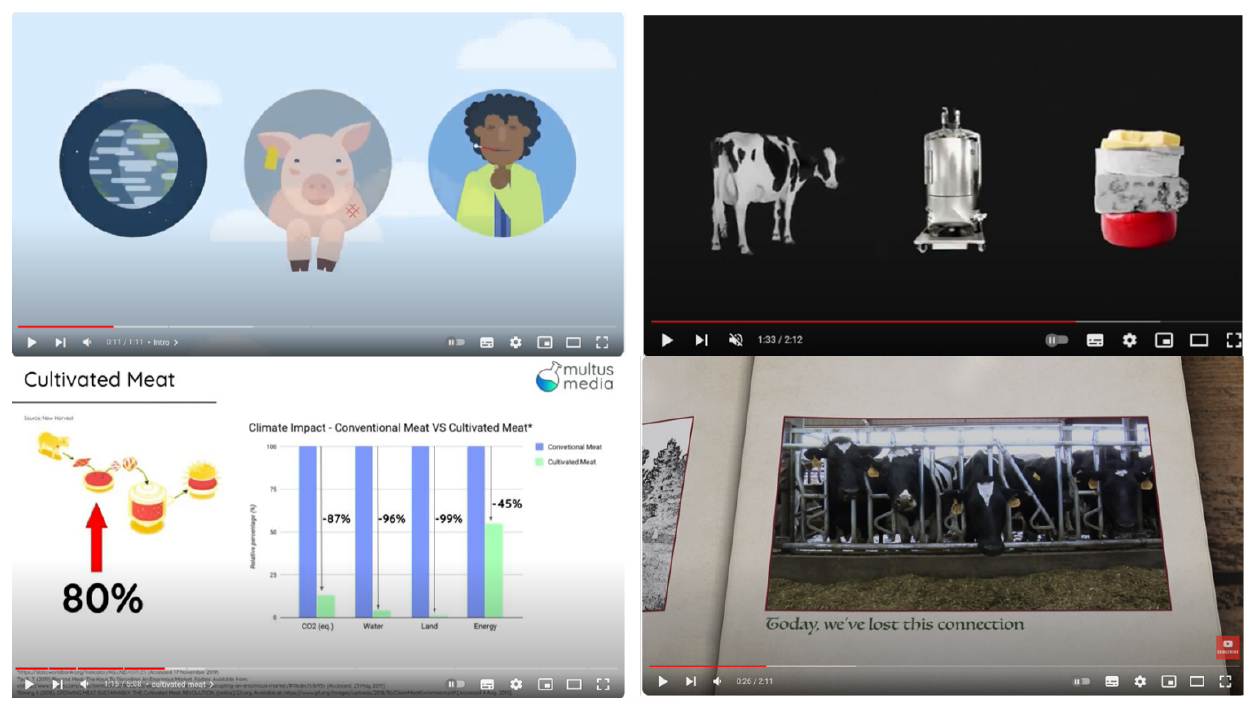
Figure 1Visual patterns to narrate CellAg. Credits and links from upper left to lower right: Imperial Tech Foresight, Multus Media (2020, https://www.youtube.com/watch?v=qu1gS-pzRyY), Aleph Farms (2019, https://www.youtube.com/watch?v=EWR7hPl1EQo), Memphis Meats (2017, https://www.youtube.com/watch?v=DgdFjy1DTjA), and Turtle Tree (2022, https://www.youtube.com/watch?v=BvDBGvLae6w).
Interviews with young employees play dual roles, being shown to work diligently in laboratories while also celebrating their future, symbolizing innovation and hope (e.g. Upside Foods). Laboratory staff in white suits are depicted to emphasize safe production practices (e.g. Roslin Technologies Ltd.), while CEOs and management figures appear to guarantee high standards with key company figures, including women from the organization, often serving as advocates, personally vouching for the technology (e.g. Solar Foods) (Fig. 2). Personal attachment to the desired outcome, a better world, therefore, visually intertwines with ideals of economic progress and the technological feasibility of achieving these ambitious and both personal and globally significant goals. In short, compared to textual counterparts, audio-visual narratives have the advantage of employing a complex, multi-modal toolkit to convey a diverse range of synthesized benefits, e.g. by siding images of suffering animals with clean, rational calculations and graphs.
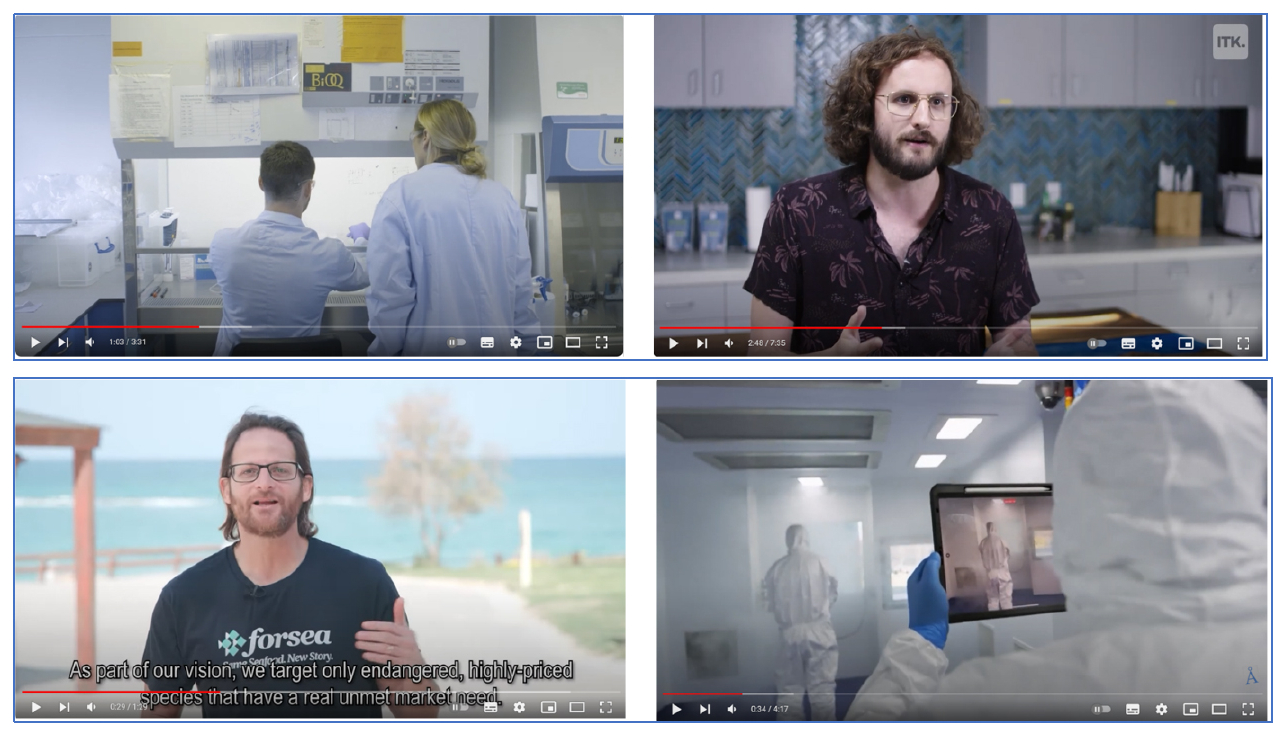
Figure 2Representation of people narrating CellAg. Credits and links from upper left to lower right: Cellular Agriculture Ltd (2019, https://www.youtube.com/watch?v=r19WFaDhmpA), Forsea Foods (2023, https://www.youtube.com/watch?v=3C9xd0ePPvY), Finless Foods (2022, https://www.youtube.com/watch?v=rILJEKr-cV4), Roslin Technologies Ltd (2021, https://www.youtube.com/watch?v=p6BTVYqQQIY).
The narrative includes a diverse range of spokespersons, from senior food production specialists explaining lab processes and safety and CEOs discussing the risks of conventional agriculture and the benefits of bio-technology to willing investors vouching for the technology (e.g. BlueNalu). These visual and narrative elements aim to build credibility and trust. The portrayal frequently highlights a predominantly white, middle- to -upper-class consumer group in a business-fair-stylized kitchen environment (e.g. Sustineri Piscis), reinforcing the aspirational nature of CellAg products. These elements function as a translational act of guided explanation: it is translational as it facilitates non-experts' understanding of scientific procedures and complexities, and it is guided as – of course – its goal is to present selected technical claims in an accessible form but uses specific arguments to support the company's narrative goals.
Analytically, this pattern does more than simplify complex information. It bundles epistemic authority, entrepreneurial legitimacy, and aspirational lifestyle into a single address to the viewer. The alternation between laboratory imagery, infographics, and founder testimony converts technical opacity into personal credibility: what cannot be verified directly is made trustworthy through controlled visual explanation and embodied spokespersons. At the same time, the pattern narrows the field of interpretation by foregrounding expertise, safety, and optimism while backgrounding uncertainty, conflict, and industrial scale-up. As a translational operation, guided explanation therefore not only makes CellAg intelligible but also specifies who is authorized to speak for it and under which evaluative terms it should be understood.
4.2 Pattern “entangling the planetary, the microbial, and the kitchen”
Expanding on a diverse spatial register, patterns are often framed using references to abstract crises and the necessity and capabilities to counter them. In this context, the laboratory is depicted as the mediator or connecting translator between the micro-scale of the “cell” – representing science in general and food-development-bound bio-technology in particular – and the “table” – the furniture that represents consumption. The laboratory is the site that exerts a translational function as various videos centre their representational efforts on high-tech artefacts as agents in a future-oriented transition for meat production (Fig. 3).
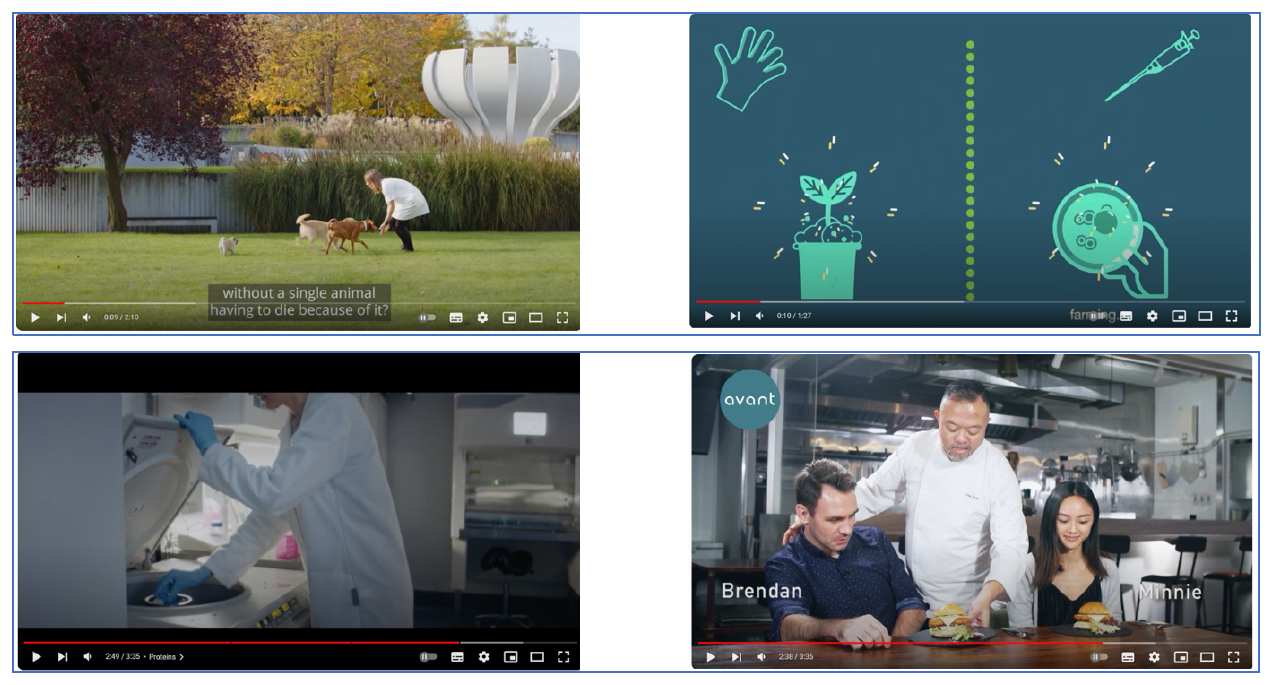
Figure 3Representation of different scales of CellAg. Credits and links from upper left to lower right: Bene Meat Technologies (2023, https://www.youtube.com/watch?v=6aNlylK9iVI), Cellivate Technologies (2019, https://www.youtube.com/watch?v=T5Fbu38fdz0), Solar Foods (2021, https://www.youtube.com/watch?v=T2cmbNSNC0w), Avant Meats (2020, https://www.youtube.com/watch?v=23JuVPxMB-Q).
The visual techniques that sustain that translational function use a mix of close-ups on hands and eyes and experiments, petri dishes, test tubes, and microscopes to stage the agentic power of the cell; air-view tracking shots that fly over maritime escapes; monotonous agriculture; and meadows and abruptly are followed by laboratory scenes. Air-view tracking shots are a frequently used technique, depicting the correlation between environments and consumption and opening up a narrative of repair that emerges from the CellAg innovation (Meatable). In another image sequence, kitchens and sites of consumption (barbecues in backyards) and dinner tables in home kitchens are followed by interviews with CEOs (e.g. Fermbox, Finless Foods, Forma Foods). A third sequence connects explanations about the devastating effect of the conventional meat industry with close-ups on animals and an explanation of the solution, by educational, often drawn and abstract graphics of CellAg technologies (Multus Media, Memphis Meats) (Fig. 4).
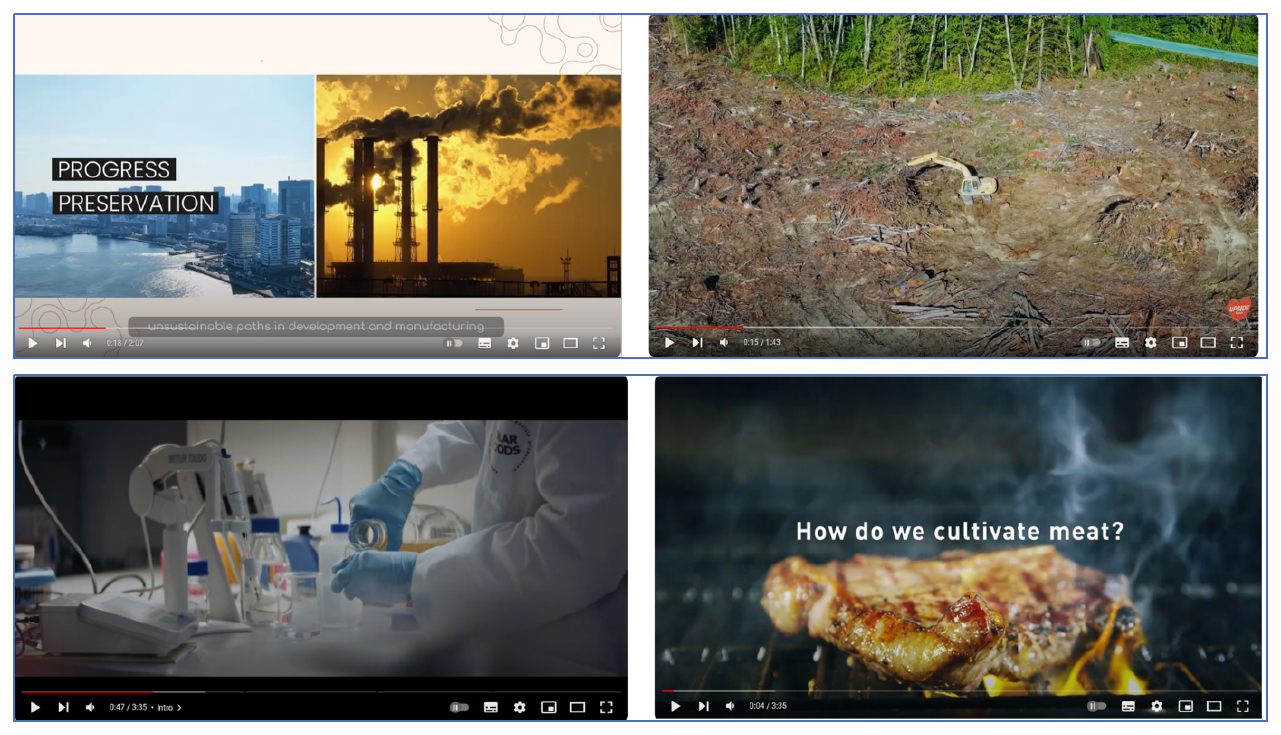
Figure 4Representation of different presentations of scales of CellAg. Credits and links from upper left to lower right: Fermbox (2023, https://www.youtube.com/watch?v=DOiAoLjDmn0), Upside Foods (2021, https://www.youtube.com/watch?v=x5bFUqrXyq4), Solar Foods (2021, https://www.youtube.com/watch?v=T2cmbNSNC0w), Avant Meats (2020, https://www.youtube.com/watch?v=23JuVPxMB-Q).
These narrative sequences are sonically connected by the voices of entrepreneurs and company representatives, promoting their start-ups in search for investment (e.g. BlueNalu), able and willing to rethink how to “replicate nature” (Meatable) – a future in which we “can save our planet, a planet we call home” (Fermbox). Fast cuts from computer-generated cell-biopsy (Mosa Meat, Fig. 5) to sites for the preparation of food are followed by close-up on pans, kitchens, and barbecues in family and home scenes, as well as the new site of production: a laboratory. Left out is, most frequently, the logical middle step between kitchen and consumption: the productive facility, the upscaled fabrication plant. This absence is particularly striking as its negative counterpart is visually represented by smoking chimneys, deforestation, and degraded landscapes. Without explicit explanation, the montage constructs a binary between conventional animal agriculture and a technologically managed alternative, but it does so by skipping the contested middle of industrial scale-up, energy input, and infrastructural dependency. In just a few camera angles, cell cultivation is framed as a response to planetary crises.
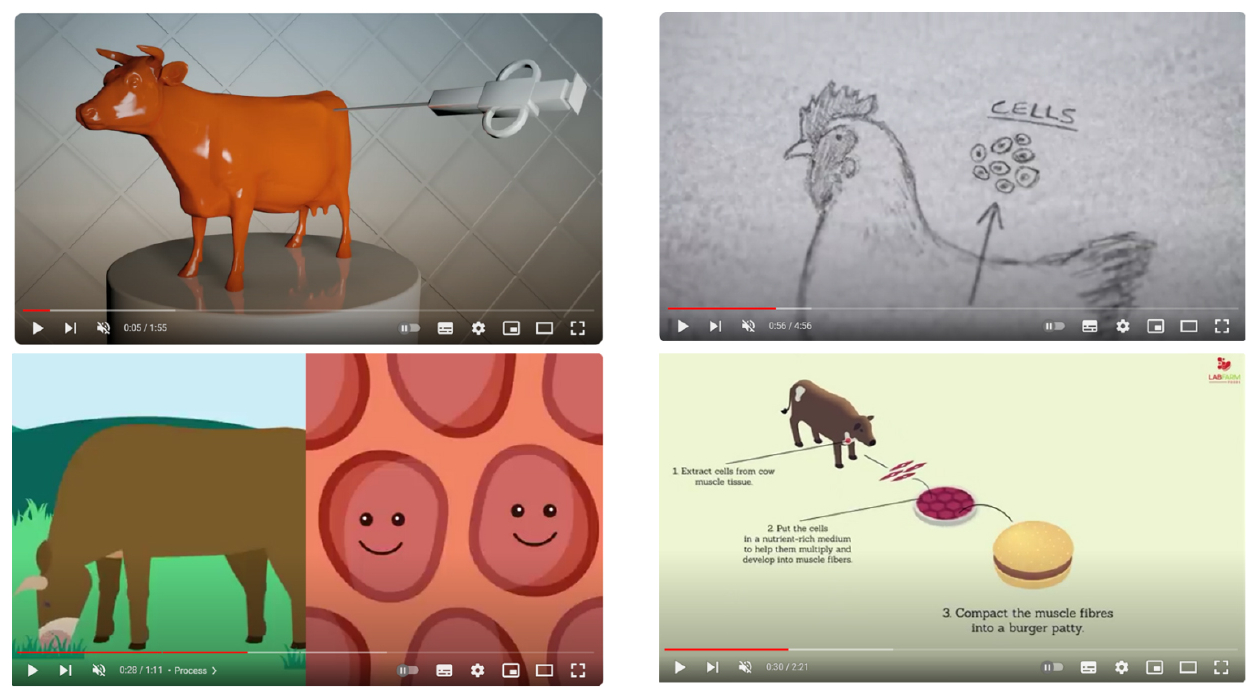
Figure 5Stylized cell extraction (biopsy). Credits and links from upper left to lower right: Mosa Meat (2018, https://www.youtube.com/watch?v=kG4EO-P93Dk), Just Egg (2018, https://www.youtube.com/watch?v=f8Ii3DB6ejE), Memphis Meats (2017, https://www.youtube.com/watch?v=DgdFjy1DTjA), LabFarm Foods (2020, https://www.youtube.com/watch?v=KIFPGxlzGOY).
The promotional videos, thus, consistently point out that the cutting-edge contribution of the new technology diffuses from the cellular level and that this scale level corresponds with other scales. To support this cross-scale association, the videos show laboratories, kitchens, tasting events, landscapes, barns, and planet Earth from an outer-space perspective, often in a fast sequence. This pattern, thus, places the emerging bio-tech industry, represented by CEO offices and laboratories, in relation to the “whole planet”, functioning as a scalar translation of knowledge about places, processes, and actors into a coherent sequence. It thus frames CellAg as a logical and necessary part of a larger logic.
The analytical significance of this pattern lies in its scalar compression. Videos move rapidly from petri dish to kitchen to planet, producing the impression that these scales are naturally continuous rather than politically and materially mediated. The laboratory becomes the hinge that sutures together micro-biological processes, domestic consumption, and planetary repair. What disappears in this montage is precisely the contested middle between industrial infrastructure, energy demand, regulatory complexity, and scale-up. The persuasive force of the pattern therefore lies not only in what it shows but in what it omits. As a translational operation, scalar translation collapses heterogeneous spaces into an apparently coherent pathway from cell to solution.
4.3 Pattern “solving multiple crises collectively”: the CellAg-solution
These sites – the planetary as the site of crisis and the local as the site of consumption – are narratively associated with each other by the laboratory as the site of the solution: the CellAg solution. The promotional videos position CellAg as a common and undeniable “good” to facilitate a needed and therefore wanted shift considered to not only revolutionize protein production but also solve crises the world faces today (e.g. Multus Media, Aleph Farms). These videos present cultivated meat as the answer to challenges such as food security, sustainability, pollution, and environmental conservation:
Globally we're facing climate crisis. By 2050 we will have a growing world population that's over ten billion. There's a real need for us to look at alternative ways to what we currently do. Cellular agriculture is here to tackle that. (Cellular Agriculture Ltd, min 00:00 to 00:14)
By showing the laboratory as the birthplace of future food solutions, they suggest that embracing CellAg can make urban living more feasible for young people and rescue the future from impending crises (e.g. Nordic Virtual Pastures). The emphasis is on the scalability and sustainability of this technology, often illustrated with appetizing images of meat and other foods (e.g. Steakholder Food). While not all videos tackle the crisis narrative directly, many highlight the urgency of protein shortages and the burdens of traditional agriculture. CellAg is frequently presented as the ultimate solution to these protein crises (e.g. Solar Foods), offering a sustainable alternative that is considered to be efficient and inclusive (e.g. TurtleTree). The broader crises of land use, climate change, and water scarcity are also addressed, with claims that CellAg can usher in a new era of environmentally friendly food production (e.g. Forsea Foods). Despite varying degrees of emphasis on crises, the overarching narrative is one of CellAg as a force for good (e.g. Upside Foods), capable of addressing issues from overpopulation to environmental sustainability (e.g. Cellva). Whilst there is a strong emphasis on ideals, many videos also frame this “CellAg solution” as a business opportunity (e.g. BlueNalu).
The translation at work here involves framing an entrepreneurial decision to found or invest in a CellAg company as a form of societal responsibility, meaningfulness, and empowering consumerism in the face of seemingly unavoidable global crises: the translation at work here converts diffuse collective anxieties into a market-compatible horizon of action, positioning private CellAg firms as legitimate responders to anticipated crisis.
This pattern functions through crisis bundling. Distinct problems such as climate change, land scarcity, food security, animal welfare, urban futures, and investment are condensed into a single narrative problem space to which CellAg appears as a proportionate response. The effect is to reduce political complexity by converting structural crises into an innovation challenge and then into an entrepreneurial opportunity. In this way, the videos solicit not only consumer approval but moral alignment from investors and founders, whose participation is framed as socially responsible rather than merely profit-seeking. Translation here operates by converting diffuse collective anxieties into a concentrated, actionable, market-compatible solution.
4.4 Pattern “meadows, trees and chicken barns”: a nature nostalgia
However, it is not only economic pragmatism that these videos speak to. Instead, they portray the linkage of crisis, solution, and time. If time is spoken of, the past is usually associated with a desirable natural equilibrium, and the future, based on current diagnoses of crisis, is represented as a dystopia. However, CellAg, from a narrative point of view, is presented as a possibility of a transversal step into a different future.
In this endeavour, self-produced media portrayals of CellAg create visions and ideals to which CellAg technologies may present a connection. This connection includes a temporal aspect as the loss brought to and by humanity with industrialized food production is envisioned to be cured via CellAg (e.g. Fermbox, Meatable):
Once upon a time the world was in balance. People used to grow their own food. They even called animals by their names. There was a connection between what we grew and what we ate. But today in our hyper industrialized world we've lost this connection. We send billions of animals to slaughter every year, using thirty percent of available lands, consuming 15,000 liters of water for every kilo of beef produced, increasing issues of contamination, antibiotic resistance and climate change throwing our world out of balance. But what if we could go back to growing food that was in balance with nature. What if we could grow a steak identical to the steak, we all like but without the downsides to health and the environment and in a way that's more humane? (Aleph Farms, min 00:00 to 01:02)
Accompanying these words, the video presents a fairy-tale-style book, its pages turned by an invisible hand. Each page reveals moving images: cows grazing in meadows near forested landscapes, reminiscent of idyllic alpine scenes, followed by close-up shots of cows' heads, accompanied by the statement “we've lost this connection”. The sequence then shifts to contrasting imagery: the devastated landscape of the Amazon superimposed on a world map and the bare back of a child seated on eroded soil. These visuals parallel the brief, explicit message of shared responsibility, evoking, whether consciously or not, audience associations with loss, ecological destruction, and unsustainable extractive agricultural practices.
We identified several approaches: firstly, some videos emphasize the preservation of ecological spaces through the development of lab-grown meat (e.g. Multus Media); nature is depicted as a place for recreation and relaxation but also as an environment to work in in sustainable ways (e.g. Nordic Virtual Pastures). Secondly, some videos employ visuals of and assertions relating to landscapes deemed to be “traditional” – e.g. pastures with free-roaming livestock (e.g. Believer Meats), even sometimes with families wandering in them (e.g. Aleph Farms) – contrasted by, e.g. cows in mass-holding facilities (e.g. Aleph Farms). Thirdly, some videos suggest a transformation from industrialized spaces back into green nature through precision fermentation as industrial spaces and large-scale aquafarming are shown to be negative (Fermbox). Many, yet not all, videos use strong temporal narratives, showing nostalgic images of nature to highlight the need for technological solutions to save the planet (e.g. Jellatech).
The translational function at work here has a temporal nature, promising to bridge an oxymoron: a return to a lost past, the harmonic coexistence of animals and humans, nature and culture; yet, it pushes for technological progress that allows for the feeding of a growing population's hunger. While a return to a pre-industrial age's form of production is difficult to scale under contemporary conditions, the other extreme, a perfectly controlled, rational, yet emotionally defendable and ethically right mass production of sufficient animal protein is at once combining an idealized past (animals alive in their environment) and the necessity of a human-dominated planetary future with sufficient meat for all.
What gives this pattern analytical force is its management of temporal contradiction. The videos do not simply oppose past and future; they promise a technologically produced recovery of values associated with an imagined pre-industrial past. Meadows, family scenes, and named animals evoke loss, while the laboratory is positioned as the means through which that loss can be repaired without abandoning modern abundance. This is less a return than a simulated restoration: the affective vocabulary of tradition is preserved while the material basis of that tradition is replaced. Temporal translation thus works by reconciling nostalgia with intervention, allowing CellAg to appear to be both radically novel and culturally continuous.
4.5 Pattern “CellAg-futures”: hygiene and the technological promise for a better world
Promotional video portrayals generalize based on the possibility of integrating the “interests” of all in saving the planet, people, and business. Such promises often involve the contrastive imaginary of cleanliness as healthiness and progress vs. unsustainability, e.g. represented by the old-fashioned, Industrial Age chimney, and dirt, e.g. the barn and real animals. Videos are using fast cuts of scenes that switch between forests with sun peeking through trees followed by a drone flight over a city, widening the camera angle to show on the horizon an industrial production zone with smoking chimneys and, lastly, a mining area (e.g. Fermbox, Upside Foods). The voiceover mentions the “unsustainable development” and mentions the “sustainable solutions” while showing a family kitchen scene at the dining table. Showing a perfectly clean microscope and micro-organisms, the voice explains that “the solution lies in tiniest organisms”. The following hard cut takes the viewer into a supermarket (Fermbox).
This future is both nostalgic and futuristic: while the past is natural and had become unnatural (given its conventional form of meat production as depicted by the Industrial Age), the future as a new epoch is depicted as a return to nature (e.g. Meatable) while being able to produce food in the cleanest way. The microscope and other laboratory artefacts are the materializations of this transition towards hygiene, sustainability, and/or cleanliness. CellAg and its elements (cleanliness and technology) are considered to be the key business branch that is capable of creating this utopia. In this pattern, we witness the translational function that reframes the feral nature and the messiness of animal consumption into a controllable environment. This environment is clean, technologically modernist, and professional and is seen to contrast prevalent mass meat production.
Analytically, cleanliness operates here as a moral and political sign and not merely as an aesthetic preference. Sterile surfaces, microscopes, and controlled interiors are repeatedly opposed to barns, smoke, mud, and industrial exhaust so that hygiene becomes shorthand for sustainability, safety, and ethical superiority. This visual coding reframes food production as a problem of controlled environments and optimized processes. In doing so, it shifts attention away from questions of energy use, material throughput, and industrial dependency and towards an ideal of transparent technical management. As a translational operation, hygienic translation turns the contested materiality of food production into a seemingly frictionless and governable environment.
4.6 Pattern “emotion, aesthetics, and the politics of regret”: bonding with Ian
However, there is an element that eludes the rational aspects: the politics of regret and personal feeling of guilt, as well as the highlighting of moral growth, which the promotional videos utilize. Related images of individuals or groups, sharing their thoughts and performing facial expressions of concern when speaking of their moral attachment to animals, are presented alongside talks about conventional meat production. Its role in human and pet consumption is explicitly marked as unethical:
… the production and sale of cultured meat means a very near future in which you will be able to treat your pets to the best food feeds with pure protein and a high ethical value. (Bene Meat Technologies)
Human consumption of CellAg meat instead is considered to be ethical (e.g. Avant Meats); the meat is considered “kind” (Mosa Meat), and a coexistence between meat-consuming humans and animals is claimed (e.g. JustEgg) (Fig. 6).
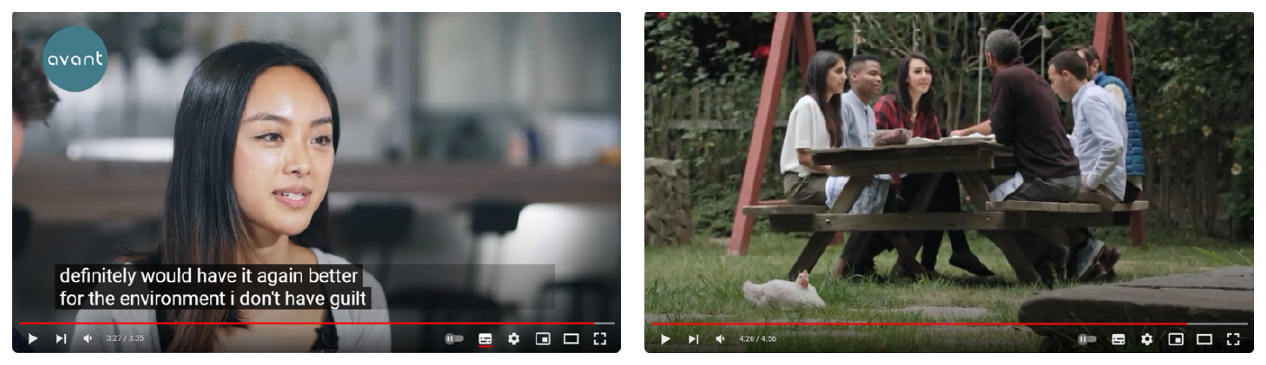
Figure 6Ethicality of CellAg. Credits and links from left to right: Avant Meats (2020, https://www.youtube.com/watch?v=23JuVPxMB-Q), Just Egg (2018, https://www.youtube.com/watch?v=f8Ii3DB6ejE).
This pattern mobilizes affective relations between viewers and the animals in question. A central strategy is to individualize the animal – depicting close-ups of pigs (Memphis Meats) and cows on meadows and “jailed in” in cages (Mosa Meat); showing, in a negative emotional effort, the dead fish (Umami Foods) or the chicken running happily and even seating with meat eaters (e.g. Just Meat, Just Egg); or even personalizing the chicken by giving it a name, as in Ian the chicken (Fig. 7) or Umami Foods.
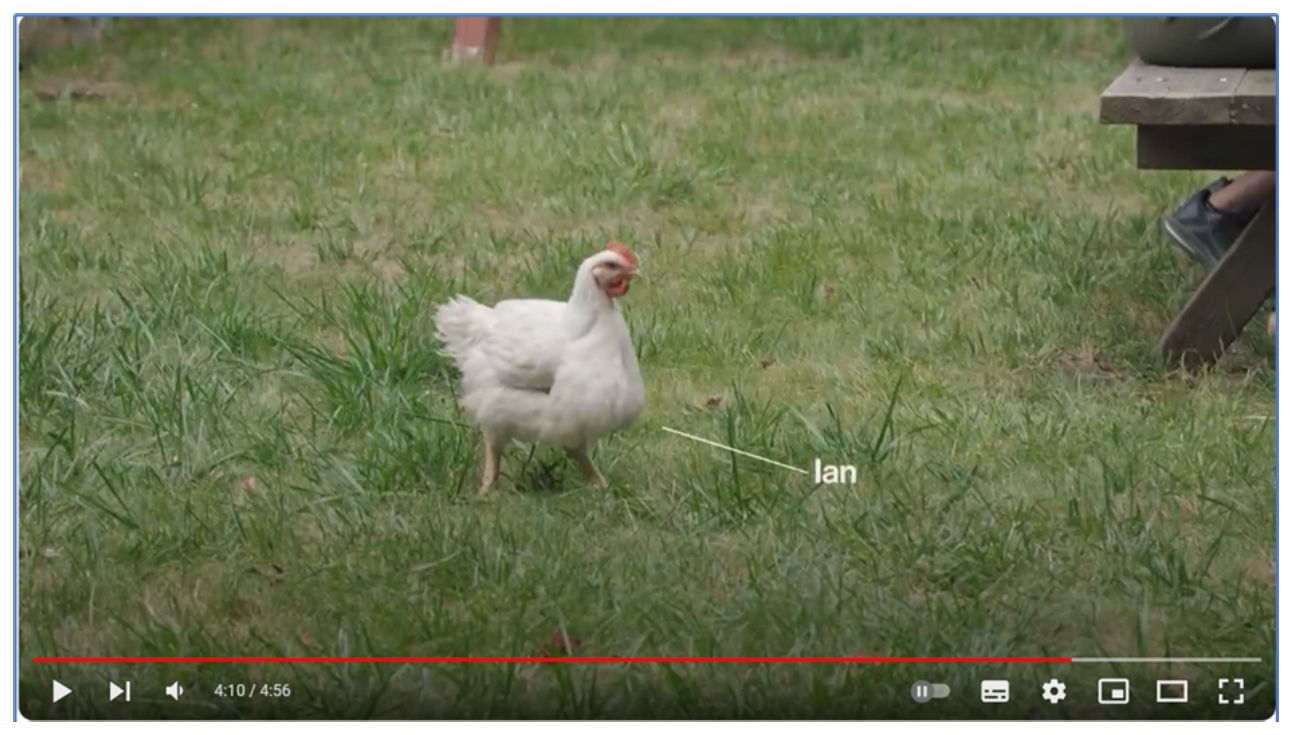
Figure 7Ian the chicken. Credits: Just Egg (2018, https://www.youtube.com/watch?v=f8Ii3DB6ejE).
The emotional attachment to animal protein is furthermore stylized by scenes that alert viewers to a possible loss: a nostalgic, old-fashioned-looking colour and light choice of a video when showing the family barbecue (e.g. Memphis Meats). Meatable, for instance, uses the aesthetics of a 1970s amateur video, filming a barbecue scene in a US city backyard with children and grandparents waving into the camera, accompanied by the slogan “at Meatable, we know that people love eating meat”, suggesting that we can acknowledge the human desire and corporeal necessity to eat meat while incorporating environmental concerns into its production. The very traditional, conventional form of cattle raising is questioned: “is this even natural?” an off voice asks when showing animals stuffed into a barn. Such nature–culture mingling is further sustained by the affective–moral argument that, even if humans follow their “natural” habits (e.g. Meatable), we can do the replication ourselves, beyond “natural” reproduction: by endless replicability of cell biopsy and fermentation (e.g. Magic Valley).
The positive emotion associated with conserving eating habits and maintaining the desired meat in the everyday diet is thus sustained by bio-technological companies' abilities to orchestrate the technological transition, but a negative emotion is also mobilized – that associated with the cruelty of raising and eating animals. Thus, the in vitro space – the laboratory and the CEO-guided planning and calculation – translates the affective bond with “nature”, animals, and the environment into an in vivo space: consuming cultured meat means to emplace a better life for animals and the environment, freed from the pressures of a greenhouse-gas-emission-heavy industry.
The analytical power of this pattern lies in its affective redistribution of responsibility. By individualizing animals and pairing them with scenes of family eating, the videos preserve attachment to meat while displacing guilt onto existing production systems rather than consumption itself. The viewer is not asked to relinquish meat but to retain it in a morally repaired form. In this sense, the individualized animal does not simply humanize nonhuman life; it also legitimizes a new production regime that promises ethical continuity without dietary rupture. Emotional translation therefore works by converting regret and compassion into acceptance of technological substitution.
Taken together, the six patterns form a repertoire rather than a typology of separate video genres. Their shared analytical significance lies in the recurrent work they perform: authorizing certain speakers, collapsing scales, bundling crises, reconciling nostalgia with intervention, moralizing cleanliness, and displacing guilt. Read together, these patterns show how CellAg promotional videos do not merely communicate a product; they stage the conditions under which that product can appear to be plausible, desirable, and ethically defensible.
Our analysis shows that CellAg promotional videos translate cultured meat into a publicly legible future by systematically linking cellular-level laboratory work to planetary crises, consumer spaces, and ethical affect. The six patterns identified in Sect. 4 are not a Latourian typology; they are empirically derived analytical categories that specify how translation operates in this corpus. Together, they show that the videos do more than advertise products. They assemble heterogeneous elements, that is, cells, bioreactors, landscapes, kitchens, animals, consumers, and crisis narratives, into a coherent socio-technical imaginary of future protein production.
This clarifies the relation between our conceptual framework and our empirical results. Translation provided the analytic lens; the six translational operations are the empirical outcome of applying that lens to the corpus. Put differently, the analysis does not claim that CellAg companies are already objective agents of transition. Rather, it shows how their promotional videos frame them as credible and desirable contributors to future protein transitions.
Although originally developed through research on collective action, the distinction between diagnostic, prognostic, and motivational framing provides a useful heuristic for specifying the interpretive work performed by these promotional videos (Benford and Snow, 2000). Diagnostic framing identifies conventional animal agriculture as the source of interconnected ecological, ethical, and food security problems. Prognostic framing presents cell cultivation, laboratory control, and technological scale-up as a feasible response to these problems. Motivational framing, in turn, positions consumer acceptance, investment, and entrepreneurial participation as meaningful contributions to a desirable protein transition. These framing tasks overlap across the six patterns rather than mapping one-to-one onto them. The contribution of a translational perspective is to show how they are made persuasive through multi-modal alignments: a scalar montage links cellular processes to planetary repair, hygienic imagery codes technological control as ethical superiority, and individualized animals convert regret into support for substitution. Framing and translation are therefore complementary analytical vocabularies: framing identifies the interpretive tasks performed by the videos, whereas translation captures the alignment and transformation of actors, scales, objects, and affects through which these tasks are accomplished. In this way, our analysis extends research on the contested framing of alternative proteins by specifying its audio-visual organization (Sexton et al., 2019). These patterns up can be summed up as follows:
-
Knowledge translation. The first pattern translates complex, expert-knowledge-based details into quickly understood and lay-understandable information. Heterogeneous visual techniques (e.g. infographics, interviews, tracking shots) create an engaging and cinematic presentation that is coupled with stories about experiences, crises, and solutions.
-
Scalar translation. Subtle scalar narratives entangle the global, the lab, and the local into one storyline, thereby legitimizing the companies' claims. In addition to the ostensible omission to (critically) mention the not-yet-possible upscaled production facility, this scalar translation thus places the laboratory as a middle ground between cell biopsy and the eating table.
-
Crisis–solution translation. Widespread narratives of solving contemporary environmental crises using CellAg technologies are employed. This pattern reveals CellAg companies' self-promotional efforts as agents that are able to solve crises, thus translating major collective and interspecies' interests into a horizon of possibility within a narrow economic purview.
-
Temporal translation. These narratives are supplemented visually by picturing past sites (e.g. nature, the barn); present sites (e.g. mass meat production facilities); and, in a temporally transversal move, idyllic sites as a return to past idylls by adopting CellAg (e.g. labs).
-
Hygienic translation. These sites (the barn, the meadow, the lab) possess distinct properties within the production chain of dietary protein. With the lab's sterile environment at the chain's centre, a calculable site replaces the potentially uncontrollable, unhygienic “nature”, represented by the barn or meadow. Self-reproductive “life” is translated into monitored production to communication professionalism, technological solutionism, and a solution deemed to be free of actual (and metaphorical) pollution.
-
Emotional translation. Lastly, some videos employ a strategy of affective bonding to animals, thereby mobilizing emotional attachments to individualized animals to translate the in vitro space of calculated cell reproduction into an in vivo space of harmonized multi-species coexistence.
We thus find that the cultured-meat industry, despite the highly specialized and fragmented market, does present a surprisingly coherent audio-visually backed narrative about the chances of CellAg's promise as the industry mobilizes these translational acts to yield a return to a utopian future in comparison to the dystopian present. The narrative that CellAg may solve contemporary crises is professionally crafted using scripts and storyboards to make their message digestible. From a strategic point of view, they position themselves in the field of venture capital and potential consumers' favourites. From a content point of view, they tailor information about CellAg process; tie them into moral arguments (Mouat et al., 2018); and thus valorize techno-ethical, promissory narratives.
As part of a more general tendency of socio-technological promise (Beck et al., 2021; Beckert, 2013), we have identified some particularities of the promissory narrative of protein futures. Pursuing a discursive intervention in relation to a “new nature” (Memphis Meats) with regard to the rhetorical and provocative question “is this even natural?” (Memphis Meats), CellAg companies do not only defend the technological solution but also go to the heart of nature–culture divides. Beyond mere linear progress, the specificity of this socio-technological promise involves a rather circular logic, pushing audiences to accept that the promised cultured meat allows them to maintain a past, returning to the virtues of a lost nature–culture harmony, while pushing forward towards the temporal yet-to-come techno-progress. This progressive reality skips “the barn” and livestock industries, combining the rationalization of the production chain of meat cells with the reduction in or overcoming of these spaces that, at least by animal welfarists, are considered to be spaces of cruelty and slaughter – a mutually beneficial framing, to be critically examined further (Howard, 2022).
This paper asked how CellAg promotional videos translate cellular-level bio-technological processes and planetary-scale crises into persuasive narratives of sustainable protein futures. Across 41 company videos, we identified six recurring narrative patterns that connect laboratories, microbial life, environmental crisis imagery, consumer spaces, and individualized animals. Interpreted through Latour's notion of translation, these patterns show how promotional videos render complex scientific processes publicly intelligible, morally charged, and commercially appealing.
The paper's contribution is therefore twofold. Empirically, it offers a repertoire of recurrent audio-visual narrative patterns in company promotion. Conceptually, it shows that these patterns function as translational operations through which CellAg firms align expertise, affect, and future-oriented promises. This does not demonstrate that CellAg companies are already agents of transition; rather, it shows how promotional media frame them as such and seek to stabilize that position vis-à-vis consumers, investors, and regulators.
By centring audio-visual material, the paper extends research on promissory narratives regarding alternative proteins beyond textual and news-based sources. Future research could examine how these promissory translations travel across other arenas, including policy documents, news coverage, investor communication, and audience reception, and could compare whether the meanings advanced in industry videos are reproduced, contested, or transformed elsewhere.
All of the data used in this article are available in the Supplement.
The supplement related to this article is available online at https://doi.org/10.5194/gh-81-463-2026-supplement.
All of the authors contributed equally to this work. All of the authors were involved in funding acquisition, investigation, data curation, formal analysis, and writing (original draft preparation, review and editing).
The contact author has declared that none of the authors has any competing interests.
Publisher's note: Copernicus Publications remains neutral with regard to jurisdictional claims made in the text, published maps, institutional affiliations, or any other geographical representation in this paper. The authors bear the ultimate responsibility for providing appropriate place names. Views expressed in the text are those of the authors and do not necessarily reflect the views of the publisher.
The authors gratefully acknowledge the generous support of the Gerda Henkel Foundation, whose funding made the research project “Protein Matters: Securitizing Zoonoses in the EU and the USA” possible.
This research has been supported by the Gerda Henkel Foundation (grant no. AZ 06/KF/21).
This paper was edited by Alexander Vorbrugg and reviewed by two anonymous referees.
Ahmed, S.: The Promise of Happiness, Duke University Press, Durham and London, https://doi.org/10.1215/9780822392781, 2010.
Aleph Farms: Aleph Farms: Once upon a time…, YouTube [video], https://www.youtube.com/watch?v=EWR7hPl1EQo (last access: 25 November, 2024), 2019.
Avant Meats: Avant's Cultivated Fish Fillet, YouTube [video], https://www.youtube.com/watch?v=23JuVPxMB-Q (last access: 25 November 2024), 2020.
Bateman, J.: Triangulating transmediality: A multimodal semiotic framework relating media, modes and genres, Discourse Context Me., 20, 160–174, https://doi.org/10.1016/j.dcm.2017.06.009, 2017.
Beck, S., Jasanoff, S., Stirling, A., and Polzin, C.: The governance of sociotechnical transformations to sustainability, Curr. Opin. Env. Sust., 49, 143–152, https://doi.org/10.1016/j.cosust.2021.04.010, 2021.
Beck, V. and Ladwig, B.: Ethical consumerism: Veganism, Climate Change, 12, e689, https://doi.org/10.1002/wcc.689, 2020.
Beckert, J.: Imagined futures: fictional expectations in the economy, Theor. Soc., 42, 219–240, https://doi.org/10.1007/s11186-013-9191-2, 2013.
Benford, R. D. and Snow, D. A.: Framing processes and social movements: An overview and assessment, Annu. Rev. Sociol., 26, 611–639, https://doi.org/10.1146/annurev.soc.26.1.611, 2000.
Bene Meat Technologies: Cultivated PET FOOD from Bene Meat Technologies, YouTube [video], https://www.youtube.com/watch?v=6aNlylK9iVI (last access: 25 November 2024), 2023.
Bhat, Z. F., Morton, J. D., Mason, S. L., Bekhit, A. E.-D. A., and Bhat, H. F.: Technological, regulatory, and ethical aspects of in vitro meat: A future slaughter-free harvest, Compr. Rev. Food Sci. F., 18, 1192–1208, https://doi.org/10.1111/1541-4337.12473, 2019.
Biltekoff, C. and Guthman, J.: Conscious, Complacent, Fearful: Agri-Food Tech's Market-Making Public Imaginaries, Sci. Cult., 32, 58–82, https://doi.org/10.1080/09505431.2022.2090914, 2023.
Borup, M., Brown, N., Konrad, K., and Van Lente, H.: The sociology of expectations in science and technology, Technol. Anal. Strateg., 18, 285–298, https://doi.org/10.1080/09537320600777002, 2006.
Brown, N.: Hope against hype: accountability in biopasts, presents and futures, Sci. Stud., 16, 3–21, https://doi.org/10.23987/sts.55152, 2003.
Castle, N.: In Vitro Meat and Science Fiction Contemporary Narratives of Cultured Flesh, Extrapolation, 63, https://doi.org/10.3828/extr.2022.11, 2022.
Cellivate Technologies: An overview of Cellivate's first innovation and line of products, YouTube [video], https://www.youtube.com/watch?v=T5Fbu38fdz0 (last access: 25 November 2024), 2019.
Cellular Agriculture Ltd: Cellular Agriculture, YouTube [video], https://www.youtube.com/watch?v=r19WFaDhmpA (last access: 25 November 2024), 2019.
Doyle, J.: Celebrity vegans and the lifestyling of ethical consumption, Environ. Commun., 10, 777–790, https://doi.org/10.1080/17524032.2016.1205643, 2016
Envall, F. and Rohracher, H.: Technopolitics of future-making: The ambiguous role of energy communities in shaping energy system change, Environ. Plann. E, 7, 765–787, https://doi.org/10.1177/25148486231188263, 2023.
European Parliamentary Research Service: EU protein strategy. Briefing, https://www.europarl.europa.eu/RegData/etudes/BRIE/2023/751426/EPRS_BRI(2023)751426_EN.pdf (last access: 20 March 2026), 2023.
Farm Europe: Public investments in synthetic foods, https://www.farm-europe.eu/wp-content/uploads/2022/12/EN-Public-investments-in-synthetic-food.docx.pdf (last access: 29 July 2024), 2022.
Fazeli, S., Sabetti, J., and Ferrari, M.: Performing Qualitative Content Analysis of Video Data in Social Sciences and Medicine: The Visual-Verbal Video Analysis Method, Int. J. Qual. Meth., 22, 16094069231185452, https://doi.org/10.1177/16094069231185452, 2023.
Fermbox: Fermbox Bio – Fermenting the Future, YouTube [video], https://www.youtube.com/watch?v=DOiAoLjDmn0 (last access: 25 November 2024), 2023.
Finless Foods: Here's how Finless Foods is trying to change the way we consume seafood, YouTube [video], https://www.youtube.com/watch?v=rILJEKr-cV4 (last access: 25 November 2024), 2022.
Forsea Foods: Forsea Foods 2023, YouTube [video], https://www.youtube.com/watch?v=3C9xd0ePPvY (last access: 25 November 2024; login now required), 2023.
GFI (Good Food Institute): 2022 State of the Industry Report. Cultivated meat and seafood, https://gfi.org/wp-content/uploads/2023/01/2022-Cultivated-Meat-State-of-the-Industry-Report.pdf (last access 24 January 2023), 2023.
GFI (Good Food Institute): Company Database, https://gfi.org/resource/alternative-protein-company-database/ (last access: 30 September 2024), 2024.
Guthman, J. and Biltekoff, C.: Magical Disruption? Alternative Protein and the Promise of de-materialization, Environ. Plann. E, 4, 1583–1600, https://doi.org/10.1177/2514848620963125, 2021.
Helliwell, R. and Burton, R. J. F.: The promised land? Exploring the future visions and narrative silences of cellular agriculture in news and industry media, J. Rural Stud., 84, 180–191, https://doi.org/10.1016/j.jrurstud.2021.04.002, 2021.
Hoogstraaten, M. J., Frenken, K., Vaskelainen, and Boon, W. P. C.: Replacing meat, an easy feat? The role of strategic categorizing in the rise of meat substitutes, Environmental Innovation and Societal Transitions, 47, 100703, https://doi.org/10.1016/j.eist.2023.100703, 2023.
Hopster, J. K. G., Gerola, A, Hofbauer, B., Löhr, G., Rijssenbeek, J., and Korenhof, P.: Who owns NATURE? Conceptual appropriation in discourses on climate and biotechnologies, Environ. Values, 33, 414–433, https://doi.org/10.1177/09632719231196535, 2023.
Howard, P. H.: Cellular agriculture will reinforce power asymmetries in food systems, Nature Food, 3, 798–800, https://doi.org/10.1038/s43016-022-00609-5, 2022.
Jasanoff, S.: Future imperfect: science, technology, and the imaginations of modernity, in: Dreamscapes of Modernity: Sociotechnical Imaginaries and the Fabrication of Power, edited by: Jasanoff, S. and Kim, S.-H., University of Chicago Press, Chicago, 1–33, https://doi.org/10.7208/chicago/9780226276663.001.0001, 2015.
Imperial Tech Foresight, Multus Media: Increasing yield and efficiency of lab-grown meat, YouTube [video], https://www.youtube.com/watch?v=qu1gS-pzRyY (last access: 25 November 2024), 2020.
Jewitt, C.: Multimodal analysis, in: The Routledge Handbook of Language and Digital Communication, 69–84, Routledge, https://doi.org/10.4324/9781315694344, 2015.
Jönsson, E.: On breweries and bioreactors: Probing the “present futures” of cellular agriculture, T. I. Brit. Geogr., 45, 921–936, https://doi.org/10.1111/tran.12392, 2020.
Just Egg: Cultured Meat: A Vision of the Future, YouTube [video], https://www.youtube.com/watch?v=f8Ii3DB6ejE (last access: 25 November 2024; login now required), 2018.
Katz-Rosene, R., Heffernan, A., and Arora, A.: Protein pluralism and food systems transition: A review of sustainable protein meta-narratives, World Dev., 161, 106121, https://doi.org/10.1016/j.worlddev.2022.106121, 2022.
Kemmer, L. and Simone, A.: Standing by the promise: Acts of anticipation in Rio and Jakarta, Environ. Plann. D, 39, 573–589, https://doi.org/10.1177/0263775820982997, 2021.
Kish, Z. and Peters, B.: Farm media: An introduction, New Media and Society, 25, 1827–1841, https://doi.org/10.1177/14614448231174522, 2023.
Lanzoni, D., Rebucci, R., Formici, G., Cheli, F., Ragone, G., Baldi, A., Violini, L., Sundaram, T. S., and Giromini, C.: Cultured meat in the European Union: Legislative context and food safety issues, Curr. Res. Food Sci. Mar., 16, 100722, https://doi.org/10.1016/j.crfs.2024.100722, 2024.
Latour, B.: Science in Action: How to Follow Scientists and Engineers through Society, Harvard University Press, Cambridge, MA, ISBN 9780674792913, 1987.
Latour, B.: On technical mediation, Common Knowl., 3, 29–64, 1994.
Latour, B.: Reassembling the Social: An Introduction to Actor-Network-Theory, Oxford University Press, Oxford, https://doi.org/10.1093/oso/9780199256044.001.0001, 2005.
LabFarm Foods: Lab Farm Foods Intro Video, YouTube [video], https://www.youtube.com/watch?v=KIFPGxlzGOY (last access: 25 November 2024), 2020.
Levidow, L. and Paul, H.: Global Agrofuel Crops as Contested Sustainability Part II: Eco-Efficient Techno-fixes?, Capitalism Nature Socialism, 22, 27–51, https://doi.org/10.1080/10455752.2011.569357, 2011.
Lonkila, A. and Kaljonen, M.: Promises of meat and milk alternatives: an integrative literature review on emergent research themes, Agr. Hum. Values, 38, 625–639, https://doi.org/10.1007/s10460-020-10184-9, 2021.
Memphis Meats: How to make cell-based meat, YouTube [video], https://www.youtube.com/watch?v=DgdFjy1DTjA (last access: 25 November 2024), 2017.
Moritz, J., Tuomisto, H. L., and Ryynänen, T.: The transformative innovation potential of cellular agriculture: Political and policy stakeholders' perceptions of cultured meat in Germany, J. Rural Stud., 89, 54–65, https://doi.org/10.1016/j.jrurstud.2021.11.018, 2022.
Mosa Meat: How is cultivated meat (a.k.a. cultured meat) made exactly?, YouTube [video], https://www.youtube.com/watch?v=kG4EO-P93Dk (last access: 25 November 2024), 2018.
Mouat, M. J., Prince, R., and Roche, M. M.: Making value out of ethics: The emerging economic geography of lab-grown meat and other animal-free food products, Econ. Geogr., 95, 136–158, https://doi.org/10.1080/00130095.2018.1508994, 2018.
Neo, H.: Ethical consumption, meaningful substitution and the challenges of vegetarianism advocacy, Geogr. J., 182, 201–212, https://doi.org/10.1111/geoj.12130, 2016.
Oliveira Júnior, J. R. d., Limongi, R., Lim, W. M., Eastman, J. K., and Kumar, S.: A story to sell: The influence of storytelling on consumers' purchasing behavior, Psychol. Market., 40, 239–261, https://doi.org/10.1002/mar.21758, 2023.
Ong, S., Choudhury, D., and Naing, M. W.: Cell-based meat: Current ambiguities with nomenclature, Trends Food Sci. Tech., 102, 223–231, https://doi.org/10.1016/j.tifs.2020.02.010, 2020.
Painter, J., Brennen, J. S., and Kristiansen, S.: The coverage of cultured meat in the US and UK traditional media, 2013–2019: drivers, sources, and competing narratives, Climatic Change, 162, 2379–2396, https://doi.org/10.1007/s10584-020-02813-3, 2020.
Roslin Technologies Ltd: BioCube Cell & Gene Therapy Suite for RoslinCT, YouTube [video], https://www.youtube.com/watch?v=p6BTVYqQQIY (last access: 25 November 2024), 2021.
Roßmann, M.: Vision as make-believe: how narratives and models represent sociotechnical futures, Journal of Responsible Innovation, 8, 70–93, https://doi.org/10.1080/23299460.2020.1853395, 2020.
Sexton, A., Garnett, T., and Lorimer, J.: Framing the future of food: The contested promises of alternative proteins, Environ. Plann. E, 2, 47–72, https://doi.org/10.1177/2514848619827009, 2019.
Sippel, S. R. and Dolinga, M.: Constructing agri-food for finance: startups, venture capital and food future imaginaries, Agr. Hum. Values, 40, 475–488, https://doi.org/10.1007/s10460-022-10383-6, 2023.
Solar Foods: Solar Foods – Cellular Farming for a Better Future, YouTube [video], https://www.youtube.com/watch?v=T2cmbNSNC0w (last access: 25 November 2024), 2021.
Stephens, N.: Join our team, change the world: edibility, producibility and food futures in cultured meat company recruitment videos, Food Cult. Soc., 25, 32–48, https://doi.org/10.1080/15528014.2021.1884787, 2022.
Stephens, N., Di Silvio, L., Dunsford, I., Ellis, M., Glencross, A., and Sexton, A.: Bringing cultured meat to market: Technical, socio-political, and regulatory challenges in cellular agriculture, Trends Food Sci. Tech., 78, 155–166, https://doi.org/10.1016/j.tifs.2018.04.010, 2018.
Treich, N.: Cultured Meat: Promises and Challenges, Environmental and Resource Economics, 79, 33–61, https://doi.org/10.1007/s10640-021-00551-3, 2021.
Turtle Tree: TurtleTree LF+, YouTube [video], https://www.youtube.com/watch?v=BvDBGvLae6w (last access: 25 November 2024), 2022.
Upside Foods: UPSIDE Foods' EPIC Engineering, Production, and Innovation Center, YouTube [video], https://www.youtube.com/watch?v=x5bFUqrXyq4 (last access: 25 November 2024), 2021.
Van der Weele, C. and Tramper, J.: Cultured meat: Every village its own factory?, Trends Biotechnol., 32, 294–296, https://doi.org/10.1016/j.tibtech.2014.04.009, 2014.
Weinrich, R.: Opportunities for the adoption of health-based sustainable dietary patterns: A review on consumer research of meat substitutes, Sustainability, 11, 1–15, https://doi.org/10.3390/su11154028, 2019.
Woll, S.: On visions and promises – ethical aspects of in vitro meat, Emerg. Top Life Sci., 3, 753–758, https://doi.org/10.1042/ETLS20190108, 2019.
Wu, D., Elliott, C., and Wu, Y.: Food Safety Strategies: The One Health Approach to Global Challenges and China's Actions, China CDC Wkly, 3, 507–513, https://doi.org/10.46234/ccdcw2021.131, 2021a.
Wu, W., Zhang, A., van Klinken, R. D., Schrobback, P., and Muller, J. M.: Consumer Trust in Food and the Food System: A Critical Review, Foods, 10, 2490, https://doi.org/10.3390/foods10102490, 2021b.
Wurgaft, B. A.: Meat Planet: Artificial Flesh and the Future of Food, University of California Press, Oakland, ISBN 9780520968264, 2019.
- Abstract
- Introduction
- Conceptual foundations
- Methodology
- Promissory audio-visual narratives and their translational functions
- Discussion: promissory visual narratives and the future of meat production
- Conclusion
- Data availability
- Author contributions
- Competing interests
- Disclaimer
- Acknowledgements
- Financial support
- Review statement
- References
- Supplement
- Abstract
- Introduction
- Conceptual foundations
- Methodology
- Promissory audio-visual narratives and their translational functions
- Discussion: promissory visual narratives and the future of meat production
- Conclusion
- Data availability
- Author contributions
- Competing interests
- Disclaimer
- Acknowledgements
- Financial support
- Review statement
- References
- Supplement